
Joe Mabel / CC BY 4.0, via Wikimedia Commons
Steeplebush: complete guide
Spiraea douglasii
Want to see Steeplebush: complete guide in your garden?
1 minute, no credit card
Overview
Spiraea douglasii, commonly known as Steeplebush, is a tough, upright shrub native to the Pacific Northwest of North America, stretching from Alaska down to California. It thrives in wetlands, stream banks, and moist meadows-places where many garden shrubs would struggle. In cultivated gardens, it performs best in consistently moist, humus-rich soil and full sun to light shade. This is a plant for problem spots: boggy corners, low-lying areas, or near water features. On gardenworld.app, you can design a garden layout that makes the most of wet zones by incorporating Steeplebush as a focal point.
Appearance & bloom cycle
Steeplebush typically grows 1 to 1.5 meters tall and spreads about 1 meter wide. The growth habit is dense and upright, with multiple slender stems emerging from the base. Leaves are lance-shaped, medium green in spring, turning darker by midsummer. In autumn, they may develop a soft coppery hue, but fall color is not always reliable.
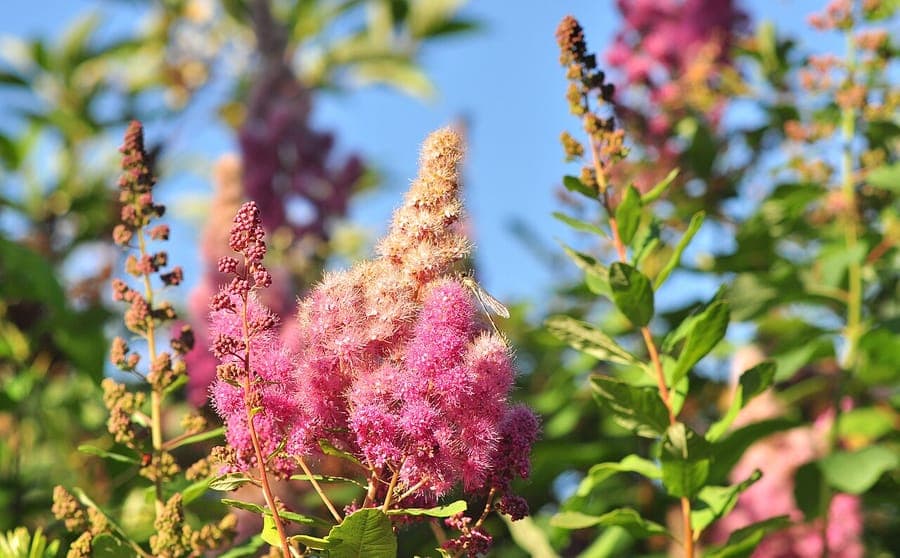
The real show starts in July and lasts through mid-August. That's when tall, bottlebrush-like spikes of deep pink to purple flowers rise above the foliage. Each flower cluster is 10–15 cm long, forming a steeple-like shape-hence the common name. Individual flowers are tiny, around 5 mm across, but collectively they create a striking, cloud-like effect. These blooms are a magnet for pollinators: bees, bumblebees, and butterflies visit regularly, making this shrub a key player in a wildlife-friendly garden.
Ideal location
Aim for a spot with at least 7 hours of direct sunlight per day. On a light scale of 1–10 (10 being full sun), Steeplebush scores a solid 7, meaning it prefers full sun but tolerates light shade. In heavy shade, growth becomes leggy and flowering diminishes significantly.
This shrub loves moisture. Ideal locations include the edge of a pond, a rain garden, or any area that stays damp through the growing season. It's excellent for erosion control on damp slopes. In drier climates or during prolonged summer droughts, supplemental watering is essential-especially for young plants. Established shrubs handle occasional dry spells better but still perform best with consistent moisture.
Soil requirements
Steeplebush prefers rich, moist, well-drained soil with a pH between 5.5 and 7.5. It handles slightly acidic to neutral conditions best. When planting, amend the soil with compost or well-rotted manure to boost organic content and water retention.
Avoid dry, sandy soils-they'll stress the plant quickly. Heavy clay can work if it doesn't stay waterlogged for weeks. If your soil is too compact, mix in coarse sand and organic matter to improve drainage. Mulching with wood chips or leaf mold helps retain moisture and suppress weeds.
Free design
Want to see Steeplebush: complete guide in your garden? Make a free design now.
Watering
This is not a drought-tolerant shrub. Young plants need deep watering once a week during their first two growing seasons, especially in dry spells. Established plants are more resilient but still benefit from regular irrigation during summer droughts. Aim to keep the soil evenly moist, not soggy.
Use rainwater if possible-Steeplebush can be sensitive to high calcium levels in tap water over time. Morning watering is best, reducing evaporation and fungal risk.
Pruning
Pruning is minimal. The best time is right after flowering, by early September at the latest. This is crucial because Steeplebush sets flower buds on old wood-pruning in fall or winter removes next year's blooms.
If needed, cut back up to one-third of the oldest stems to the base to encourage fresh growth. Avoid hard pruning; this species doesn't respond well to severe cutting. Never trim into old, leafless wood-it likely won't resprout.
Maintenance calendar
- February–March: Inspect for winter damage. Remove any broken or dead stems.
- April: Apply a layer of compost or organic fertilizer around the base. Start regular watering as soil dries.
- May–June: Monitor soil moisture. Check for aphids or spider mites.
- July–August: Peak bloom. Enjoy the flowers and pollinators-no pruning!
- September: Light pruning after flowering. Clear spent flower heads and fallen leaves.
- October–January: Little to no maintenance. Apply a 5–10 cm mulch layer to protect roots from freeze-thaw cycles.
Winter hardiness
Steeplebush is hardy in USDA zones 5 to 8. In zone 5, top growth may die back in harsh winters, but the plant usually regrows from the base in spring. In colder areas, a thick mulch helps insulate the roots. No additional winter protection is needed in most temperate gardens.
Companion plants
Pair Steeplebush with other moisture-loving perennials like Joe-Pye weed (Eutrochium maculatum), blue flag iris (Iris versicolor), or cardinal flower (Lobelia cardinalis). For texture contrast, use ferns like Matteuccia struthiopteris or grasses such as Carex vulpinoidea. It also works well in naturalistic planting schemes alongside shrubs like Cornus sericea (red osier dogwood).
On gardenworld.app, you can build a custom planting plan that integrates Steeplebush with complementary species for a balanced, low-maintenance, and ecologically rich garden.
Closing
Steeplebush isn't a common sight in most gardens, but it deserves more attention-especially in wet areas where few shrubs thrive. With its vivid summer bloom, wildlife value, and minimal care needs, it's a smart choice for eco-conscious gardeners. Look for it at local garden centres in spring, especially those with a focus on native or wetland plants. Plant it right, keep it moist, and you'll enjoy its soft purple plumes for years to come.
Want to see Steeplebush: complete guide in your garden? Make a free design now.
Upload a photo, pick a style, and get a photorealistic design with plant list in under a minute.
No credit card required


Similar plants
Siberian crab apple: complete guide
Malus x robusta
Complete guide to the Siberian crab apple (Malus x robusta): location, soil, pruning, winter hardiness and the best companion plants for your garden.
Chinese flowering crabapple (Malus x spectabilis): complete guide
Malus x spectabilis
Meet the Chinese flowering crabapple (Malus x spectabilis): a classic spring bloomer with carmine buds and pink blossom.
Potentilla crassinervia: complete guide
Potentilla crassinervia
Potentilla crassinervia, the Corsican cinquefoil, grows wild on Corsica and Sardinia's peaks. Discover how to grow this hardy alpine rock garden gem.