
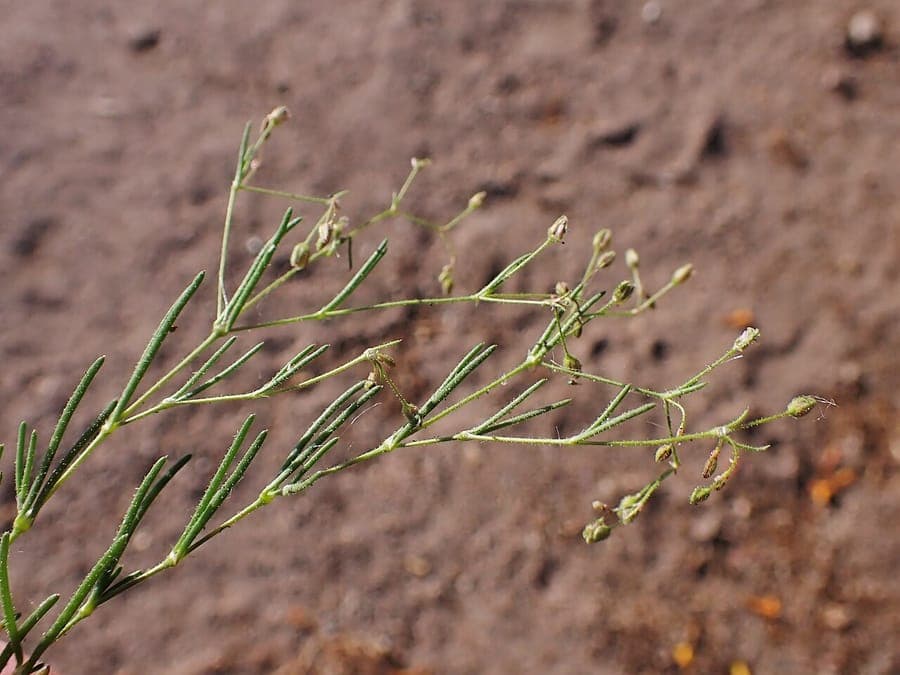
Krzysztof Ziarnek, Kenraiz / CC BY-SA 4.0, via Wikimedia Commons
Alkali sand-spurrey: complete guide
Spergularia diandra
Want to see Alkali sand-spurrey: complete guide in your garden?
1 minute, no credit card
Overview
Spergularia diandra, commonly known as alkali sand-spurrey, two-stamen spurrey, or Mediterranean sand-spurrey, is a small herbaceous plant inhabiting saline and alkaline habitats across four continents. This remarkable halophyte ranges from the Canary Islands to Siberia and north-central China, with introduced populations in North America. Belonging to the Caryophyllaceae family (pinks and carnations), this species represents one of the most salt-tolerant herbaceous plants in temperate regions.
This diminutive plant exhibits exceptional physiological adaptations to halophytic environments, thriving in locations where salt concentrations would eliminate most vegetation. Its value extends beyond ornamental potential to restoration ecology and phytoremediation of saline-degraded lands.
Appearance and Bloom
Spergularia diandra is a small herb typically reaching 5 to 20 centimeters tall, though vigorous plants may reach 30 centimeters. The plant develops slender, weak stems with fine, needle-like leaves approximately 0.5 to 2 centimeters long, often clustered in fascicles.
Flowers are minute, measuring 3-5 millimeters across, with petals ranging from purple to pink coloration. Each flower displays five petals, ten stamens (though reduction to two explains "diandra"), and persistent green sepals. Blooming occurs from May through July depending on location and growing season.
Following pollination, small capsules develop containing numerous minute seeds adapted for wind and water dispersal. These seeds remain viable for decades in dormancy, germinating upon encountering moisture and appropriate temperature.
Ideal Location
Spergularia diandra occupies highly specialized saline habitats:
- Alkali deserts and salt pans in interior regions
- Coastal zones with salt spray exposure
- Xeric, sun-exposed sites with excellent drainage
- Full sunlight (minimum 8 hours daily)
- Preference for nutrient-poor to moderately fertile substrates
The species exhibits extreme salt tolerance, growing almost exclusively where sodium chloride concentrations exceed 1000 ppm. In Netherlands gardens, specialized salt-containing containers or halophyte gardens can accommodate this demanding species.
Free design
Want to see Alkali sand-spurrey: complete guide in your garden? Make a free design now.
Soil Requirements
Soil preferences are highly specific:
- Saline to hypersaline sand or clay substrates
- Neutral to slightly alkaline pH (7.0-7.5)
- Well-drained, xeric soil profile
- Nutrient-poor to moderately fertile condition
- Organic matter is not essential
The plant tolerates salt concentrations exceeding 3000 ppm where ordinary plants perish. This exceptional halophytism makes it invaluable for restoration ecology and land reclamation projects in salt-affected regions.
Watering
Watering must be minimal:
- Once established, plants require minimal supplemental water
- Drought tolerance exceeds that of most herbaceous plants
- Excessive moisture promotes root disease
- In cultivation, water sparingly and only when severely desiccated
- Artificial saltwater can maintain soil salinity
- Avoid freshwater irrigation that leaches saline substrates
Pruning
Pruning is virtually unnecessary:
- Remove only dead or damaged foliage
- Plants remain naturally compact
- No vigorous formation required
- Retain seed heads for natural dispersal
- Minimal maintenance increases ecological authenticity
Maintenance Calendar
May-July: Flowering and seed-set period August-April: Seed dormancy period April-May: Preparation for next flowering season
Winter Hardiness
Spergularia diandra exhibits moderate cold hardiness:
- Tolerates frost down to approximately -5 to -10 degrees Celsius
- In northern regions, may function as annual or winter annual
- Feasible in temperate Netherlands climate outdoors
- Seed dormancy enhances frost survival
- Drought stress improves winter acclimation
Companion Plants
In halophytic habitats, this species coexists with:
- Other Spergularia species
- Salicornia (glasswort) species
- Artemisia species
- Suaeda species
- Atriplex species
- Other salt-tolerant herbaceous vegetation
Concluding Thoughts
Spergularia diandra represents a botanical marvel of extreme specialization, demonstrating nature's solutions to environmental stress. For Dutch gardeners interested in halophyte cultivation, this species offers a unique opportunity to grow a Mediterranean salt-lover in authentic conditions, particularly in coastal regions. The delicate purple flowers provide subtle beauty in what might otherwise appear as barren, salt-crusted landscapes, making it a valuable educational plant for understanding extreme plant adaptations and ecological restoration.
Want to see Alkali sand-spurrey: complete guide in your garden? Make a free design now.
Upload a photo, pick a style, and get a photorealistic design with plant list in under a minute.
No credit card required


Similar plants
Dianthus karami: complete guide
Dianthus karami
Dianthus karami is a rare Lebanese mountain pink with fringed pink blooms on limestone cliffs, ideal for rock gardens and troughs.
Sicilian pink: complete guide
Dianthus siculus
Discover Dianthus siculus, an elegant purple bloomer from Sicily. Cultivation, June-September flowering and garden combinations.
Alpine mouse-ear chickweed: complete guide
Cerastium pedunculatum
Full growing guide for Cerastium pedunculatum: ideal location, soil, watering, winter hardiness, and companion plants for rock gardens.