Mason Brock (Masebrock) / Public domain, via Wikimedia Commons
Sorghastrum nutans: complete guide
Sorghastrum nutans
Want to see Sorghastrum nutans: complete guide in your garden?
Full design in HD: €7.99
Look after your Sorghastrum nutans with the GardenWorld app
Identify plants with your camera and get a care calendar with reminders for this plant.


Overview
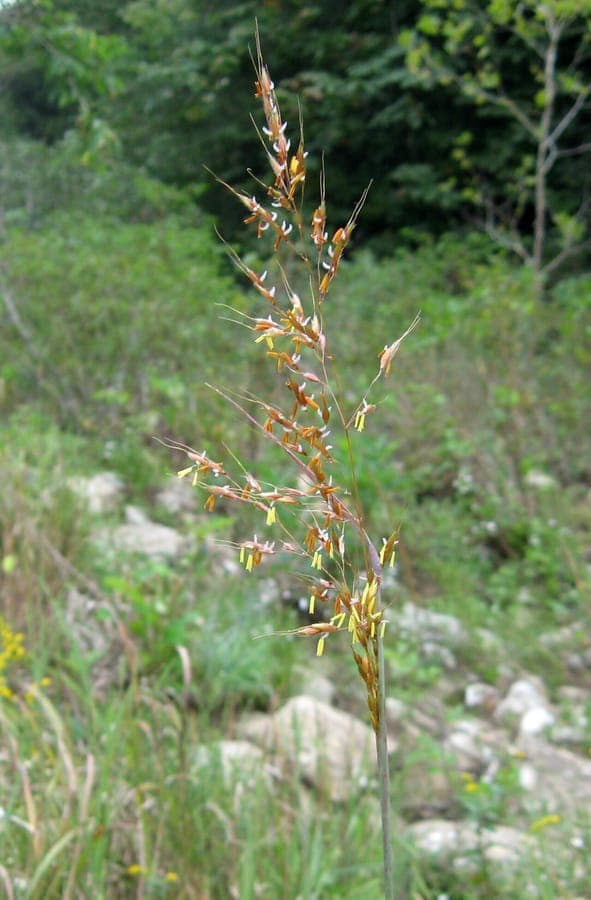
Sorghastrum nutans, commonly known as Indiangrass or Wood Grass, is an impressive native ornamental grass from North America. This member of the Poaceae (grass) family grows to 1.5 meters tall and is famous for its distinctive, golden-toned plumes that grace the garden from August through October. The plant is a classic ingredient in prairie gardens and provides seasonal interest plus wildlife habitat.
Appearance and bloom
Sorghastrum nutans grows as an upright, clumping plant with fine, blue-green foliage. The plant reaches 1-1.5 meters tall. From August to October, distinctive golden-brown plumes appear atop slender, elegant stems. These plumes represent the plant's most striking feature. In autumn, the foliage transitions to golden-brown and russet-red tones, providing extended seasonal interest.
Ideal location
Indiangrass thrives in full sun, requiring at least 6 hours of direct daily sunlight. The plant excels in prairie-like settings, native plantings, back borders, and open meadows. Suitable for slopes and dry exposures. Fully hardy and supports native habitat gardening.
Soil
Sorghastrum nutans adapts to diverse soil types. Well-drained, moderately fertile soil is ideal. The plant tolerates dry to moderately moist conditions but dislikes permanently waterlogged sites. Heavy clay can work but may slow root development. The plant grows on poor soils.
Free preview
Want to see Sorghastrum nutans: complete guide in your garden? Make a free preview of your design.
Watering
Indiangrass is drought-tolerant. Water regularly during the first growing season for establishment. Once established, supplemental water is needed only during extreme drought. Excessive watering is unnecessary. Mulching helps retain moisture in very dry periods.
Pruning
Minimal pruning required. Dead foliage can be removed in early spring. Cut the plant to the ground in March-April to stimulate fresh growth. No other pruning needed. Natural self-seeding typically produces young plants throughout the area.
Maintenance calendar
March-April: Cut old growth to ground level. May-July: Active growth, no special care. August-October: Plume appearance, no feeding needed. October-March: Dormancy, leave dead foliage for winter interest.
Winter hardiness
Sorghastrum nutans is fully hardy to USDA zone 3 (minimum -40 degrees C). In temperate regions, it remains permanent. No winter protection needed. The plant provides attractive winter structure.
Companion plants
Indiangrass pairs beautifully with other tall perennials and seed-producing plants: Rudbeckia, Ratibida, Asters, Echinacea, other grasses (Panicum, Andropogon), and native shrubs. Creative combinations work well in prairie settings.
Conclusion
Sorghastrum nutans is a spectacular, low-maintenance grass for natural, prairie-like gardens. Perfect for those seeking tall, dynamic grass with seasonal drama. Suitable for meadows, borders, and naturalized areas. Plant it and enjoy golden plumes from late summer through fall. Visit gardenworld.app for prairie garden design ideas.
Frequently asked questions about Sorghastrum nutans
Is Sorghastrum nutans winter hardy?
Sorghastrum nutans is fully hardy to USDA zone 3 (minimum -40 degrees C). In temperate regions, it remains permanent.
When and how do you prune Sorghastrum nutans?
Minimal pruning required. Dead foliage can be removed in early spring.
How much water does Sorghastrum nutans need?
Indiangrass is drought-tolerant. Water regularly during the first growing season for establishment.
Where does Sorghastrum nutans grow best?
Indiangrass thrives in full sun, requiring at least 6 hours of direct daily sunlight. The plant excels in prairie-like settings, native plantings, back borders, and open meadows.
What soil does Sorghastrum nutans need?
Sorghastrum nutans adapts to diverse soil types. Well-drained, moderately fertile soil is ideal.

See it in your garden
See Sorghastrum nutans in your garden
One photo of your garden and a few questions. You see the result in about a minute.
Try it with a photoIdentify this plant in your own garden. Identify a plant
Similar plants
Pheasant's tail grass (Anemanthele lessoniana): a guide
Anemanthele lessoniana
Pheasant's tail grass (Anemanthele lessoniana) is an evergreen New Zealand grass with orange-streaked leaves and airy summer flower heads. Siting, soil, care and hardiness.
Korean feather reed grass (Calamagrostis brachytricha): guide
Calamagrostis brachytricha
Everything about Korean feather reed grass (Calamagrostis brachytricha): position, soil, cutting back and planting partners for its glistening autumn plumes.
Northern sea oats (Chasmanthium latifolium): growing guide
Chasmanthium latifolium
Northern sea oats (Chasmanthium latifolium) carries flat, dangling spikelets and thrives in part shade. Learn how to site, water, cut back and partner it.
