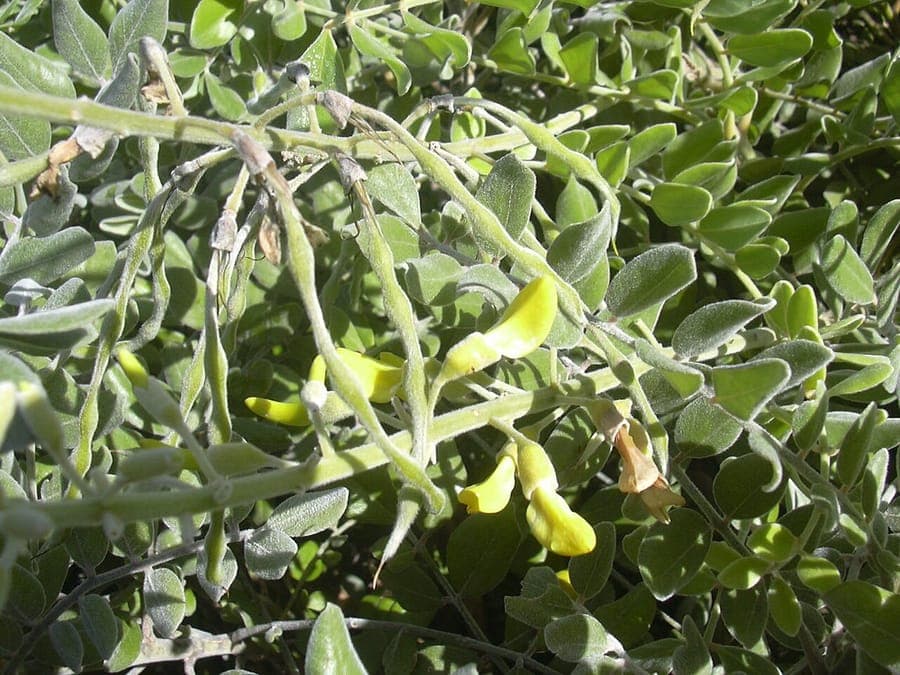
Forest & Kim Starr / CC BY 3.0, via Wikimedia Commons
Sophora tomentosa: complete guide to Silverbush
Sophora tomentosa
Want to see Sophora tomentosa: complete guide to Silverbush in your garden?
Full design in HD: €7.99
Look after your Sophora tomentosa with the GardenWorld app
Identify plants with your camera and get a care calendar with reminders for this plant.


Overview
Sophora tomentosa, commonly called Silverbush or Seacoast laburnum, is a striking tropical shrub native to warm regions worldwide. The plant is prized for its gorgeous golden flower clusters and distinctive silvery-gray foliage that gives it its common name. It thrives in warm, sunny locations and is especially popular in Mediterranean and coastal garden designs.
Appearance and Bloom
Sophora tomentosa displays a striking appearance with fine, compound leaves covered in fine hairs that give a silvery-grey tint. During the growing season, it produces distinctive yellow flower spikes that are highly attractive to bees and insects. The flowers grow in long, elegant racemes and bloom throughout much of the year in warm climates. The plant typically grows 2 to 4 meters tall with a broad, open growth habit.
Ideal Location
This plant thrives best in a full sun location. Sophora tomentosa needs a minimum of 6 to 8 hours of direct sunlight daily to bloom optimally. Provide shelter from strong winds in temperate climates, though the plant handles wind fairly well. In very hot regions, some afternoon shade may be beneficial, particularly during extreme heatwaves.
Soil
Sophora tomentosa is not particularly fussy about soil type but prefers well-draining soil. It favors sandy to loamy soil with neutral to slightly acidic pH. The plant is very drought-tolerant once established and can handle alkaline soils well. Ensure the soil does not remain waterlogged, as this can cause root rot.
Free preview
Want to see Sophora tomentosa: complete guide to Silverbush in your garden? Make a free preview of your design.
Watering
Once established, water requirements are low to moderate. During the first year, water regularly until the root system is well developed. Afterward, water only during dry periods. Excessive watering is harmful and can lead to diseases. Allow the soil to dry out somewhat between waterings.
Pruning
Pruning is not essential but you can shape the plant by carefully removing excess branches. Pruning in early spring helps maintain a compact shape. Remove dead or damaged branches as you spot them. The plant responds well to pruning and will become bushier.
Maintenance Calendar
Spring: Check for winter damage and perform light pruning. Spring/summer: Monitor for pests and diseases. Summer: Ensure adequate watering during dry periods. Fall: Reduce watering as temperatures decline. Winter: In frost-prone areas, protect from freezing.
Winter Hardiness
Sophora tomentosa is frost-sensitive and can only grow permanently outdoors in very warm climates (zones 9-11). In temperate climates, the plant can be outside during summer but must be brought indoors before the first frost. In containers, it is easy to move the plant to a protected location.
Companion Plants
The golden blooms of Sophora tomentosa pair beautifully with purple and blue plants like Salvia or Agapanthus. Combine with silver-leaved plants such as Artemisia or Senecio for a harmonious effect. Group with other drought-tolerant plants in a dry, sunny garden area.
Conclusion
Sophora tomentosa is an impressive choice for those seeking an exotic, low-maintenance plant. With its striking golden flowers, grey-green foliage, and drought tolerance, it is ideal for modern gardens with sunny locations. You will find this plant at garden centers and on gardenworld.app, where you can discover more plant guides.
Frequently asked questions about Sophora tomentosa
Is Sophora tomentosa winter hardy?
Sophora tomentosa is frost-sensitive and can only grow permanently outdoors in very warm climates (zones 9-11). In temperate climates, the plant can be outside during summer but must be brought indoors before the first frost.
When and how do you prune Sophora tomentosa?
Pruning is not essential but you can shape the plant by carefully removing excess branches. Pruning in early spring helps maintain a compact shape.
How much water does Sophora tomentosa need?
Once established, water requirements are low to moderate. During the first year, water regularly until the root system is well developed.
Where does Sophora tomentosa grow best?
This plant thrives best in a full sun location. Sophora tomentosa needs a minimum of 6 to 8 hours of direct sunlight daily to bloom optimally.
What soil does Sophora tomentosa need?
Sophora tomentosa is not particularly fussy about soil type but prefers well-draining soil. It favors sandy to loamy soil with neutral to slightly acidic pH.

See it in your garden
See Sophora tomentosa in your garden
One photo of your garden and a few questions. You see the result in about a minute.
Try it with a photoIdentify this plant in your own garden. Identify a plant
Similar plants
Pineapple broom (Argyrocytisus battandieri): complete guide
Argyrocytisus battandieri
Everything about pineapple broom (Argyrocytisus battandieri), the Moroccan wall shrub with silver leaves and pineapple-scented flowers: site, pruning and hardiness.
Blue false indigo: complete guide
Baptisia australis
Everything about blue false indigo (Baptisia australis): position, soil, watering, cutting back, hardiness and toxicity. A long-lived prairie perennial with indigo flowers.
Warminster broom (Cytisus × praecox): complete guide
Cytisus × praecox
Everything about Warminster broom (Cytisus × praecox): position, poor soil, pruning after flowering, hardiness and what you need to know about its toxicity.
