
Ton Rulkens from Mozambique / CC BY-SA 2.0, via Wikimedia Commons
Mangrove Apple: complete guide
Sonneratia alba
Want to see Mangrove Apple: complete guide in your garden?
1 minute, no credit card
Overview
Sonneratia alba, commonly called mangrove apple, is a remarkable tropical tree perfectly adapted to one of Earth's harshest environments. Native to coastal regions from Somalia to Australia, this tree settles itself in salt marshes, mangrove swamps, and brackish estuaries where few other plants survive. Growing 10 to 15 meters tall, it develops a handsome crown with yellowish-brown bark and glossy foliage that turns silvery-green in strong sunlight.
Appearance and Bloom
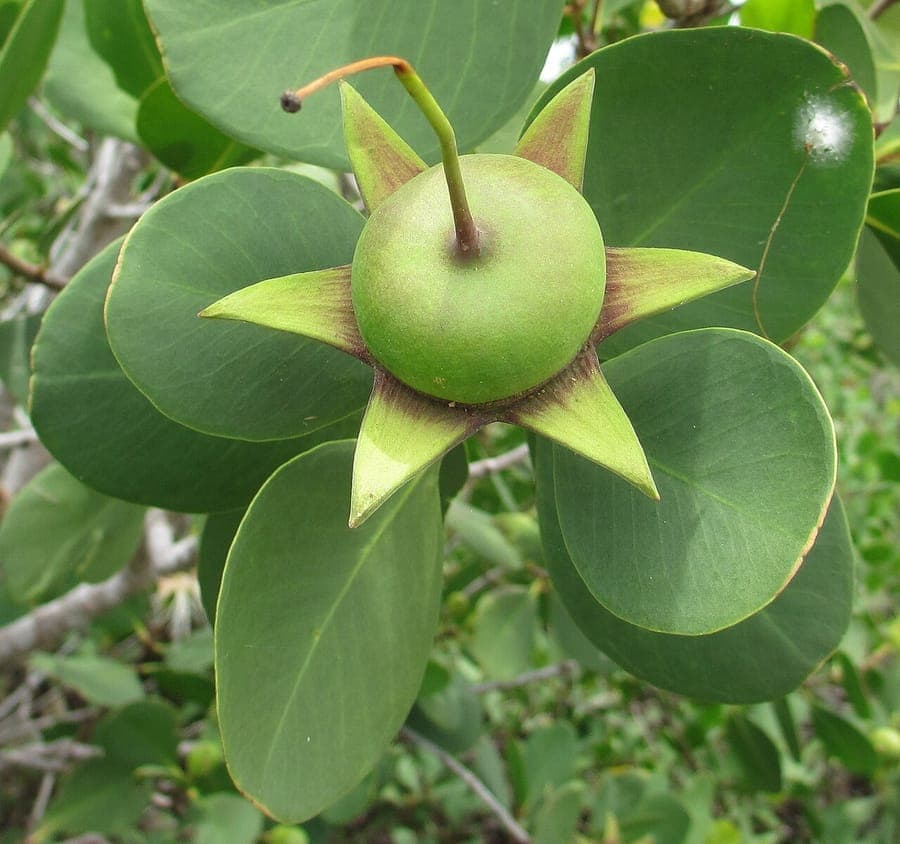
The leaves are elliptic, measuring 5 to 15 centimeters long, with a glossy dark green surface. What truly distinguishes Sonneratia alba are its extraordinary flowers. Appearing in clusters, each bloom features four to five pure white petals surrounded by dozens of long, brilliant red stamens that extend outward like fireworks. The flowers are ephemeral, lasting only one night, but the tree produces blooms continuously from May through October. Following pollination, brownish rounded fruits develop, reaching up to 6 centimeters in diameter.
Ideal Location
This tree demands full sun exposure. In its native tropical habitat, Sonneratia alba grows exclusively in bright, unobstructed sunlight along windswept coasts. The tree's remarkable salt and wind tolerance means coastal placement is actually beneficial rather than problematic. For cultivation outside tropical zones, plant in the sunniest, most sheltered position available. Avoid frost-prone areas entirely; the tree requires minimum temperatures above 10°C for survival.
Soil
Soil is surprisingly irrelevant to Sonneratia alba success because this tree thrives in salt and brackish water that would destroy most plants. Add seawater to regular potting mix or obtain specialized mangrove soil formulations. Well-draining, calcium-rich substrate works best. In containers, use heavy, chalky soil mixes that retain moisture without waterlogging. Neutral to alkaline pH (7-8) is ideal, though the tree tolerates wider ranges.
Free design
Want to see Mangrove Apple: complete guide in your garden? Make a free design now.
Watering
In tropical climates, rainfall and tidal flushing provide adequate moisture. When grown in containers, water regularly during heat and drought. Remarkably, irrigating with salt water is actually beneficial; this unusual tree thrives on brackish water better than fresh water. Advanced growers often add marine salt to irrigation water, replicating the tree's coastal environment. This salt tolerance is perhaps the most unique feature among tropical ornamentals.
Pruning
Sonneratia alba rarely needs pruning if allowed to develop naturally. Specimens in insufficient light may grow tall and leggy; thin emerging shoots carefully to promote bushier branching. Remove dead branches immediately. The tree recovers well from pruning and regrows lost height rapidly, making it forgiving of corrective cuts.
Maintenance Calendar
Spring: check soil moisture and start light feeding. Summer: water whenever soil surface feels dry; monitor flower production. Fall: reduce watering slightly but maintain consistent moisture; no feeding needed. Winter: minimal water and feeding as growth halts completely.
Winter Hardiness
This is the critical limitation: Sonneratia alba is strictly tropical and cannot tolerate frost. Temperatures below 10°C cause severe damage or death. In Mediterranean climates, either dig up and store in heated spaces during winter or maintain plants in greenhouses year-round. Only tropical, frost-free gardens allow permanent outdoor cultivation.
Companion Plants
Sonneratia alba belongs with other coastal species in salt-tolerant designs. Plant alongside Avicennia germinans (black mangrove) and Rhizophora apiculata (red mangrove) to create authentic mangrove ecosystems within gardens. These species share identical cultural requirements and create stunning textural combinations.
Closing Thoughts
Sonneratia alba is no ordinary garden plant, but an extraordinary specimen for those with tropical space and commitment. The spectacular white flowers, salt-loving nature, and unique ecological role make it truly exceptional. Visit major garden centers for tropical seeds or young specimens. Discover more about exotic tropical trees at gardenworld.app. This magnificent mangrove apple will transform your garden into a tropical paradise. Learn advanced tropical gardening techniques at gardenworld.app.
Want to see Mangrove Apple: complete guide in your garden? Make a free design now.
Upload a photo, pick a style, and get a photorealistic design with plant list in under a minute.
No credit card required


Similar plants
Winged loosestrife: complete guide
Lythrum alatum
Everything about Lythrum alatum, the winged loosestrife. Care, location, pruning and garden pairings for this native North American wetland perennial.
Dnieper loosestrife: complete guide
Lythrum borysthenicum
Everything about Lythrum borysthenicum, the Dnieper loosestrife: location, bloom season, care in pond margins and bog gardens. Full growing guide included.
Grand redstem: complete guide
Ammannia robusta
Everything about Ammannia robusta: pond margins, bog gardens, soil, care and propagation. Practical advice for water garden enthusiasts in temperate climates.