
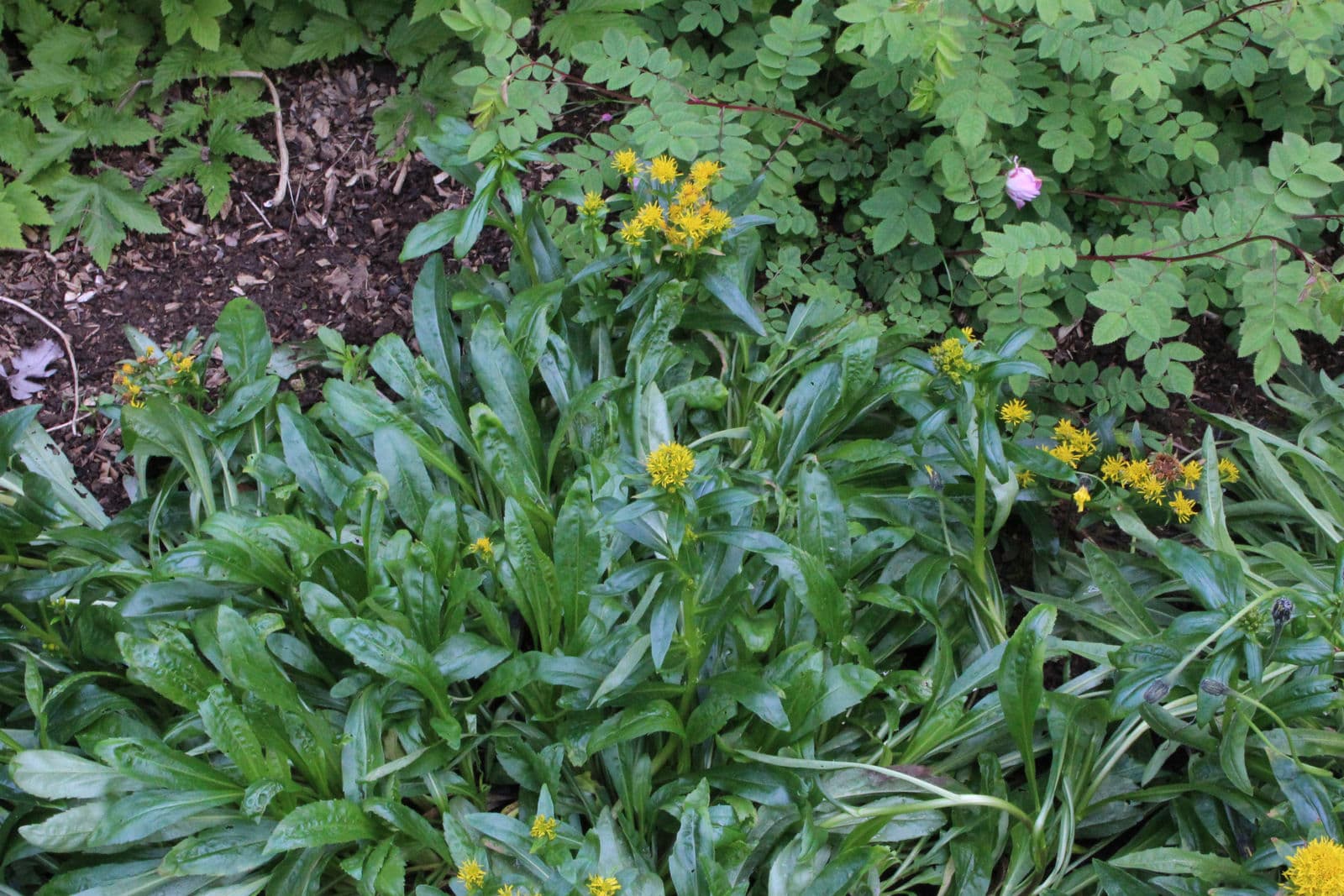
Rocky Mountain Goldenrod: complete guide
Solidago multiradiata
Want to see Rocky Mountain Goldenrod: complete guide in your garden?
1 minute, no credit card
Solidago multiradiata, commonly called Rocky Mountain Goldenrod or Alpine Goldenrod, is a North American perennial renowned for dense golden-yellow flower plumes that create stunning late-season displays. This species occurs naturally in mountainous regions from Alaska through the western United States, providing the source of its common name. The plant proves exceptionally hardy and adaptable, thriving in alpine and subalpine gardens where other plants struggle. Rocky Mountain Goldenrod produces striking yellow flowering spires that attract bees and other pollinating insects, making it valuable for ecological gardens. This plant is reliable, low-maintenance, and demands minimal fertilization or special care once established. Learn more about alpine perennials and mountain garden plants on gardenworld.app.
Appearance and Bloom Cycle
Rocky Mountain Goldenrod develops into a compact perennial reaching 45 to 70 centimeters in height with a spread of 40 to 60 centimeters. The plant forms a dense, multi-stemmed growth habit with linear to narrow lanceolate leaves. The foliage is mid-green to dark green with matte finish. The stems are smooth and glabrous without excessive hairiness. The plant exhibits a rustic, mountain appearance perfect for rocky gardens.
Flowers emerge from August through October in large, dense plumes reaching 5 to 15 centimeters in length. Individual florets are minuscule but occur in thousands within compact clusters that create impressive displays. The color is bright golden-yellow and persists throughout the blooming period. The flowering season typically extends four to six weeks. Following bloom, seed heads transform into silvery plumes, providing additional visual interest. The plant grows increasingly tall and broad each year.
Ideal Location
Rocky Mountain Goldenrod flourishes in sunny locations receiving minimum six hours direct sunlight daily. The plant also grows acceptably in partial shade, though flowering increases in very sunny positions. Ensure good air circulation. Rocky Mountain Goldenrod is highly tolerant of windy conditions, making it suitable for exposed mountain sites or coastal gardens. Avoid deeply shaded locations.
Soil Requirements
Rocky Mountain Goldenrod develops optimally in well-draining, moderately fertile soil. The plant proves highly adaptable to diverse soil types ranging from acidic to neutral. A pH between 5.5 and 7.0 is ideal. Poor, rocky soils present no difficulty. Avoid strongly waterlogged soil conditions that promote rot. For container cultivation, use standard potting soil amended with extra sand for improved drainage.
Watering
Water Rocky Mountain Goldenrod thoroughly at planting time. Thereafter, reduce watering significantly as this plant demonstrates strong drought tolerance. Once fully established, nearly eliminate supplemental watering. Regular moisture during the first growing season aids establishment. Ensure water drains thoroughly around the plant's crown. The plant tolerates dry conditions and requires minimal supplemental feeding.
Pruning
Rocky Mountain Goldenrod requires minimal pruning. In early spring, remove any dead wood. You may cut the plant back to approximately 20 centimeters following bloom to encourage compact form, though this proves unnecessary. Some gardeners remove spent flower spikes for neatness, but this is optional. Allow seed heads to persist for autumn-winter visual interest.
Maintenance Calendar
APRIL-MAY: Monitor for new growth and prune dead wood. No feeding required. JUNE-JULY: Maintain moisture if needed but require minimal watering. AUGUST-OCTOBER: Abundant flowering. Enjoy the spectacular display. NOVEMBER-MARCH: Minimal care. Seed heads may remain for bird food and winter texture.
Free design
Want to see Rocky Mountain Goldenrod: complete guide in your garden? Make a free design now.
Winter Hardiness
Rocky Mountain Goldenrod is extremely cold-hardy, suitable for USDA zones 2 through 8, surviving temperatures as low as -40 degrees Celsius. The plant is fully frost-hardy and requires no special winter protection. Dead top growth can remain through winter. This makes it perfect for extremely cold climates.
Companion Plants
Rocky Mountain Goldenrod combines beautifully with purple asters, purple clematis, and silver-leaved artemisia. Complementary perennials such as catmint and blue delphiniums create appealing combinations. For continuous fall color, pair with other late-season bloomers. Low-growing edging plants such as creeping stonecrop provide attractive contrast. Avoid vigorous competitors sharing the root zone.
Propagation
Rocky Mountain Goldenrod is straightforward to propagate through division or seed. Divide established clumps in early spring (March-April) or in autumn after flowering, while the plant is dormant. Carefully lift the root clump and divide it with a sharp spade or knife into sections of at least 10 to 15 centimeters, each retaining sufficient roots and a few shoots. Replant divisions immediately at the desired location and keep soil consistently moist for the first few weeks until new growth appears.
Seed propagation is also possible, though less reliable for named selections since cross-pollination with other goldenrod species can occur. Collect the silvery seed heads in autumn once fully dry. Sow indoors during February-March in seed compost at approximately 18 to 20 degrees Celsius. Germination takes two to four weeks. Transplant young plants outdoors after the last frost, typically from mid-May onward.
Pests and Diseases
Rocky Mountain Goldenrod is generally a healthy, robust plant with few pest problems. Occasionally aphids colonize young shoots, particularly during warm, humid spells. Rinse aphids off with a strong jet of water or apply a mild soap solution for heavier infestations.
Powdery mildew can develop when air circulation is poor or humidity remains excessive, recognizable by a white powdery coating on leaves. Ensure adequate spacing between plants (at least 40 centimeters) to promote airflow and remove affected foliage promptly. Rust occasionally appears but rarely causes serious damage to the plant's overall vigor.
Slugs may nibble young shoots in early spring. Use slug pellets or natural barriers such as crushed eggshells around vulnerable young plants.
Cultivar Notes
Solidago multiradiata is typically sold in its natural species form through specialist nurseries and alpine garden centers, unlike the more common garden goldenrod (Solidago x hybrida), whose well-known cultivars such as 'Fireworks', 'Goldenmosa', and 'Little Lemon' are widely available at general garden centers. For an authentic alpine garden, the wild species form of S. multiradiata is preferable, distinguished by its compact habit and exceptional cold hardiness compared to the larger hybrid cultivars.
Buying and Planting Advice
Rocky Mountain Goldenrod is available through specialist perennial and alpine nurseries. When purchasing, look for a firm, compact root ball without visible rot. Plant preferably in spring or autumn when soil temperatures are moderate, spacing plants 40 to 50 centimeters apart for a naturally cohesive border effect. Water generously after planting and repeat regularly during the first two weeks until roots establish firmly. A thin layer of gravel around the base deters weeds and mimics the natural mountain conditions where this species thrives.
Closing
Rocky Mountain Goldenrod is an exceptionally reliable and rewarding perennial that flowers abundantly year after year. With minimal maintenance demands and spectacular fall blooming, this goldenrod species proves excellent for mountain and alpine gardens. The plant attracts pollinators and supports ecological gardening. Rocky Mountain Goldenrod is available at quality alpine plant nurseries. Discover additional plant combinations and comprehensive garden design ideas on gardenworld.app.
Want to see Rocky Mountain Goldenrod: complete guide in your garden? Make a free design now.
Upload a photo, pick a style, and get a photorealistic design with plant list in under a minute.
10,000+ gardens designed already
No credit card required


Similar plants
Calendula stellata: complete guide
Calendula stellata
Complete guide to Calendula stellata, the star-flowered marigold from Sicily: location, soil, watering and companion planting tips.
Korean chrysanthemum: complete guide
Chrysanthemum x rubellum
Chrysanthemum x rubellum is a hardy autumn perennial with single pink to copper flowers from August to November. Care and combinations.
Helianthus divaricatus: complete guide
Helianthus divaricatus
Helianthus divaricatus is a North American woodland sunflower with yellow summer blooms, ideal for naturalistic borders and shady edges.