
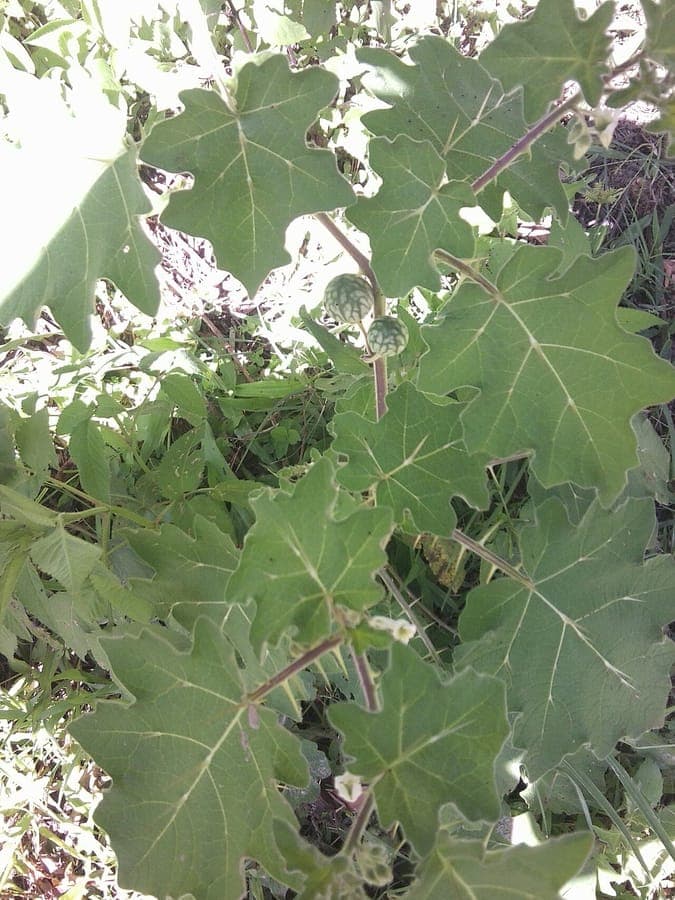
Krish Dulal / CC BY-SA 3.0, via Wikimedia Commons
Yellow-fruit nightshade: complete guide
Solanum virginianum
Want to see Yellow-fruit nightshade: complete guide in your garden?
1 minute, no credit card
Overview
The Yellow-fruit nightshade (Solanum virginianum), also known as "Kantikari" in Asian cultures, is a fascinating herb to shrub native to East Africa and Asia. This plant belongs to the Nightshade family and is known in traditional medicine and as an ornamental fruit plant. In gardens, this plant brings an exotic element and interesting yellow fruits. The plant grows rapidly and can be cultivated both in gardens and containers.
Appearance and bloom
The Yellow-fruit nightshade forms a deciduous or semi-evergreen shrub, depending on climate, with some thorns on stems and leaves. The leaves are elliptical to oval, green, and rough-textured. The flowers are small, in clusters of bright yellow to white, not particularly showy. The fruits, however, are very attractive: glossy yellow berries the size of small currants that can remain on the plant for months. The plant usually reaches 0.5-1.5 meters in height.
Ideal location
The Yellow-fruit nightshade thrives best in full sun to partial shade, with at least 5-6 hours of direct solar energy per day. The plant is very adaptable and can grow even in lightly shaded conditions. In warm climates, the plant can grow outdoors; in temperate regions, container cultivation or indoor overwintering is necessary. Protect from strong winds that can damage leaves.
Soil
The Yellow-fruit nightshade is tolerant of various soil types, from acidic to neutral to slightly alkaline (pH 6.5-8.0). Optimal is well-draining, humus-rich soil. Mix standard garden soil with compost and sand for optimal drainage. The plant tolerates even poor soils, though better growth occurs in nutrient-rich soil. For container cultivation, use universal potting soil with extra drainage material.
Watering
The Yellow-fruit nightshade enjoys moderate moisture conditions. Water regularly during the growing season, but let the soil dry out partially between waterings. Avoid excessive moisture that can cause root rot. In dry conditions, more water can be given. In winter, watering can be reduced, especially for container plants kept indoors. The plant tolerates drought periods better than many other tropical plants.
Free design
Want to see Yellow-fruit nightshade: complete guide in your garden? Make a free design now.
Pruning
Pruning is useful to maintain the plant's shape and encourage branching. Pruning can be done after flowering or in early spring. Remove dead, diseased, or damaged parts. The plant can be cut back more vigorously to remain compact in container cultivation. Young plants can be pruned back to encourage dense growth.
Maintenance calendar
January-February: Perform pruning, keep plant indoors in temperate climates. March-May: Begin watering, gradually move plant outdoors, apply light feeding. June-August: Give regular water and fertilizer, monitor for insect pests, enjoy blooming and fruit development. September-October: Adjust watering, reduce feeding. November-December: Bring plant indoors, minimal water.
Winter hardiness
The Yellow-fruit nightshade is frost-sensitive and cannot overwinter outdoors in temperate climates. In USDA zones 8-9, the plant can survive with protection. In warmer zones 10-11, the plant grows outdoors without problems. In countries like the Netherlands and Belgium, grow the plant in containers and overwinter indoors. Ensure a minimum temperature of 5-10°C indoors. Prolonged exposure to freezing temperatures is fatal.
Companion plants
The Yellow-fruit nightshade combines well with other warmth-loving plants. Partner this plant with other medicinal herbs like basil and oregano. In gardens, interesting combinations can be made with other fruit-bearing shrubs. In container cultivation, combine this plant with trailing plants or low-growing flowering plants for texture contrast. Avoid wet conditions where fungal diseases can develop.
Closing
The Yellow-fruit nightshade is a versatile plant that is both decorative and useful. With its interesting yellow fruits and adaptability, it is a fascinating choice for passionate gardeners. In warmer climates, the plant can grow outdoors permanently; in temperate regions, container cultivation offers flexibility. Work with your GardenWorld designer to optimally integrate this unique plant into your garden design!
Want to see Yellow-fruit nightshade: complete guide in your garden? Make a free design now.
Upload a photo, pick a style, and get a photorealistic design with plant list in under a minute.
No credit card required


Similar plants
Solanum dolichosepalum: complete guide
Solanum dolichosepalum
Discover Solanum dolichosepalum, an Andean nightshade with striking long sepals. Growing tips, hardiness, and companion planting for your patio.
Solanum ripense: complete guide
Solanum ripense
Discover Solanum ripense, a moisture-loving Andean nightshade for pond edges and conservatories. Growing tips, hardiness, and companions.
Solanum tomentosum: complete guide
Solanum tomentosum
Discover Solanum tomentosum, a thorny South African nightshade with felted leaves. Growing tips, hardiness, and companion planting ideas.