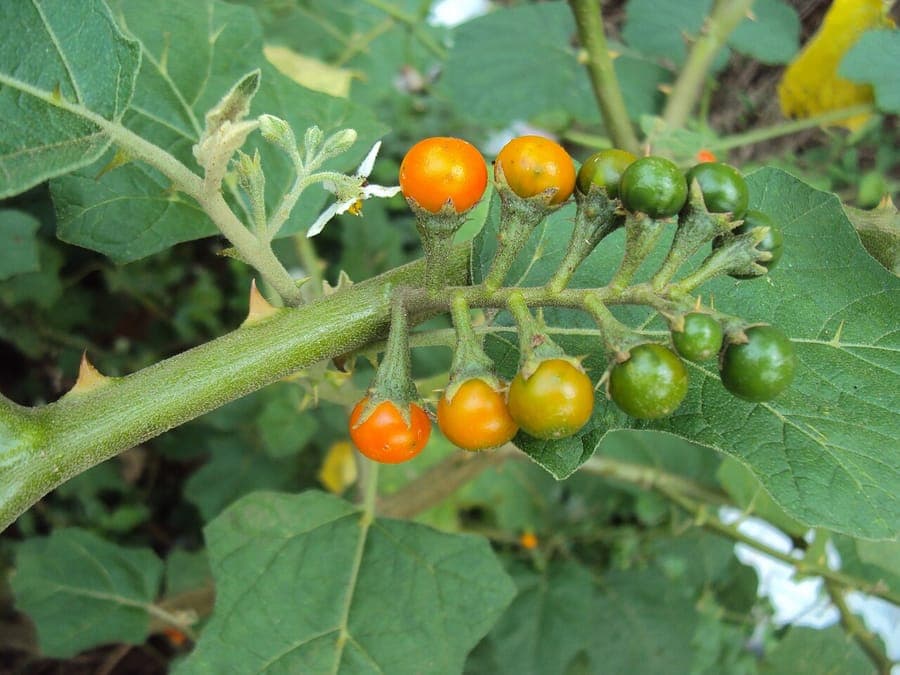
Vinayaraj / CC BY-SA 3.0, via Wikimedia Commons
Solanum violaceum: complete guide
Solanum violaceum
Want to see Solanum violaceum: complete guide in your garden?
Full design in HD: €7.99
Look after your Solanum violaceum with the GardenWorld app
Identify plants with your camera and get a care calendar with reminders for this plant.


Overview
Solanum violaceum, commonly known as Purple Nightshade or Indian Eggplant, is a tropical shrub native to Africa and Asia. This ornamental member of the Solanaceae family grows as a versatile shrub with dark green leaves, elegant purple flowers, and decorative round berries. The plant is valued in warm climates as an ornamental and is sometimes used in traditional medicine.
Appearance and bloom
Solanum violaceum grows as a semi-woody shrub, 1-2 meters tall. The leaves are long, oval, and somewhat rough-textured. From April to October (or longer in warm regions), numerous violet to purple flowers appear, each with golden stamens. These flowers attract insects and are followed by round, orange-yellow to red berries approximately 1 cm in diameter. The berries are not edible.
Ideal location
Purple Nightshade thrives in full sun. Plant in a location receiving at least 6-8 hours of direct daily sunlight. In very hot climates, light afternoon shade is beneficial. The plant suits patios, balconies (in containers), small gardens, and greenhouses. In cooler regions, grow in containers that are brought indoors before frost.
Soil
Solanum violaceum thrives in well-drained, fertile soil. Ideal mixture: 50% garden soil, 30% compost, 20% sand. The plant loves enriched soil with consistent feeding. For container cultivation, use quality potting compost with regular feeding. Fertile soil promotes flowering and fruiting.
Free preview
Want to see Solanum violaceum: complete guide in your garden? Make a free preview of your design.
Watering
Solanum violaceum prefers regular watering. Water during the growing season when the top inch becomes dry. In warm months, daily watering may be necessary. In winter, reduce watering but never allow soil to dry completely. Excellent drainage prevents waterlogging. In containers, monitor moisture more carefully.
Pruning
Purple Nightshade responds well to pruning. In early spring, cut back the plant to encourage compact, branching growth. Remove dead wood and crossing branches. For container plants, pinch regularly for fuller shape. Older, leggy plants can be cut back hard.
Maintenance calendar
May-June: Active growth, water regularly, feed weekly. July-August: Flowering and fruiting, continue feeding. September-October: Reduce watering gradually. November-April: Dormancy, minimal water, stop feeding. Prune in March.
Winter hardiness
Solanum violaceum is not frost-hardy. In temperate zones, bring indoors before first frost. The plant can overwinter in a greenhouse or conservatory above 10 degrees C. Harden off gradually after winter.
Companion plants
Purple Nightshade pairs well with other heat-loving plants: Brugmansia, tropical Hibiscus, Lantana, Mandevilla, and other Solanum species. For container combinations, pair with Bougainvillea or ornamental foliage plants.
Conclusion
Solanum violaceum is a stunning ornamental for warm seasons and controlled environments. Perfect for gardeners desiring tropical beauty in a manageable size. Available from specialty plant nurseries. Visit gardenworld.app for container gardening ideas.
Frequently asked questions about Solanum violaceum
Is Solanum violaceum winter hardy?
Solanum violaceum is not frost-hardy. In temperate zones, bring indoors before first frost.
When and how do you prune Solanum violaceum?
Purple Nightshade responds well to pruning. In early spring, cut back the plant to encourage compact, branching growth.
How much water does Solanum violaceum need?
Solanum violaceum prefers regular watering. Water during the growing season when the top inch becomes dry.
Where does Solanum violaceum grow best?
Purple Nightshade thrives in full sun. Plant in a location receiving at least 6-8 hours of direct daily sunlight.
What soil does Solanum violaceum need?
Solanum violaceum thrives in well-drained, fertile soil. Ideal mixture: 50% garden soil, 30% compost, 20% sand.

See it in your garden
See Solanum violaceum in your garden
One photo of your garden and a few questions. You see the result in about a minute.
Try it with a photoIdentify this plant in your own garden. Identify a plant
Similar plants
Petunia (Petunia × atkinsiana): complete guide
Petunia × atkinsiana
Everything about garden petunias (Petunia × atkinsiana): sowing, position, compost, watering, feeding and pruning for containers in bloom until autumn.
Chinese lantern: complete guide
Physalis alkekengi
Everything about the Chinese lantern (Physalis alkekengi): position, drying the orange lanterns, keeping its spread in check, toxicity and winter hardiness.
Solanum dolichosepalum: complete guide
Solanum dolichosepalum
Discover Solanum dolichosepalum, an Andean nightshade with striking long sepals. Growing tips, hardiness, and companion planting for your patio.
