
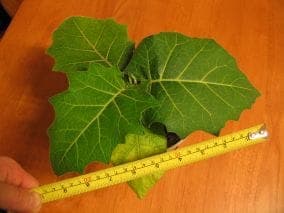
Original uploader was JartsaP at en.wikipedia / CC BY-SA 2.5, via Wikimedia Commons
Cocona fruit: complete guide
Solanum sessiliflorum
Want to see Cocona fruit: complete guide in your garden?
1 minute, no credit card
Overview
Cocona (Solanum sessiliflorum), also known as topiro and Orinoco-apple, is a fascinating tropical fruit species from the Amazon, occurring from Nicaragua through south-tropical America. This Solanaceae family member produces interesting, softly hairy orange to red fruits with unique flavor. In temperate climates, it can be cultivated in warm greenhouse conditions, making it a valuable experiment for tropical plant collections.
Appearance and bloom
The plant grows as a small tree or large shrub, reaching 1.5 to 2.5 metres height. Leaves are large, oval, dark green, and softly hairy. The plant lacks thorns, a major advantage over related species. Yellow flowers appear in clusters along stems and develop into characteristic, round to slightly flattened fruits. These fruits display distinctive fuzzy appearance and reach 5 to 8 centimetres diameter. They change from green to orange to red upon ripening.
Ideal location
The plant requires very warm conditions with at least 6 to 8 hours of direct sunlight daily. The plant is highly thermophilic and thrives best with temperatures between 22 and 30 degrees Celsius. In temperate climates, it can only grow in warm greenhouse conditions or very hot outdoor microclimates. The plant prefers full sun over shade.
Soil
The plant requires highly fertile, well-draining soils with substantial organic matter. A mixture with compost, coconut coir, and sand works well. pH should be around 6.0 to 7.0. In greenhouse cultivation, gardeners use specially formulated fertile potting mix. Regular feeding is important for good productivity.
Watering
The plant requires regular watering, especially during growth and fruiting. Soil should remain consistently moist (not waterlogged). Under dry conditions, fruiting will be poor. In tropical conditions, water daily or every other day. Stagnation is harmful; excellent drainage is essential. Regular leaf spraying promotes humidity.
Free design
Want to see Cocona fruit: complete guide in your garden? Make a free design now.
Pruning
The plant requires no heavy pruning, though removing dead branches can occur. The plant can be gently pruned after harvest to maintain form, though this is unnecessary. The plant naturally grows neatly and forms a pleasant shape spontaneously.
Maintenance calendar
Spring-Summer: Water regularly, feed regularly (monthly with balanced fertilizer). Flowering and fruiting begin. Summer: Continuous care, monitor for pests, spray against diseases. Fall-Winter: Reduce feeding, prevent cold exposure (temperature above 15 degrees Celsius essential).
Winter hardiness
The plant is extremely cold-sensitive. Temperatures below 15 degrees Celsius are harmful, while below 10 degrees causes serious damage or even death. In temperate regions, the plant must always be kept indoors except during very warm summer months. Cold protection is essential.
Companion plants
In greenhouse conditions, the plant pairs well with other tropical fruits such as passion fruit and guava. Also suitable for botanical collections of tropical plants. The plant grows better in specialized tropical gardens than in temperate outdoor conditions.
Closing thoughts
Cocona is a fascinating tropical fruit species for specialized gardeners and collectors of exotic plants. Though unsuitable for outdoor growing in temperate climates, it offers substantial interest in controlled greenhouse conditions. The fruits are nutritious and interesting for culinary use. For more advice on tropical fruits and exotic plants, visit gardenworld.app, your guide to modern garden design with focus on unique and exotic species. gardenworld.app offers guidance, design tools, and inspiration for creating special gardens.
Want to see Cocona fruit: complete guide in your garden? Make a free design now.
Upload a photo, pick a style, and get a photorealistic design with plant list in under a minute.
No credit card required


Similar plants
Solanum dolichosepalum: complete guide
Solanum dolichosepalum
Discover Solanum dolichosepalum, an Andean nightshade with striking long sepals. Growing tips, hardiness, and companion planting for your patio.
Solanum ripense: complete guide
Solanum ripense
Discover Solanum ripense, a moisture-loving Andean nightshade for pond edges and conservatories. Growing tips, hardiness, and companions.
Solanum tomentosum: complete guide
Solanum tomentosum
Discover Solanum tomentosum, a thorny South African nightshade with felted leaves. Growing tips, hardiness, and companion planting ideas.