
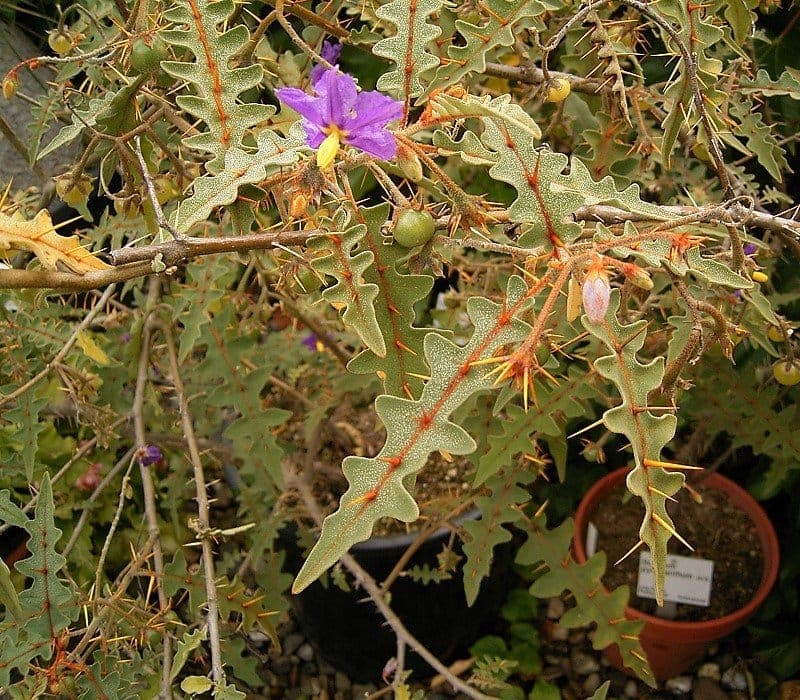
Frank Vincentz / CC BY-SA 3.0, via Wikimedia Commons
Porcupine-tomato: complete guide
Solanum pyracanthos
Want to see Porcupine-tomato: complete guide in your garden?
1 minute, no credit card
Overview
Porcupine-tomato (Solanum pyracanthos) is a fascinating shrubby plant from Madagascar belonging to the Solanaceae family (nightshade family). This unique plant is characterized by its striking red to orange thorns and interesting, dull green foliage. Though naturally tropical, it can be cultivated in temperate climates in pots and conservatories, making it a remarkable accent for modern gardens.
Appearance and bloom
The plant reaches 1 to 1.5 metres height as a shrub under ideal conditions. Leaves are elliptical and greenish, potentially reaching 15 centimetres length. The plant is covered with numerous sharp red to orange thorns distributed along stems and leaf veins, giving it a very distinctive appearance. Small white to purple flowers appear in clusters, followed by orange to red fruits resembling peas, highly decorative. However, blooming and fruiting require warm conditions.
Ideal location
The plant thrives in very warm, sunny locations receiving at least 6 to 8 hours of direct sunlight daily. The plant demands substantial light and will struggle in insufficient light. In temperate climates, it should remain outdoors only during very warm periods; otherwise, it should be kept in a heated greenhouse or controlled warm room with abundant light. Container cultivation provides better climate control.
Soil
The plant demands well-draining, relatively fertile soil. A mixture of leaf mould, coconut coir, and sand in equal parts works well. For pot culture, gardeners typically use commercial potting mix with additional sand for drainage. pH should be neutral to slightly acidic (6.0 to 6.5). In ground, compact soils must be improved with compost.
Free design
Want to see Porcupine-tomato: complete guide in your garden? Make a free design now.
Watering
The plant requires regular watering, especially during the growing season (summer). Soil should remain consistently moist (not sopping). In winter, reduce watering as growth slows. Stagnation is harmful and can cause rot. In pots, ensure excellent drainage. Regular misting in dry conditions proves beneficial.
Pruning
The plant can be pruned to maintain shape and density. Gentle cutting back after flowering encourages bushier growth. Old woody branches can be removed. The thorns make pruning careful work, so gloves are recommended. The plant tolerates firm pruning well.
Maintenance calendar
Spring: Begin feeding with organic fertilizer. April-May: Increase watering as growth commences. June-August: Water regularly and mist. September-October: Reduce watering, prepare for dormancy. November-March: Winter rest at lower temperatures; minimal watering.
Winter hardiness
The plant is tropical and extremely cold-sensitive. Temperatures below 10 degrees Celsius are harmful, while below 5 degrees causes serious damage. In temperate regions, the plant should remain outdoors only during summer and be brought inside for winter. Container culture in a greenhouse or conservatory is ideal.
Companion plants
The plant can be combined with other exotic pot plants in greenhouse conditions. In botanical displays, it combines with other red-thorned plants for contrast. For indoor use, it grows well with other tropical foliage plants sharing similar warmth requirements.
Closing thoughts
Porcupine-tomato is an unusual, fascinating cultivation for gardeners seeking exotic and interesting plants. Though unsuitable for outdoor growing in cold climates, this plant offers substantial interest in controlled conditions in temperate zones. For more advice on tropical plants, visit gardenworld.app, your guide to modern garden design with focus on unique plants. gardenworld.app offers guidance and design tools for creating interesting gardens featuring exotic plants.
Want to see Porcupine-tomato: complete guide in your garden? Make a free design now.
Upload a photo, pick a style, and get a photorealistic design with plant list in under a minute.
No credit card required


Similar plants
Solanum dolichosepalum: complete guide
Solanum dolichosepalum
Discover Solanum dolichosepalum, an Andean nightshade with striking long sepals. Growing tips, hardiness, and companion planting for your patio.
Solanum ripense: complete guide
Solanum ripense
Discover Solanum ripense, a moisture-loving Andean nightshade for pond edges and conservatories. Growing tips, hardiness, and companions.
Solanum tomentosum: complete guide
Solanum tomentosum
Discover Solanum tomentosum, a thorny South African nightshade with felted leaves. Growing tips, hardiness, and companion planting ideas.