
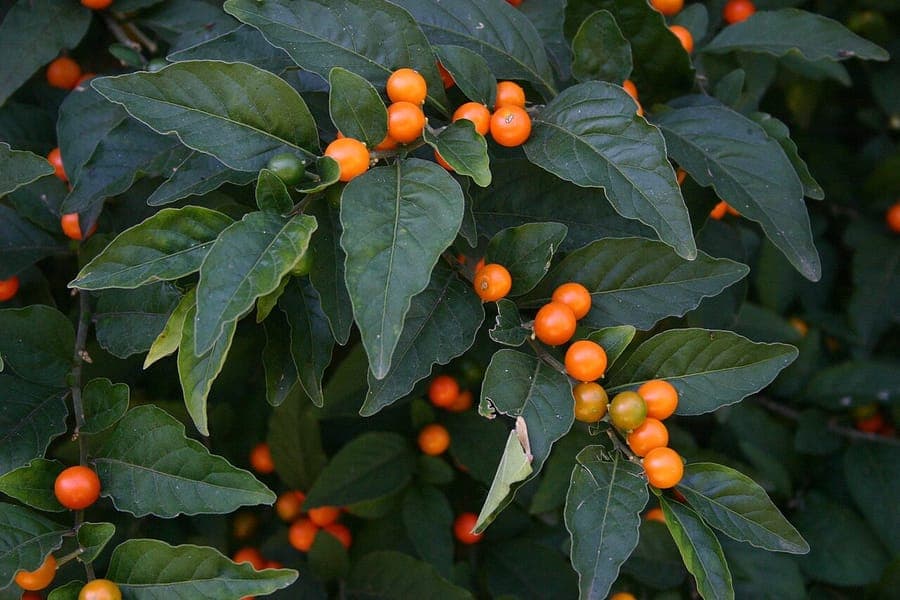
Paul venter / CC BY-SA 3.0, via Wikimedia Commons
Jerusalem-cherry: complete guide
Solanum pseudocapsicum
Want to see Jerusalem-cherry: complete guide in your garden?
1 minute, no credit card
Overview
Jerusalem-cherry, or Solanum pseudocapsicum, is a small evergreen shrub that catches the eye with its clusters of shiny orange berries. Often sold as a festive houseplant during the holidays, it's more than just seasonal decoration - with proper care, it can live for years. Native to South America, this member of the nightshade family (Solanaceae) is closely related to tomatoes and peppers. But unlike its edible cousins, every part of this plant is toxic if ingested.
In the UK and US, it's typically grown indoors, but in warmer zones (USDA 9b–11), it can thrive outside year-round. If you're designing a winter garden with year-round interest, Jerusalem-cherry could be a striking addition. On gardenworld.app, you can plan a layout that highlights its bright berries while keeping it safely away from children and pets.
Appearance & bloom cycle
This subshrub grows 40 to 80 cm tall with a bushy, upright form. The leaves are oval, dark green, and glossy, creating a lush backdrop for its seasonal display. In spring (April to June), clusters of small white star-shaped flowers appear. These aren't particularly fragrant but are essential for fruit development.
After pollination, green berries form and gradually ripen to a vibrant orange by late summer. These fruits can last from August through May, making the plant a long-lasting ornamental feature during the darker months. Each berry is about 1–1.5 cm in diameter - cherry-sized, hence the common name. Remember: they're poisonous. Even a few berries can cause stomach upset, vomiting, or drowsiness in humans and pets.
Ideal location
Jerusalem-cherry needs bright, indirect light for at least 6–8 hours daily. A south- or west-facing window is ideal indoors. Avoid direct midday sun, which can scorch the leaves. If you're growing it outdoors in warm climates, place it in partial shade - under a tree with light canopy or on an east-facing patio.
Temperature-wise, it prefers 18–22°C during the growing season. It doesn't like drafts or sudden temperature drops. If you're integrating it into your garden, use gardenworld.app to map sun exposure and microclimates so you can place it exactly where it will thrive.
Soil requirements
Well-draining soil is non-negotiable. Use a mix of standard potting soil, perlite, and a bit of coarse sand. The plant prefers a neutral to slightly alkaline pH - aim for 7.5 to 8.0. Avoid acidic mixes, especially peat-heavy soils, as they can stunt growth.
If planting in the ground (in zones 9b+), amend the soil with lime if needed to raise pH. Good drainage is crucial - consider raised beds or containers to prevent waterlogging, especially in clay soils.
Free design
Want to see Jerusalem-cherry: complete guide in your garden? Make a free design now.
Watering
Water when the top 2–3 cm of soil feels dry. During active growth (April–September), this usually means once a week. In winter, reduce to every 10–14 days. Always empty the saucer after watering to prevent root rot.
Use room-temperature, low-lime water. Hard tap water can gradually acidify the soil. Rainwater is ideal if you're growing it in a container outside.
Pruning
Pruning isn't required, but it helps maintain shape and encourages bushier growth. Do it in early spring (March), just before the growing season kicks in. Trim back leggy stems by up to a third and remove any dead or weak branches.
Pinching the tips of new growth promotes branching. Use clean, sharp scissors to avoid damaging stems or spreading disease.
Maintenance calendar
- January: Minimal watering. Watch for spider mites in dry indoor air.
- February: No fertiliser. Keep in bright light.
- March: Light pruning. Begin feeding at half strength.
- April: Increase watering. Start full-strength fertiliser every 3 weeks.
- May: Move outdoors if in warm zone. Feed every 2 weeks.
- June: Flowers appear. No intervention needed.
- July: Keep soil moist. Check for yellowing leaves.
- August: Berries start forming. Avoid pruning now.
- September: Bring indoors before first frost. Inspect for pests.
- October: Reduce watering. Stop fertilising.
- November: Keep in bright spot. Humidity is key.
- December: Decorative phase. Keep away from kids and pets.
Winter hardiness
Not frost-tolerant. In USDA zones below 9b, it must be grown in containers and overwintered indoors. Ideal winter conditions are cool (12–18°C), bright, and moderately humid. Avoid placing it near radiators or heat vents.
Low humidity invites spider mites. Mist leaves lightly or place a humidity tray nearby. A pebble tray with water works well.
Companion plants
Outdoors, pair with shade-tolerant perennials like Heuchera, Hellebores, or Epimedium. Avoid planting near edibles - the toxic berries could be mistaken for food. Indoors, it works best as a standalone specimen due to its specific needs.
Don't plant it where children play or pets roam freely. Consider placing it on a high shelf or in a room that's off-limits.
Closing
Jerusalem-cherry is a bold, beautiful plant that adds winter colour and texture. Its long fruiting season and glossy foliage make it stand out, but its toxicity demands respect. With consistent light, proper soil, and careful watering, it can become a long-term fixture in your home or garden.
You can find it at garden centres, especially during the holiday season. In the US and UK, look for it in seasonal plant sections. On gardenworld.app, you can find design templates that safely incorporate Jerusalem-cherry into mixed planters or winter displays. Whether grown in a pot on your windowsill or as part of a sheltered patio scheme, this plant rewards attention with vibrant, lasting beauty.
Want to see Jerusalem-cherry: complete guide in your garden? Make a free design now.
Upload a photo, pick a style, and get a photorealistic design with plant list in under a minute.
No credit card required


Similar plants
Solanum dolichosepalum: complete guide
Solanum dolichosepalum
Discover Solanum dolichosepalum, an Andean nightshade with striking long sepals. Growing tips, hardiness, and companion planting for your patio.
Solanum ripense: complete guide
Solanum ripense
Discover Solanum ripense, a moisture-loving Andean nightshade for pond edges and conservatories. Growing tips, hardiness, and companions.
Solanum tomentosum: complete guide
Solanum tomentosum
Discover Solanum tomentosum, a thorny South African nightshade with felted leaves. Growing tips, hardiness, and companion planting ideas.