
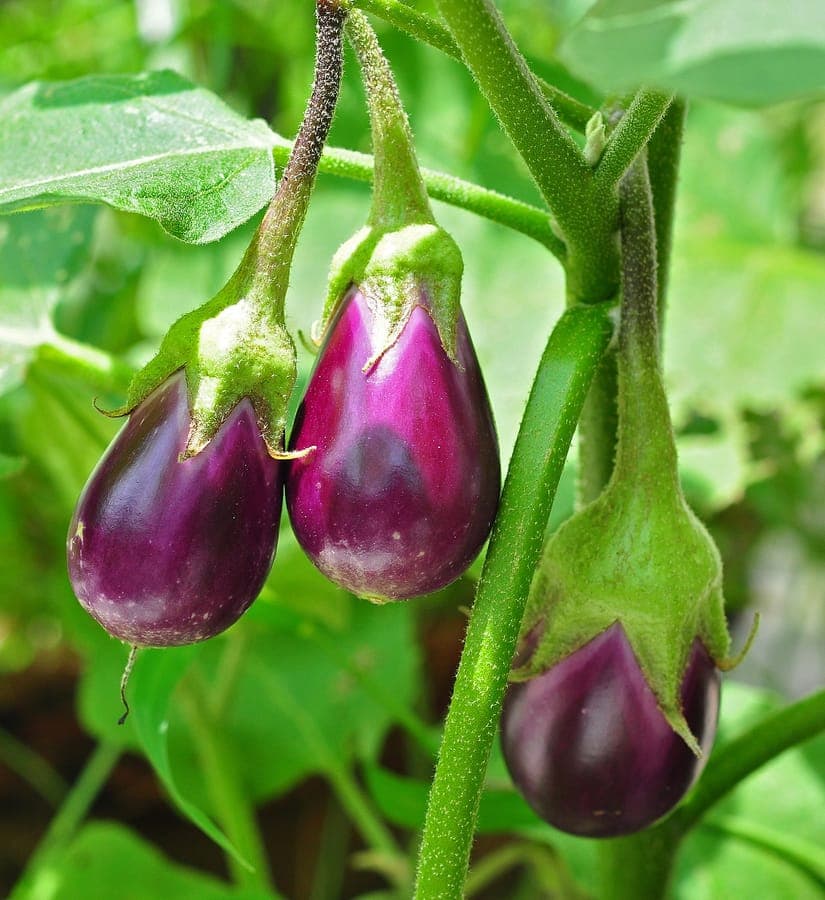
Joydeep / CC BY-SA 3.0, via Wikimedia Commons
Aubergine: complete guide
Solanum melongena
Want to see Aubergine: complete guide in your garden?
1 minute, no credit card
Overview
Solanum melongena, better known as aubergine or eggplant, is a heat-loving member of the nightshade family. Native to Southeast Asia - specifically southern China, Myanmar, Thailand and Vietnam - it thrives in long, hot summers. In cooler temperate zones like the UK and northern Europe, growing aubergine successfully means mimicking those tropical conditions as closely as possible. Though often treated as an annual, it's technically a perennial in USDA zones 10–12. In most gardenworld.app climates, though, it's grown from seed indoors in late winter and harvested by late summer.
This glossy purple fruit (yes, it's a fruit botanically) demands warmth, consistent moisture and fertile soil. It's not the easiest vegetable to grow, but the reward - tender, homegrown aubergines with none of the bitterness - makes the effort worthwhile. Many modern varieties, like 'Bonica' or 'Fairy Tale', are bred for shorter seasons and container growing, ideal for UK gardens.
Plan your layout early. On gardenworld.app, you can simulate sun exposure and companion planting to boost your aubergine's success.
Appearance & bloom cycle
Aubergine plants grow 60–90 cm tall and spread about 50 cm wide. The stems are sturdy, often purple-tinged, with large, coarsely hairy, dark green leaves. Flowers appear from July onwards in temperate zones, usually purple with a star-shaped corolla, 4–5 cm across. They're self-fertile but benefit from pollination by bumblebees or gentle hand-vibration to release pollen.
Fruits follow quickly after pollination. The classic shape is elongated and deep purple, 15–25 cm long, but there are round, striped and white varieties too. Harvest when the skin is glossy - dullness means overripeness. Picking time ranges from 70 to 100 days after transplanting, depending on variety and season warmth.
Ideal location
Full sun is non-negotiable: aubergines need at least 7–8 hours of direct sunlight daily. A south-facing wall or greenhouse is ideal. In cooler regions, use cloches or grow in a polytunnel. Don't plant out until all risk of frost has passed and night temperatures stay above 12 °C - usually late May or early June in the UK.
Containers work well too - use pots at least 30 cm in diameter and 25 litres in volume. Terra cotta or fabric pots help with root temperature regulation. For best results, position near heat-reflecting surfaces. Check your garden's sun map on gardenworld.app to find the warmest spot.
Free design
Want to see Aubergine: complete guide in your garden? Make a free design now.
Soil requirements
Aubergines demand rich, well-draining soil with plenty of organic matter. A pH between 5.5 and 6.8 is optimal. Prepare beds with well-rotted manure or compost. Avoid heavy clay or waterlogged areas.
If growing in containers, use a high-quality peat-free potting mix, amended with perlite or composted bark for drainage. Rotate crops - don't plant aubergine where tomatoes, potatoes or peppers grew in the past two years, to reduce disease risk like verticillium wilt.
Watering
Consistent moisture is crucial. Irregular watering leads to blossom end rot or bitter fruits. Water deeply every 2–3 days during hot spells, more if in containers. Aim for moist but not soggy soil.
Drip irrigation or soaker hoses help maintain even moisture. Mulch with straw or compost to suppress weeds and retain water. Never let the soil dry out completely, especially during fruit development.
Pruning
Pruning isn't essential, but it improves air flow and fruit size. Remove lower leaves up to 20 cm from the soil to prevent soil-borne diseases. For larger fruit, limit the plant to 3–4 main stems and pinch out growing tips once 5–6 fruits have set.
Stake or cage plants early - mature fruits can weigh them down. Wear gloves: some varieties have prickly stems.
Maintenance calendar
- January–February: Order seeds, plan layout
- March: Sow indoors at 22–25 °C under grow lights
- April: Transplant seedlings into 9 cm pots, start feeding weekly with balanced liquid feed
- May: Harden off, prepare beds or containers
- June: Plant out after last frost, apply mulch
- July: Support plants, monitor for pests, hand-pollinate if needed
- August–September: Harvest regularly, water consistently
- October: Final harvest, remove spent plants
Winter hardiness
Aubergines are not frost-tolerant. They won't survive UK winters outdoors. However, you can save seeds from ripe fruit: scoop, rinse, dry and store in a cool, dark place for next year.
Companion plants
Good companions include beans, marigolds, thyme and nasturtiums. Beans fix nitrogen, marigolds repel nematodes. Avoid planting near fennel or potatoes. Tomatoes can work but increase disease risk if grown too close.
Closing
Growing aubergine in a cooler climate is a test of patience and microclimate management. But with the right site, soil and care, you can enjoy fresh, tender fruits all autumn. Start with a reliable variety, protect from cold snaps, and keep the soil evenly moist. Visit garden centres like those listed on gardenworld.app for locally adapted seedlings or expert advice. And remember, a well-designed garden layout can make all the difference - plan yours today.
Want to see Aubergine: complete guide in your garden? Make a free design now.
Upload a photo, pick a style, and get a photorealistic design with plant list in under a minute.
No credit card required


Similar plants
Solanum dolichosepalum: complete guide
Solanum dolichosepalum
Discover Solanum dolichosepalum, an Andean nightshade with striking long sepals. Growing tips, hardiness, and companion planting for your patio.
Solanum ripense: complete guide
Solanum ripense
Discover Solanum ripense, a moisture-loving Andean nightshade for pond edges and conservatories. Growing tips, hardiness, and companions.
Solanum tomentosum: complete guide
Solanum tomentosum
Discover Solanum tomentosum, a thorny South African nightshade with felted leaves. Growing tips, hardiness, and companion planting ideas.