
Wikimedia Commons / CC BY-SA 3.0, via Wikimedia Commons
African eggplant: complete guide
Solanum macrocarpon
Want to see African eggplant: complete guide in your garden?
1 minute, no credit card
Overview
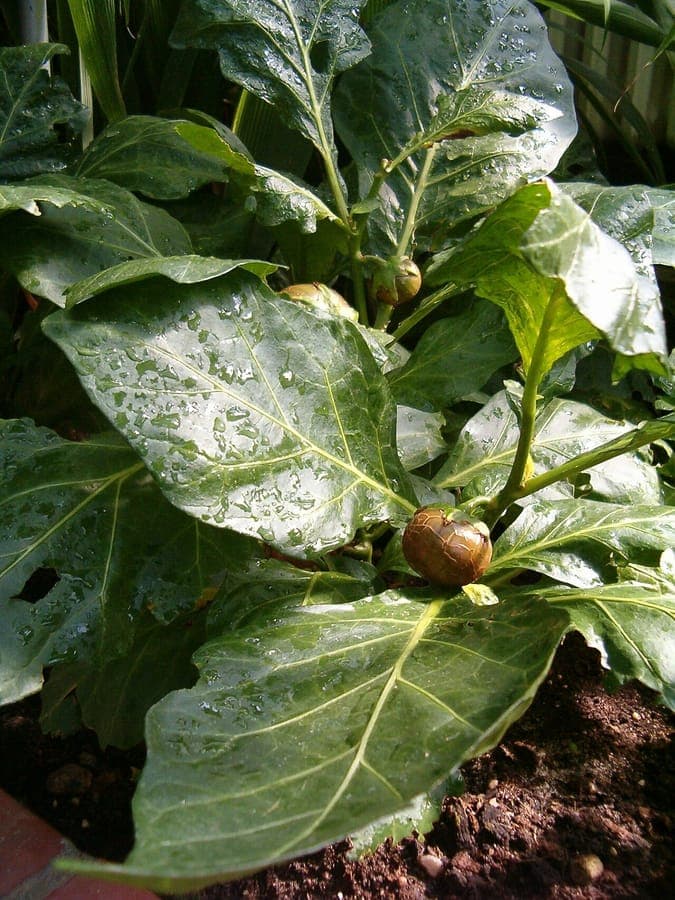
Solanum macrocarpon, better known as African eggplant, is a heat-loving herbaceous plant from the Solanaceae family. While it's closely related to tomatoes and eggplants, it's still relatively uncommon in temperate gardens. Native to tropical regions of Central and West Africa, this plant thrives in warm, humid conditions - which means gardeners in the UK, Ireland, and northern Europe need to take extra care when growing it. The fruit is round, often reaching 8–10 cm in diameter, and used widely in African cuisine as a cooked vegetable.
In cooler climates, African eggplant is best grown in greenhouses or as a container plant on patios. It can be started indoors 6–8 weeks before the last frost. If you're designing a summer vegetable layout, gardenworld.app lets you visualize how African eggplant fits into polyculture beds or raised garden boxes.
Appearance & bloom cycle
The plant grows to about 60–100 cm tall, forming a bushy, upright structure. Leaves are large, ovate, and covered in fine hairs, giving them a soft, velvety texture. Flowers appear from July to September and are star-shaped, typically white to pale purple with a central yellow stigma. They're self-fertile but often benefit from hand pollination, especially under glass.
Fruits start off bright green and mature to deep green or faintly purple. They're best harvested when firm and glossy, usually 70–90 days after transplanting. Unlike the common eggplant, the skin is tougher and often cooked with the flesh. The plant continues producing until cool autumn temperatures set in.
Ideal location
Full sun is essential - aim for at least 6–8 hours of direct sunlight daily. In cooler zones (USDA 6–7), a south-facing wall or greenhouse is ideal. Outdoors, plant only after all frost risk has passed, typically mid-May in the UK and similar latitudes. Use cloches or row covers for the first few weeks to maintain warmth.
Containers work well, especially deep pots (minimum 30 cm diameter) that allow root development. Place pots in sheltered spots to avoid wind damage. Avoid low-lying areas where cold air collects.
Soil requirements
African eggplant prefers fertile, well-draining soil rich in organic matter. A mix of garden soil, compost, and coarse sand (2:1:1) works well. The pH should be slightly acidic to neutral (5.8–6.8). Heavy clay soils should be amended with compost and grit to improve drainage.
Before planting, incorporate aged manure or composted organic material to boost nutrients. In containers, use high-quality potting mix with added slow-release fertilizer. Avoid fresh manure, as it can burn roots.
Free design
Want to see African eggplant: complete guide in your garden? Make a free design now.
Watering
Keep soil consistently moist but never waterlogged. Water at the base to prevent fungal diseases. During hot, dry spells, daily watering may be necessary, especially for container-grown plants.
Morning watering is best, allowing foliage to dry before evening. Mulching with straw or compost helps retain moisture and suppress weeds. Reduce watering in autumn as plant growth slows.
Pruning
Pruning improves airflow and reduces disease risk. Remove lower leaves that touch the soil and any overcrowded interior growth. Pinch out the growing tips when plants reach 30 cm to encourage branching.
Support tall or fruit-laden stems with stakes or tomato cages. Remove damaged or yellowing leaves promptly. Use clean, sterilized tools to prevent spreading pathogens.
Maintenance calendar
- Jan–Feb: Start seeds indoors at 22–25°C using a heat mat.
- Mar: Transplant seedlings to 10–12 cm pots. Begin feeding with diluted liquid fertilizer.
- Apr: Harden off seedlings gradually over 10–14 days.
- May: Plant out after last frost. Monitor for aphids and slugs.
- Jun–Aug: Water regularly, feed every 2 weeks with vegetable fertilizer.
- Sep: Harvest mature fruits (deep green, firm). Continue pollinating flowers.
- Oct–Dec: Clear plant debris. No overwintering in cold climates.
gardenworld.app offers a customizable care calendar and layout planner tailored to African eggplant's growth cycle.
Winter hardiness
Solanum macrocarpon is not frost-tolerant. It's hardy only in USDA zones 10–12. In cooler zones, it's grown as an annual. Bringing plants indoors is possible but rarely successful due to poor light and pest buildup. It's better to save seeds for next year.
Companion plants
Good companions include basil, marigolds, and beans. Basil repels pests and enhances flavor. Marigolds deter nematodes. Climbing beans can provide light shade and improve soil nitrogen.
Avoid planting near potatoes or tomatoes due to shared susceptibility to blight and other fungal diseases. Chives and garlic help deter aphids and improve overall garden health.
Closing
African eggplant is a rewarding crop for adventurous gardeners. It demands warmth and attention but offers unique harvests and culinary versatility. Start small, learn its rhythm, and enjoy the process.
Seeds can be sourced from specialist seed suppliers or occasionally found at garden centres like those in the UK. With proper planning and care, you can grow this tropical gem even in temperate zones. It's not your average garden staple - but that's exactly what makes it worth trying.
Want to see African eggplant: complete guide in your garden? Make a free design now.
Upload a photo, pick a style, and get a photorealistic design with plant list in under a minute.
No credit card required


Similar plants
Solanum dolichosepalum: complete guide
Solanum dolichosepalum
Discover Solanum dolichosepalum, an Andean nightshade with striking long sepals. Growing tips, hardiness, and companion planting for your patio.
Solanum ripense: complete guide
Solanum ripense
Discover Solanum ripense, a moisture-loving Andean nightshade for pond edges and conservatories. Growing tips, hardiness, and companions.
Solanum tomentosum: complete guide
Solanum tomentosum
Discover Solanum tomentosum, a thorny South African nightshade with felted leaves. Growing tips, hardiness, and companion planting ideas.