
Rl / CC BY-SA 3.0, via Wikimedia Commons
Kangaroo-apple: complete guide
Solanum laciniatum
Want to see Kangaroo-apple: complete guide in your garden?
1 minute, no credit card
Overview
Solanum laciniatum, commonly known as kangaroo-apple, is a striking, fast-growing evergreen shrub native to southern Australia and New Zealand. It belongs to the Solanaceae family, making it a relative of tomatoes and potatoes, though it's grown purely for ornamental value. This plant thrives in gardens where bold foliage and dramatic seasonal interest are desired. It can reach heights of 2–3 meters with a spread of up to 1.5 meters, making it ideal for large borders or as a standalone feature. While the purple berries it produces are toxic to humans, they attract birds, adding ecological value to your outdoor space.
If you're planning to grow kangaroo-apple in your garden, use gardenworld.app to visualise how its bold form and height will fit into your overall design. It's not a plant that hides in the background-its presence demands attention.
Appearance & bloom cycle
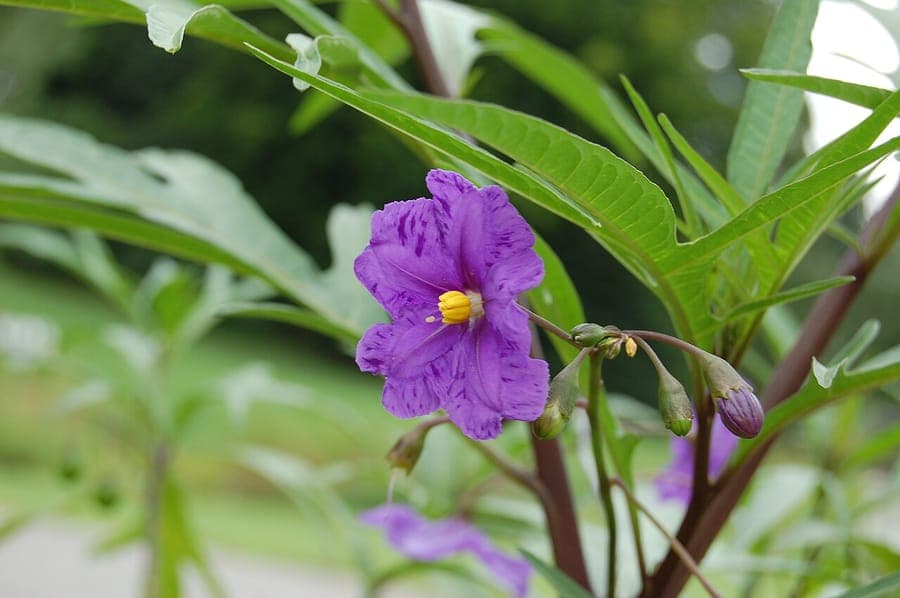
The foliage of Solanum laciniatum is its standout feature: large (up to 30 cm long), deeply lobed, dark green leaves with a coarse texture. They give the plant a lush, tropical feel, even in temperate climates. From late spring to mid-summer (May to August), it produces drooping, star-shaped flowers in deep violet with bright yellow stamens. These blooms are followed by oval berries, 2–3 cm in size, that start green and ripen to a glossy purple. These berries persist into autumn and are a key ornamental trait, though they must be kept away from children and pets due to their toxicity.
Ideal location
Kangaroo-apple performs best in full sun to partial shade. In the UK and similar climates (USDA zones 8–10), a sheltered, south-facing spot against a warm wall or fence helps it thrive. It appreciates protection from cold winds, especially when young. In hotter inland areas, afternoon shade prevents leaf scorch. If grown in a container-which is recommended in cooler zones-place it where it receives morning sun and light afternoon shade. You can use gardenworld.app to map sunlight patterns in your garden and identify the perfect microclimate for this plant.
Soil requirements
This plant prefers fertile, well-drained soil rich in organic matter. A loamy mix with added compost and some coarse sand works well. The ideal pH is slightly acidic to neutral (6.0–7.0). Heavy clay soils should be amended with grit and compost to improve drainage. In pots, use a high-quality potting mix with added perlite or pumice to prevent waterlogging.
Free design
Want to see Kangaroo-apple: complete guide in your garden? Make a free design now.
Watering
Water regularly during the growing season (April to September), ensuring the soil stays moist but not soggy. Deep watering once a week is usually sufficient, more often during dry spells. Container-grown plants need more frequent checks-water every 2–3 days in summer if temperatures rise above 25°C. Reduce watering in autumn and keep the soil on the drier side through winter.
Pruning
Prune in late winter or early spring before new growth emerges. Remove any dead, damaged, or weak stems. You can cut the plant back by up to half to maintain shape and encourage bushy growth. Wear gloves when pruning, as the foliage can cause skin irritation in sensitive individuals due to alkaloid content. Avoid heavy pruning after mid-summer to preserve next year's flower and berry production.
Maintenance calendar
- January: Inspect for frost damage; protect young plants with horticultural fleece.
- February: Prepare tools for pruning; check soil moisture.
- March: Prune hard if needed; apply compost or well-rotted manure.
- April: Begin regular watering; watch for aphids.
- May: Flowers appear; start feeding with balanced liquid fertiliser every 3 weeks.
- June–August: Peak bloom and berry development; monitor water needs.
- September: Gradually reduce watering.
- October: Move container plants indoors if temperatures drop below 5°C.
- November: Keep soil dry; clear fallen leaves.
- December: Minimal care needed; protect from wet, cold conditions.
Winter hardiness
Solanum laciniatum is not reliably hardy below USDA zone 8. In colder regions, it's best grown in containers and overwintered in a cool, bright location (5–10°C). In milder areas (zone 8–9), mulch heavily and cover with fleece during frost. Even then, top growth may die back, but it often resprouts in spring.
Companion plants
Pair kangaroo-apple with other bold-leaved plants like Phormium, Carex, or Canna for a tropical effect. Avoid planting near tomatoes, potatoes, or peppers due to shared susceptibility to blight and other Solanaceae-related diseases. Good spacing helps improve airflow and reduce fungal issues.
Closing
Kangaroo-apple isn't for every garden, but if you want drama and architectural form, it's a winner. Its fast growth, lush foliage, and ornamental berries make it a standout. While not edible, its ecological benefits and visual impact are significant. In cooler climates, treat it as a container plant, bringing it indoors in winter. You can find Solanum laciniatum at garden centres like Wyevale, Notcutts, or local independents during spring. With thoughtful placement-plan it on gardenworld.app-you'll enjoy this exotic shrub for years.
Want to see Kangaroo-apple: complete guide in your garden? Make a free design now.
Upload a photo, pick a style, and get a photorealistic design with plant list in under a minute.
10,000+ gardens designed already
No credit card required


Similar plants
Solanum dolichosepalum: complete guide
Solanum dolichosepalum
Discover Solanum dolichosepalum, an Andean nightshade with striking long sepals. Growing tips, hardiness, and companion planting for your patio.
Solanum ripense: complete guide
Solanum ripense
Discover Solanum ripense, a moisture-loving Andean nightshade for pond edges and conservatories. Growing tips, hardiness, and companions.
Solanum tomentosum: complete guide
Solanum tomentosum
Discover Solanum tomentosum, a thorny South African nightshade with felted leaves. Growing tips, hardiness, and companion planting ideas.