
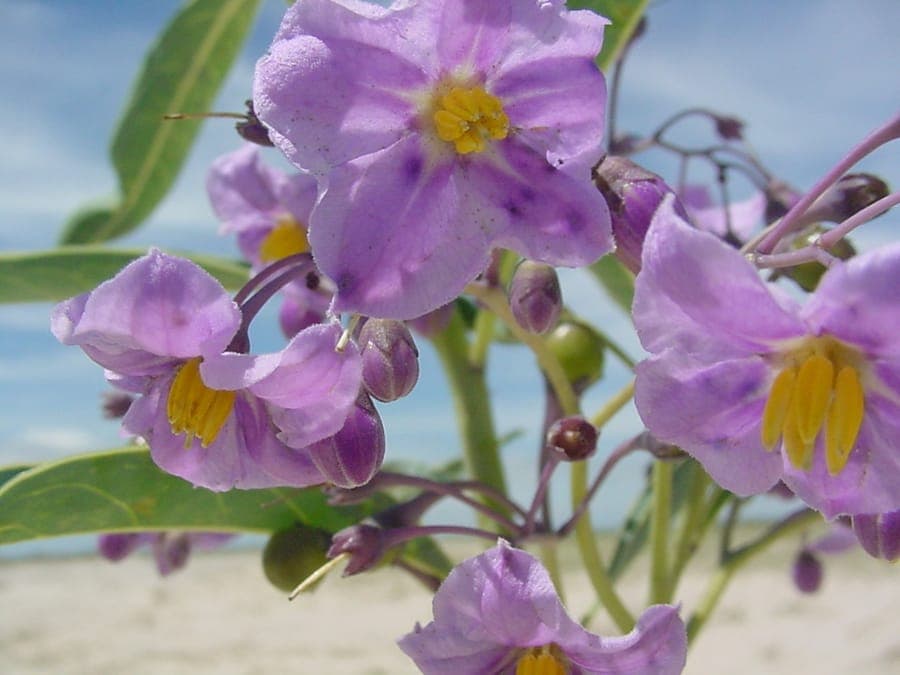
Marcia Stefani / CC BY 2.0, via Wikimedia Commons
Solanum glaucophyllum: complete guide
Solanum glaucophyllum
Want to see Solanum glaucophyllum: complete guide in your garden?
1 minute, no credit card
Overview
Solanum glaucophyllum, known as Waxyleaf nightshade, is an exotic South American subshrub native to the mountain forests from Bolivia to Brazil and Northern Argentina. This plant from the Solanaceae family is particularly valued for its unique, waxy grey-green foliage and its striking yellow berries. In temperate climates, it grows excellently in a warm greenhouse or heated conservatory.
Appearance and Bloom
Waxyleaf nightshade grows as a compact subshrub approximately 60-120 cm high. The leaves are the most striking feature: elliptical, grey-green in color, and covered with a subtle waxy coating that gives them a characteristic shine. This waxy surface gives the plant its primary name. In summer, small white to light purple flowers appear in clusters. These transform in autumn into lovely, bright yellow berries approximately 1-1.5 cm in diameter, which persist long on the plant and add substantial visual value.
Ideal Location
This plant requires abundant light for optimal growth and flowering. Place it in a sunny position receiving at least 5-6 hours of direct sunlight daily. In a warm greenhouse, it can be positioned close to windows. The plant tolerates some shade, but flowering and berry production will decrease. Good ventilation is essential to prevent disease. Keep the plant away from cold walls or windy passages.
Soil
Use nutrient-rich potting soil with excellent drainage. A mixture of garden soil, sand, and compost works well. The plant prefers neutral to slightly acidic soil (pH 6.0-7.5). Add extra sand if your normal soil mixture tends to be waterlogged. The plant is sensitive to root rot and proper drainage is crucial. Heavy clay soils should be avoided.
Watering
Provide regular moisture supply during the growing season (spring and summer). The top 2 cm of soil may dry between waterings, but should not dry out completely. In winter, reduce watering considerably, although the plant should not be left completely dry. Ensure good drainage; waterlogging is absolutely fatal. Misting in hot, dry periods can be beneficial.
Free design
Want to see Solanum glaucophyllum: complete guide in your garden? Make a free design now.
Pruning
Regular pruning helps maintain a compact form. Prune the plant back to approximately half its height in early spring before growth begins. This stimulates more branching and denser growth. Remove all dead branches and withered vegetation. Let the plant grow freely in summer and do not prune after June, as this would stimulate new growth that cannot harden for winter.
Maintenance Calendar
Spring: Prune, repot if needed, begin watering and feeding. Summer: Regular moisture supply, monthly feeding, pest observation. Autumn: Gradually reduce watering, stop feeding. Winter: Minimal water, no feeding, provide plant protection against cold (10-15C ideal).
Winter Hardiness
Waxyleaf nightshade is not frost-hardy in temperate climates. The plant requires protection and warmth during winter. Temperatures below 10C can cause plant damage, and frost will kill it. In warmer regions (USDA zones 10+), the plant can be grown outdoors, but in temperate climates, a heated environment is required. Ideal growing temperatures are between 15-25C.
Companion Plants
Waxyleaf nightshade can be beautifully combined with other Solanum species and tropical plants. Create interesting compositions with other waxy or blue-grey foliaged plants such as Brugmansia, Mandevilla, or Passiflora. In a greenhouse setting, ferns and other humidity lovers can also be good neighboring plants.
Closing
Waxyleaf nightshade is an unusual and charming subtropical subshrub that will delight any warm garden or greenhouse enthusiast. With its fascinating waxy foliage and striking yellow berries, it offers years of ornamental enjoyment. Proper warmth, consistent moisture supply, and regular pruning are the keys to success. Enjoy this South American beauty and experiment with different growing environments.
Gardenworld.app helps you select tropical plants suited to your greenhouse or conservatory environment. Plan your warm garden with our online design tools and discover which species work best together!
Want to see Solanum glaucophyllum: complete guide in your garden? Make a free design now.
Upload a photo, pick a style, and get a photorealistic design with plant list in under a minute.
No credit card required


Similar plants
Solanum dolichosepalum: complete guide
Solanum dolichosepalum
Discover Solanum dolichosepalum, an Andean nightshade with striking long sepals. Growing tips, hardiness, and companion planting for your patio.
Solanum ripense: complete guide
Solanum ripense
Discover Solanum ripense, a moisture-loving Andean nightshade for pond edges and conservatories. Growing tips, hardiness, and companions.
Solanum tomentosum: complete guide
Solanum tomentosum
Discover Solanum tomentosum, a thorny South African nightshade with felted leaves. Growing tips, hardiness, and companion planting ideas.