
Ixitixel / CC BY-SA 3.0, via Wikimedia Commons
Tall nightshade: complete guide
Solanum chenopodioides
Want to see Tall nightshade: complete guide in your garden?
1 minute, no credit card
Overview
Solanum chenopodioides, commonly known as Tall nightshade, is a slender, upright annual or short-lived perennial from the Solanaceae family. Native to southern South America - including regions of Argentina, Uruguay, and Paraguay - it thrives in warm, well-drained conditions. While not a staple in UK or North American gardens, its elegant form and textured foliage are gaining attention among gardeners seeking understated exoticism. In temperate zones, it's typically grown as an annual, as it lacks frost tolerance.
This plant works exceptionally well in mixed borders, containers, or as a temporary backdrop in summer schemes. On gardenworld.app, you can design a planting plan that integrates its vertical habit with complementary textures and colours, creating a dynamic seasonal display.
Appearance & bloom cycle
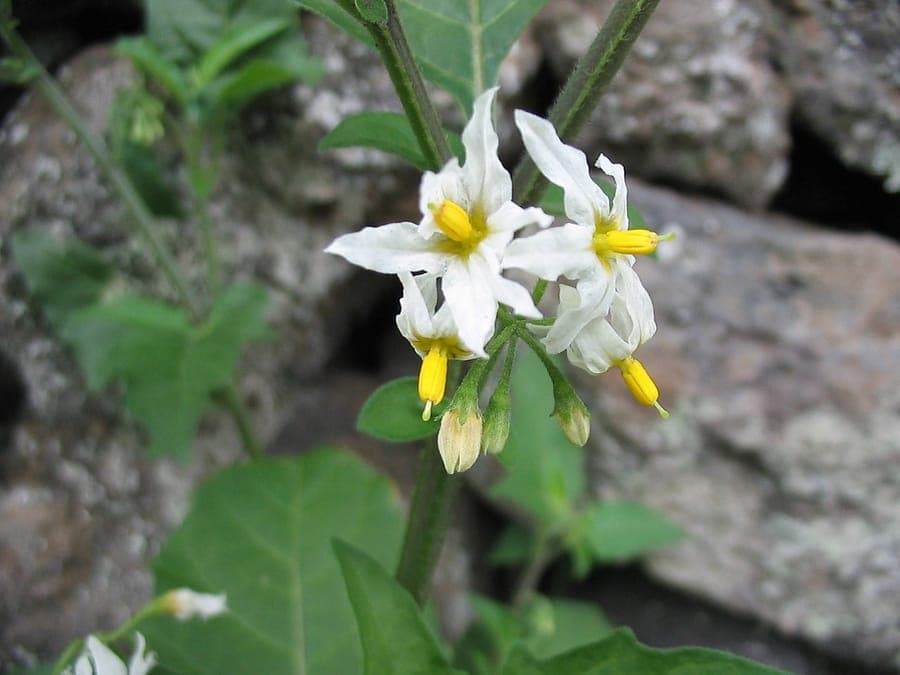
Tall nightshade reaches 60–100 cm in height, occasionally stretching to 120 cm under ideal conditions. The stems are softly hairy and often carry a faint purple tinge, especially in young growth. Leaves are deeply lobed, resembling those of chenopodium, with a greyish-green hue and a velvety texture. Each leaf measures 4–8 cm long and is arranged densely along the stems, giving the plant a full yet airy appearance.
From July to October, it produces small, star-shaped flowers, 1–1.5 cm across, with five pale purple or white petals. At the centre stands a striking yellow cone of stamens. After flowering, round, glossy black berries form, about 5 mm in diameter. These berries are toxic to humans and pets - keep them away from curious hands and paws.
Ideal location
Plant in full sun to light shade. For best flowering and compact growth, aim for at least six hours of direct sunlight daily. In full sun, the plant develops stronger stems and more blooms; in shade, it may stretch and flower less. A south- or southeast-facing spot is ideal, such as along a warm wall or in a mixed summer bed.
In containers, it does well on patios or balconies, especially when paired with Mediterranean or drought-tolerant companions. On gardenworld.app, you can simulate how this plant performs in your microclimate, helping you decide the best placement based on sun exposure and wind patterns.
Soil requirements
Tall nightshade prefers well-drained, slightly sandy to loamy soil with a pH between 6.0 and 7.0. Avoid heavy clay soils, which retain too much moisture and can lead to root rot. When planting in the ground, amend the hole with compost or well-rotted manure to improve fertility, but don't over-enrich - excessive nutrients promote foliage over flowers.
For container growing, use a high-quality potting mix with added drainage material like perlite or coarse sand. Ensure pots have drainage holes to prevent waterlogging.
Free design
Want to see Tall nightshade: complete guide in your garden? Make a free design now.
Watering
Water regularly during the growing season (May to September), especially in dry spells. Allow the top inch of soil to dry between waterings, but don't let the plant sit in drought for long. In summer, watering 2–3 times per week is typical, depending on temperature and pot size. Container plants dry out faster - check daily in heatwaves.
Avoid wetting the foliage to reduce the risk of fungal diseases like powdery mildew. Use a watering can at the base or a drip system.
Pruning
Pruning isn't essential, but light trimming encourages bushiness. In early July, pinch back the growing tips to promote side branching and a fuller habit. Remove any damaged or diseased stems during the season. Use clean, sharp secateurs to prevent disease spread.
Wear gloves when handling - like many Solanaceae, this plant can cause skin irritation in sensitive individuals.
Maintenance calendar
- Jan–Feb: No action (not overwintered)
- Mar: Start seeds indoors at 20°C
- Apr: Harden off and move outside after frost risk passes (late April)
- May: Plant out in garden or containers, begin regular watering
- Jun–Oct: Flowering period, monitor for pests, light pruning
- Nov: Remove plant after frost; compost (excluding berries)
Winter hardiness
Solanum chenopodioides is not winter-hardy in temperate climates. It thrives in USDA zones 9–11. In zone 8, it may survive mild winters with heavy mulch, but success is rare. Treat it as an annual. Collect and store seeds indoors for next season.
Companion plants
Pair with plants that share similar needs: full sun, moderate water, and excellent drainage. Good companions include Lavandula angustifolia, Eryngium bourgatii, Salvia officinalis, and Agastache cultivars. Add structure with ornamental grasses like Stipa tenuissima or taller annuals like Zinnia elegans.
Avoid moisture-loving plants such as hostas or ferns, which create damp conditions conducive to fungal issues.
Closing
Tall nightshade isn't a garden classic, but it's a rewarding choice for those who appreciate subtle beauty and architectural form. Its velvety leaves and delicate flowers bring a touch of the exotic without overwhelming a scheme. Despite its toxic berries - a common trait in nightshades - it's safe in a well-planned garden.
You can find seeds or young plants at specialist nurseries or garden centres like those stocking unique annuals. Look for them in late spring. Position it where it won't be overshadowed, and let its elegance shine. And remember, with gardenworld.app, you can visualise how this plant fits into your garden's layout and seasonal rhythm.
Want to see Tall nightshade: complete guide in your garden? Make a free design now.
Upload a photo, pick a style, and get a photorealistic design with plant list in under a minute.
No credit card required


Similar plants
Solanum dolichosepalum: complete guide
Solanum dolichosepalum
Discover Solanum dolichosepalum, an Andean nightshade with striking long sepals. Growing tips, hardiness, and companion planting for your patio.
Solanum ripense: complete guide
Solanum ripense
Discover Solanum ripense, a moisture-loving Andean nightshade for pond edges and conservatories. Growing tips, hardiness, and companions.
Solanum tomentosum: complete guide
Solanum tomentosum
Discover Solanum tomentosum, a thorny South African nightshade with felted leaves. Growing tips, hardiness, and companion planting ideas.