
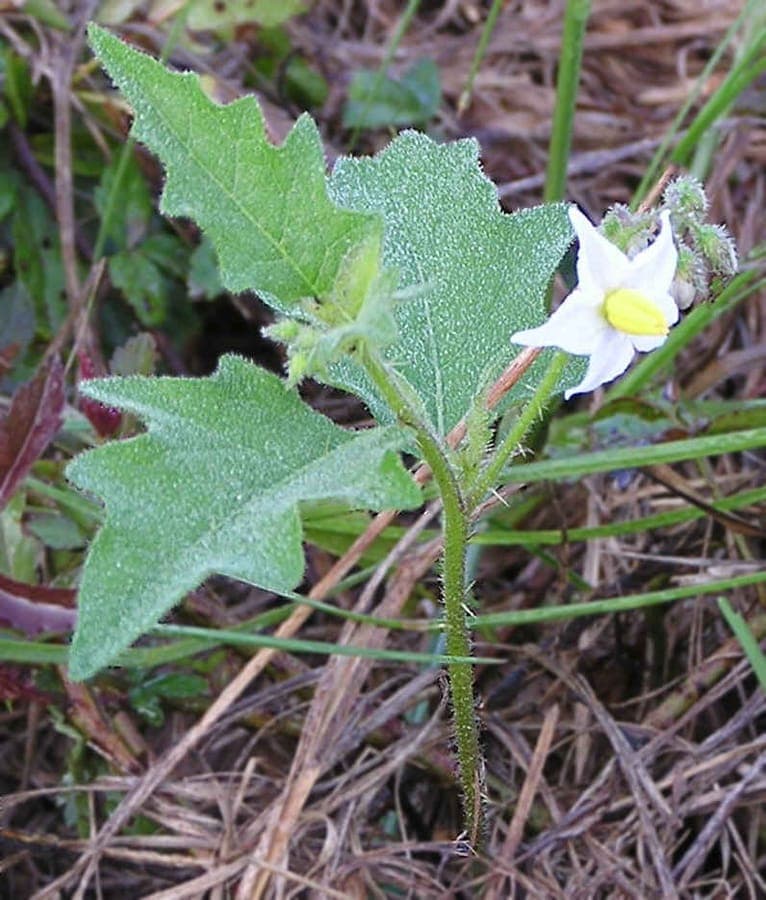
The original uploader was Richardelainechambers at English Wikipedia. / CC BY-SA 3.0, via Wikimedia Commons
Carolina horse-nettle: complete guide
Solanum carolinense
Want to see Carolina horse-nettle: complete guide in your garden?
1 minute, no credit card
Overview
Carolina horse-nettle (Solanum carolinense) is a hardy, spiny perennial that thrives in disturbed soils, roadsides, and open fields across the eastern and central United States. While often dismissed as a weed, this member of the nightshade family has striking ornamental qualities and plays a role in supporting pollinators. It's not commonly grown in ornamental gardens, but for those interested in low-maintenance, drought-tolerant plants with a wild edge, it's worth considering - with caution. All parts of the plant, especially the berries, are toxic to humans and livestock.
If you're designing a xeriscape or naturalistic garden, Carolina horse-nettle can serve as an interesting accent. On gardenworld.app, you can map out a drought-resistant planting scheme where this plant fits perfectly among gravel beds and sun-baked borders.
Appearance & bloom cycle
This herbaceous perennial or subshrub grows 12 to 30 inches (30–75 cm) tall, forming upright, branching stems covered in sharp, yellow prickles and fine, star-shaped hairs. The leaves are deeply lobed, irregularly toothed, and a pale green to grayish color with a rough texture. From late spring through early fall - typically June to September - it produces showy, star-shaped flowers with five bright yellow petals and a central cone of fused yellow stamens, creating a sunburst effect. Each flower is about 1 inch (2.5 cm) across.
After pollination, round, marble-sized berries develop, starting green and ripening to a glossy yellow or orange by late summer. These berries persist into fall and are highly toxic. The plant spreads primarily by underground rhizomes and seed, making it potentially invasive in loose, sandy soils.
Ideal location
Carolina horse-nettle demands full sun - at least 6 to 8 hours of direct sunlight daily. It performs best in hot, dry, open areas with little competition. Ideal spots include gravel gardens, rockeries, or neglected corners of the yard where few other plants survive. Avoid shaded or moist areas, as the plant will weaken and rot.
In cooler climates like the UK or northern US, choose a south-facing wall or raised bed to maximize heat retention. This plant thrives in USDA hardiness zones 5 to 9. If you're unsure about sun exposure in your garden, use the solar mapping tool on gardenworld.app to identify the sunniest zones for planting sun-loving species like this one.
Soil requirements
This plant is unfussy about soil fertility but requires excellent drainage. Sandy, loamy, or gravelly soils with a pH between 5.5 and 7.5 are ideal. It tolerates poor, compacted, and even slightly saline soils. Heavy clay or water-retentive soils should be amended with coarse sand or grit to improve drainage. Avoid rich compost or manure - excessive nutrients encourage lush foliage at the expense of flowering and increase susceptibility to fungal diseases.
Prepare planting beds by mixing in a 2–4 inch (5–10 cm) layer of horticultural grit. Space plants 12 inches (30 cm) apart to allow for airflow and prevent crowding.
Free design
Want to see Carolina horse-nettle: complete guide in your garden? Make a free design now.
Watering
Once established, Carolina horse-nettle is extremely drought-tolerant. During the first month after planting, water weekly to help roots settle. After that, natural rainfall is usually sufficient. In prolonged dry spells (over 3 weeks without rain), give a deep soak every 10–14 days - about 2–3 liters per plant. Overwatering leads to root rot and weak growth.
Use rainwater when possible, as the plant is sensitive to high levels of chlorine or fluoride in tap water.
Pruning
Pruning isn't required for health or flowering, but you can deadhead spent blooms to reduce self-seeding. Cut back dead or damaged stems in late summer or early fall using clean, sharp pruners. Always wear thick gloves and long sleeves - the spines can cause skin irritation, and the sap may trigger allergic reactions in sensitive individuals.
If the plant becomes too sprawling, trim back the tips to encourage bushier growth. Avoid heavy pruning during flowering, as it may reduce berry production.
Maintenance calendar
- January: Dormant. No care needed.
- February: Clear debris. Check for overwintering rhizomes.
- March: Start seeds indoors at 20°C (68°F). Use well-draining seed mix.
- April: Transplant seedlings after last frost. Space 30 cm apart.
- May: Monitor for weeds. Water only if dry.
- June: Blooming begins. Watch for aphids or fungal spots.
- July–August: Peak bloom. Ensure good airflow to prevent mildew.
- September: Berries ripen. Remove before seed dispersal if desired.
- October: Cut back stems to 4 inches (10 cm) above ground.
- November–December: Dormant. Mulch lightly in colder zones.
Winter hardiness
Carolina horse-nettle is hardy in USDA zones 5–9. In zone 5, the top growth dies back in winter, but the plant often returns from the rootstock in spring. In colder areas, a thin layer of dry mulch (straw or pine needles) can help protect the crown. Avoid wet mulches like compost, which can promote rot. In areas below zone 5, treat as an annual.
Companion plants
Pair with other drought-tolerant, sun-loving species: Black-eyed Susan (Rudbeckia hirta), Purple coneflower (Echinacea purpurea), Lavender (Lavandula spp.), and Yarrow (Achillea millefolium). Avoid moisture-loving plants like hostas or ferns. These companions share similar cultural needs and create a cohesive, low-water garden.
Closing
Carolina horse-nettle isn't for every garden, but it has its place in naturalized, wildlife-friendly, or xeriscaped landscapes. Its bold texture, bright flowers, and resilience make it a standout in tough conditions. Just remember: it's toxic, spreads easily, and can become weedy if unchecked. Always wear protection when handling it, and never plant it where children or pets can access the berries. For gardeners in the US and UK, seeds or plants are occasionally available at garden centres, though not widely stocked. Check specialty native plant nurseries or online retailers. Before planting, verify local regulations - some areas classify it as a noxious weed. And if you're planning your layout, use gardenworld.app to visualize how this spiky character can fit into your sun-drenched design.
Want to see Carolina horse-nettle: complete guide in your garden? Make a free design now.
Upload a photo, pick a style, and get a photorealistic design with plant list in under a minute.
No credit card required


Similar plants
Solanum dolichosepalum: complete guide
Solanum dolichosepalum
Discover Solanum dolichosepalum, an Andean nightshade with striking long sepals. Growing tips, hardiness, and companion planting for your patio.
Solanum ripense: complete guide
Solanum ripense
Discover Solanum ripense, a moisture-loving Andean nightshade for pond edges and conservatories. Growing tips, hardiness, and companions.
Solanum tomentosum: complete guide
Solanum tomentosum
Discover Solanum tomentosum, a thorny South African nightshade with felted leaves. Growing tips, hardiness, and companion planting ideas.