
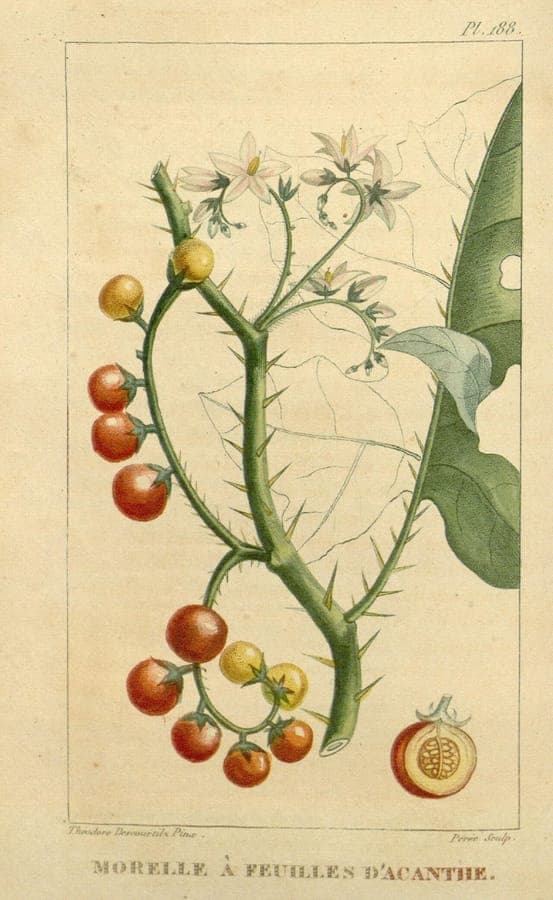
Descourtilz, J. Theodore.; Descourtilz, M. E.; Pichard. / Public domain, via Wikimedia Commons
Solanum campechiense: complete guide
Solanum campechiense
Want to see Solanum campechiense: complete guide in your garden?
1 minute, no credit card
Overview
Solanum campechiense, commonly known as redberry nightshade, is a compact-growing plant native to Texas to Colombia, Jamaica, and Puerto Rico. This member of the Solanaceae family is cherished as a houseplant and patio specimen for its elegant flowers and striking red fruits. The plant commands attention through its ornamental value and tidy growth habit.
Appearance & Bloom
Redberry nightshade grows as a compact shrub with fine, finely-branched stems. The leaves are oval to oblong with a smooth surface. The small, star-shaped flowers have white or light pink petals with prominent yellow stamens, clustered along the stems. After flowering, numerous small red berries form, persisting on the plant for weeks. The fruiting period extends over several weeks, providing sustained color and interest.
Ideal Location
Redberry nightshade thrives in bright light. A sunny window or location receiving at least 6 hours of direct sun daily is ideal. During the growing season, place the plant outdoors on a sheltered spot. For indoor cultivation, diffused light near a window ensures good growth and fruiting.
Soil
The plant grows well in fertile, well-draining potting soil. A mixture of peat-based compost with sand or perlite (ratio 7:3) prevents waterlogging. The plant prefers neutral to slightly acidic soil. Ensure drainage holes in the pot to prevent water accumulation.
Free design
Want to see Solanum campechiense: complete guide in your garden? Make a free design now.
Watering
Keep the potting soil moderately moist during the growing period. Water when the top inch feels dry. In winter, reduce watering frequency. Note: this plant tolerates drought better than waterlogging. Summer plants grown outdoors may require more water due to increased evaporation.
Pruning
Pruning encourages attractive plant form. In spring, cut back to desired height. Remove weak or dead branches. Regular pinching of shoot tips stimulates branching and promotes more flowers and fruits.
Maintenance Calendar
March-May: Repot into fresh soil, prune, and begin feeding gradually. June-August: Apply balanced fertilizer weekly to bi-weekly. September-October: Reduce feeding. November-February: Minimal watering, light rest period with cool placement.
Winter Hardiness
This plant is frost-sensitive and cannot overwinter outdoors in temperate regions. Minimum temperature must stay above 50 degrees Fahrenheit. Place the plant in a bright, cool location (50-59 degrees Fahrenheit) without drafts. Water very sparingly during this period.
Companion Plants
Pair redberry nightshade with other compact houseplants such as miniature Iresines or dwarf Chrysanthemums. For containers, add trailing ivy or succulents for contrast. In the garden, combine with silver-leaved plants like Senecio.
Conclusion
Solanum campechiense is a delightful plant for indoor and outdoor growing, with elegant flowers and prolonged fruiting. With basic care, this nightshade develops into a full, compact specimen. For seeds or cuttings, seek specialized online plant nurseries. Check gardenworld.app for plant recommendations and design inspiration for your ideal garden space.
Want to see Solanum campechiense: complete guide in your garden? Make a free design now.
Upload a photo, pick a style, and get a photorealistic design with plant list in under a minute.
No credit card required


Similar plants
Solanum angustifolium: complete guide
Solanum angustifolium
The buffalobur nightshade is a fascinating plant from North and Central America with striking flowers and thorny stems. Learn how to grow this ornamental nightshade successfully.
Solanum schlechtendalianum: complete guide
Solanum schlechtendalianum
Riedle's nightshade is a tropical climbing plant from Mexico and South America featuring stunning purple flowers and golden berries. Learn how to grow this exotic specimen successfully.