
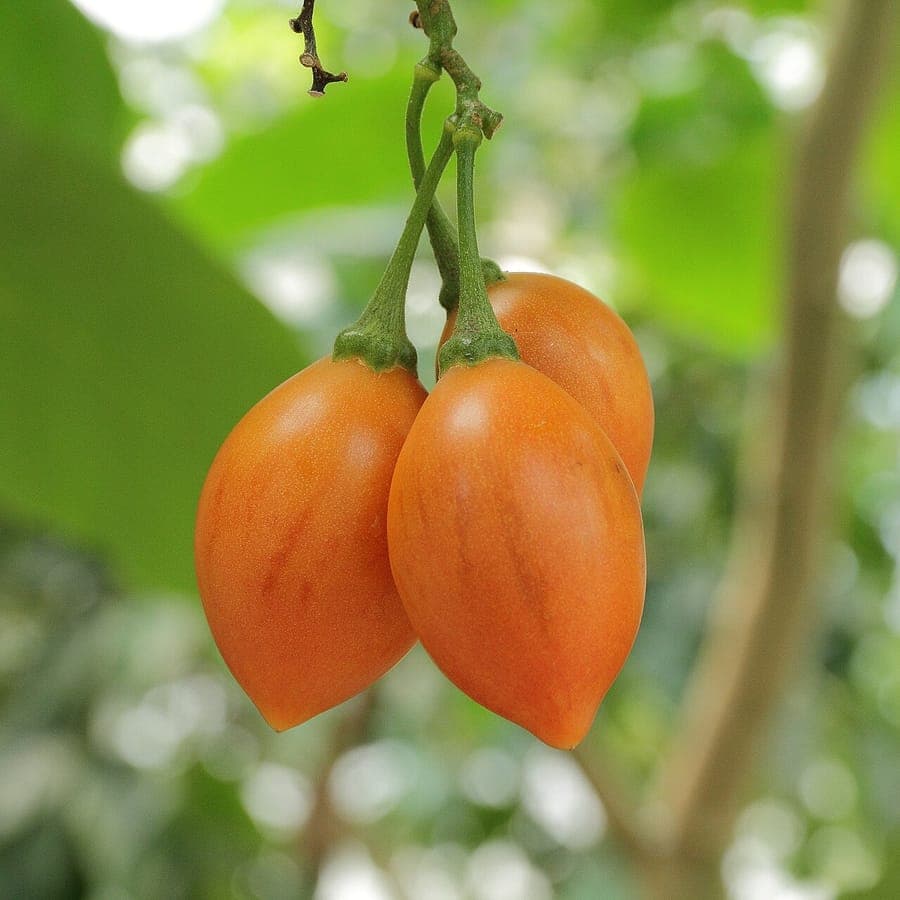
C T Johansson / CC BY-SA 3.0, via Wikimedia Commons
Tree-tomato: complete guide
Solanum betaceum
Want to see Tree-tomato: complete guide in your garden?
1 minute, no credit card
Overview
The tree-tomato, or Solanum betaceum, is a striking evergreen shrub that can grow into a small tree, native to the Andean regions of South America - from Colombia down to Argentina. Though not common in temperate gardens, it's gaining popularity among adventurous growers who want a touch of the tropics. The plant produces elongated, egg-shaped fruits that resemble tomatoes but have a tangier, more complex flavour - often described as a mix of passionfruit, tomato, and guava. They're best eaten when fully ripe, either raw or cooked into jams, sauces, or chutneys.
On gardenworld.app, you can design a subtropical garden corner perfectly suited for tree-tomatoes, with companion planting and microclimate planning.
Appearance & bloom cycle
Tree-tomatoes grow fast, reaching 3 to 5 meters in height within a few years. They have large, soft, heart-shaped leaves up to 30 cm long, often with a purplish tint on the stems and leaf veins. In late summer, typically from July to September, clusters of small, fragrant, pinkish-purple flowers appear. These hang in panicles of 10 to 50 blooms. Once pollinated, they develop into fruits 4 to 8 cm long, maturing from green to vibrant red, orange, or deep purple by autumn. Harvest time is usually October to December, depending on your climate.
The fruits are ripe when they yield slightly to gentle pressure. Unripe fruits contain solanine and should not be eaten. Each mature tree can produce 10 to 20 kg of fruit annually under ideal conditions.
Ideal location
Full sun is essential - aim for at least 6 hours of direct sunlight daily. A south- or southwest-facing wall is ideal, as it absorbs and radiates heat. The tree-tomato thrives in warm, sheltered spots, protected from strong winds that can damage its large leaves. In cooler UK or northern European climates, grow it in a large container (minimum 50 cm diameter) so you can move it indoors during winter. On gardenworld.app, you can simulate sun exposure and wind patterns to find the best spot for your tree-tomato.
Soil requirements
Use well-draining, fertile soil with a pH between 5.5 and 6.8. Heavy clay soils should be avoided or improved with grit and compost. If planting in the ground, raise the bed by 20–30 cm to prevent waterlogging. For container growing, use a mix of loam, compost, and perlite. Add slow-release organic fertiliser like blood, fish, and bone at planting time to support early growth.
Free design
Want to see Tree-tomato: complete guide in your garden? Make a free design now.
Watering
Keep the soil consistently moist but never soggy. Water 1–2 times per week during the growing season (May to September), more frequently in hot, dry spells. Potted plants may need daily watering in summer. Use rainwater when possible - tap water with high lime content can affect soil pH over time. Mulch with bark or straw to retain moisture and suppress weeds.
Pruning
Pruning encourages branching and fruit production. In early spring (March–April), cut the main stem back to 1–1.2 meters to promote lateral growth. Remove dead, damaged, or crossing branches. Thin out crowded areas to improve airflow. Also remove water sprouts - fast-growing vertical shoots that drain energy. Use clean, sharp secateurs and disinfect between cuts to avoid disease spread.
Maintenance calendar
- January: inspect for pests, keep roots dry
- February: prepare tools, check container soil
- March: prune, repot if needed
- April: plant outdoors after frost risk passes
- May: begin regular watering, apply organic fertiliser
- June: monitor for aphids and whitefly
- July: flowers appear, hand-pollinate if needed
- August: fruit set begins
- September: fruits start ripening
- October: harvest, apply mulch for winter protection
- November: move containers indoors or wrap trunks
- December: reduce watering, plant enters dormancy
Winter hardiness
Tree-tomatoes are not frost-hardy. They survive in USDA zones 9–11, meaning they can't tolerate temperatures below -3°C for long. In colder regions, grow in containers and overwinter in a cool, bright room (5–10°C). Avoid heated living spaces - the plant needs a rest period. If kept outdoors, wrap the trunk with hessian or bubble wrap and mulch heavily. In harsh winters, cut back hard to 30 cm; the plant will regrow from the base in spring.
Companion plants
Good companions include herbs like thyme, oregano, and chives, which deter pests and thrive in similar well-drained soil. Lavender and marigolds attract pollinators and beneficial insects. Avoid planting near heavy feeders or invasive species like mint or bamboo. In containers, trailing nasturtiums or lobelia add colour without competing for nutrients.
Closing
The tree-tomato isn't for the faint-hearted, but with attention to winter care and proper pruning, it can become a rewarding focal point in your garden. You can find young plants at garden centres in spring, especially at larger retailers across the UK. Be sure to check for healthy, disease-free stock. And remember - on gardenworld.app, you can create a custom planting plan that includes spacing, sunlight analysis, and companion suggestions tailored to your tree-tomato's needs.
Want to see Tree-tomato: complete guide in your garden? Make a free design now.
Upload a photo, pick a style, and get a photorealistic design with plant list in under a minute.
No credit card required


Similar plants
Solanum dolichosepalum: complete guide
Solanum dolichosepalum
Discover Solanum dolichosepalum, an Andean nightshade with striking long sepals. Growing tips, hardiness, and companion planting for your patio.
Solanum ripense: complete guide
Solanum ripense
Discover Solanum ripense, a moisture-loving Andean nightshade for pond edges and conservatories. Growing tips, hardiness, and companions.
Solanum tomentosum: complete guide
Solanum tomentosum
Discover Solanum tomentosum, a thorny South African nightshade with felted leaves. Growing tips, hardiness, and companion planting ideas.