
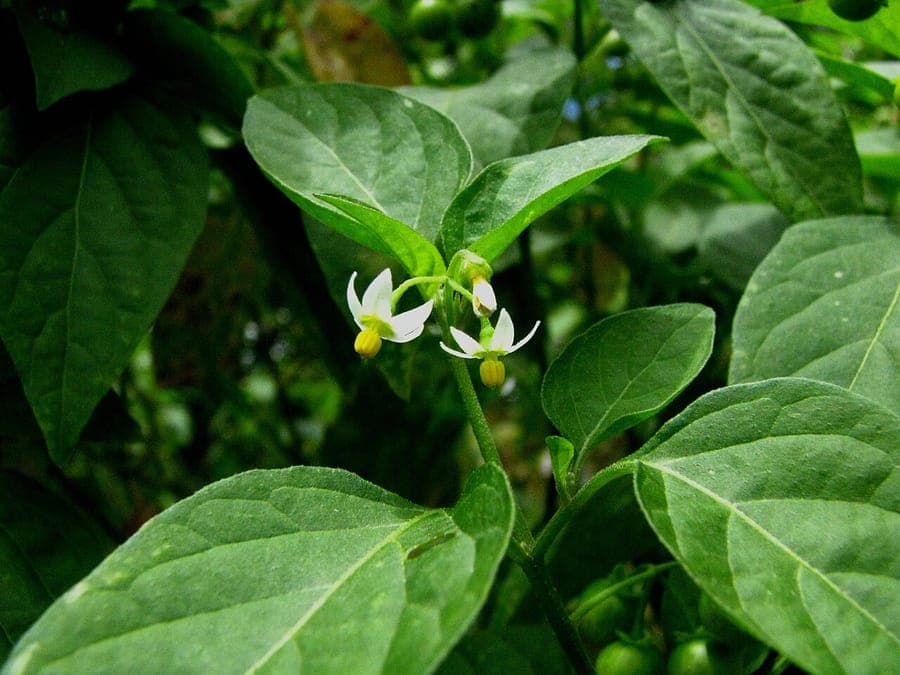
David Eickhoff from Pearl City, Hawaii, USA / CC BY 2.0, via Wikimedia Commons
Glossy nightshade: complete guide
Solanum americanum
Want to see Glossy nightshade: complete guide in your garden?
1 minute, no credit card
Overview
Solanum americanum, commonly known as glossy nightshade, is a fast-growing herb or subshrub from the Solanaceae family that pops up in gardens across warm regions. Native from Alabama to northern Argentina, it thrives in moist, disturbed soils and often appears unexpectedly in flower beds or along paths. While many gardeners treat it as a weed, its ornamental appeal - shiny foliage and clusters of jet-black berries - makes it a compelling choice for those who appreciate bold textures and seasonal interest.
You won't often find it sold at standard garden centres, but related Solanum species are sometimes available. Keep an eye out at larger outlets or specialty nurseries. On gardenworld.app, you can design a garden layout that highlights this plant's dramatic look, especially when paired with contrasting foliage.
Appearance & bloom cycle
This plant grows 2–3 feet (60–90 cm) tall with upright stems and ovate, dark green leaves that measure 2–6 inches (5–15 cm) long. The upper surface has a distinct glossy sheen, hence the common name. From late spring through early fall - roughly May to October - it produces small white star-shaped flowers in clusters of 4 to 10. These give way to round berries that start green, turn yellow, and finally ripen to a glossy black, about 1/3 inch (8 mm) wide.
The berries persist well into autumn, adding visual drama, but they are toxic to humans and pets. Never consume them. The plant's flowering period is long, giving it a multi-season presence in the garden. On gardenworld.app, you can map its bloom cycle and set reminders for key care moments like pruning or seed collection.
Ideal location
Glossy nightshade prefers full sun to partial shade. In cooler zones (USDA 7–8), it performs best in full sun. In hotter areas like USDA zone 9–10, a spot with morning sun and afternoon shade prevents leaf scorch. It does well in containers on patios or balconies where you can control its spread. Use a pot at least 12 inches (30 cm) wide to give roots room.
Avoid deep shade - it leads to leggy growth and fewer flowers. Also, keep it away from high-traffic areas if you have kids or pets, due to the toxic berries. A mixed border with architectural plants works well.
Soil requirements
It grows best in well-drained, loamy soil rich in organic matter. A pH between 5.5 and 7.0 is ideal. If your soil is heavy clay, amend it with compost and coarse sand to improve drainage. In sandy soils, add compost to boost moisture retention.
For container planting, use a quality potting mix with slow-release fertilizer. Avoid waterlogged conditions - root rot is a real risk. A light mulch layer helps retain moisture without smothering the base.
Free design
Want to see Glossy nightshade: complete guide in your garden? Make a free design now.
Watering
Keep the soil consistently moist during active growth (spring to early fall). Water deeply once or twice a week, depending on rainfall and temperature. In containers, check every 2–3 days in summer - they dry out faster. Water at the base to prevent fungal diseases on leaves.
Reduce watering in late autumn as growth slows. Let the top inch (2.5 cm) of soil dry between waterings. Overwatering is more dangerous than underwatering, especially in winter when the plant may be dormant.
Pruning
Pruning isn't required, but pinching back young tips in early summer encourages bushier growth and more flowers. Cut just above a leaf node using clean shears. Remove any damaged or yellowing stems to maintain vigor. Wear gloves - some people experience skin irritation from the sap.
If you're growing it as an annual, let it complete its cycle and remove it in late fall. For perennial attempts in warm zones, cut back hard in late winter to make room for new growth.
Maintenance calendar
- Jan: Dormant in most zones; no action needed
- Feb: Start seeds indoors if desired
- Mar: Thin indoor seedlings; prepare beds
- Apr: Harden off seedlings; plant out after last frost
- May: Begin regular watering; watch for aphids
- Jun: Flowers appear; pinch for bushiness
- Jul: Peak bloom; check for fungal spots in wet weather
- Aug: Berries begin ripening; maintain moisture
- Sep: Harvest seeds if saving; support tall stems
- Oct: Cut back or remove; collect fallen berries
- Nov: Clear debris; compost healthy material
- Dec: Monitor for reseeding in mild climates
Winter hardiness
Solanum americanum is perennial in USDA zones 9–11, surviving winter lows down to 20°F (–7°C). In colder zones (7–8), it often behaves as a tender perennial or annual. Top growth dies back in frost, but it may reseed freely. In zone 8, try cutting it back and mulching heavily - a few plants might return.
In containers, bring young plants indoors before first frost. Keep in a bright, cool room (50–60°F / 10–15°C). Water sparingly. Success is limited, so many gardeners treat it as an annual.
Companion plants
Pair with plants that enjoy similar conditions: coleus, impatiens, or canna lilies in shaded areas. In sun, it works well with lantana, verbena, or marigolds. Avoid invasive spreaders that could choke it out.
Because of its toxicity, keep it away from vegetable gardens or play areas. Use it as a bold accent at the back of a border or in a standalone pot. Its dark berries contrast beautifully with golden foliage or pink blooms.
Closing
Glossy nightshade isn't for every garden, but if you're drawn to bold textures and dramatic seasonal shifts, it's worth a try. With the right spot and care, it adds months of visual interest. On gardenworld.app, you can create a custom planting plan that integrates Solanum americanum safely and effectively. Just remember: beauty comes with caution. Keep it away from curious hands and mouths, and you'll enjoy its striking presence year after year.
Want to see Glossy nightshade: complete guide in your garden? Make a free design now.
Upload a photo, pick a style, and get a photorealistic design with plant list in under a minute.
No credit card required


Similar plants
Solanum dolichosepalum: complete guide
Solanum dolichosepalum
Discover Solanum dolichosepalum, an Andean nightshade with striking long sepals. Growing tips, hardiness, and companion planting for your patio.
Solanum ripense: complete guide
Solanum ripense
Discover Solanum ripense, a moisture-loving Andean nightshade for pond edges and conservatories. Growing tips, hardiness, and companions.
Solanum tomentosum: complete guide
Solanum tomentosum
Discover Solanum tomentosum, a thorny South African nightshade with felted leaves. Growing tips, hardiness, and companion planting ideas.