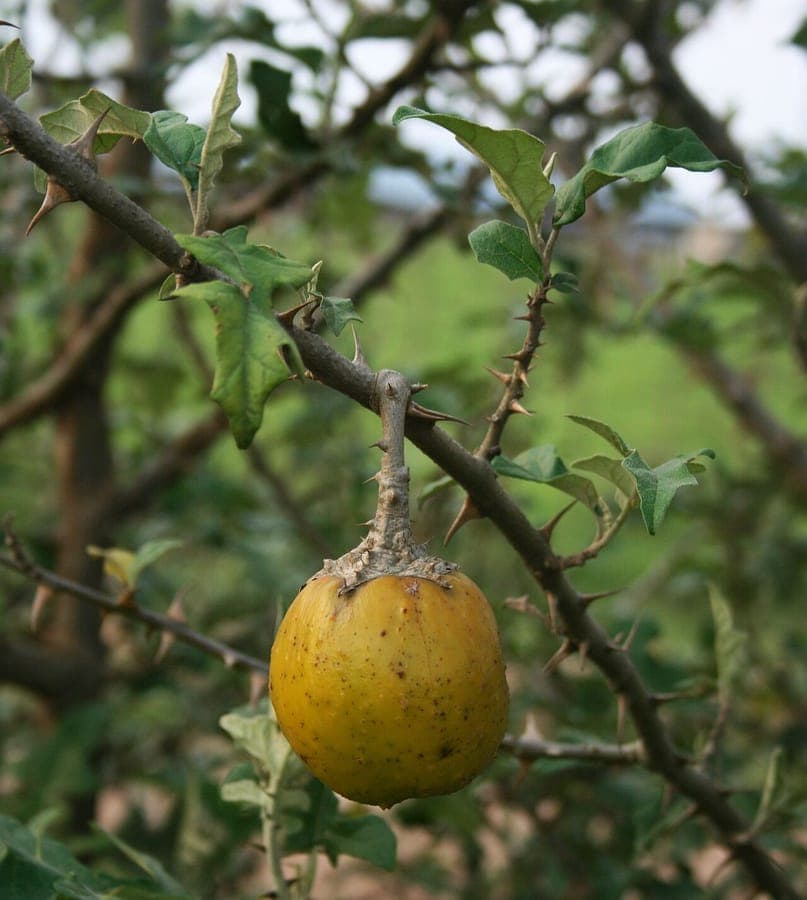
Franz Xaver / CC BY-SA 4.0, via Wikimedia Commons
Sodaapple nightshade: complete guide
Solanum aculeastrum
Want to see Sodaapple nightshade: complete guide in your garden?
Full design in HD: €7.99
Look after your Sodaapple nightshade with the GardenWorld app
Identify plants with your camera and get a care calendar with reminders for this plant.


Overview
Sodaapple nightshade (Solanum aculeastrum) is a fascinating African plant from the nightshade family. This plant is prized for its interesting, spiny stems and decorative fruits. It grows wild from Nigeria to South Africa and makes a unique choice for exotic plant enthusiasts.
Appearance and bloom
Sodaapple nightshade grows as a dense, shrubby plant reaching 1-2 meters tall. The plant is covered with sharp spines on stems and ribs. Foliage is dark green with distinct veins. Small flowers are blue to purple, followed by striking, orange-red spherical fruits that are highly decorative.
Ideal location
Place sodaapple nightshade in a sunny location with at least 8 hours of direct sunlight daily. This ensures compact growth and better fruit production. In temperate climates, it is a greenhouse or frost-free specimen. In warm regions (zone 9+), it can grow outdoors.
Soil
Sodaapple nightshade thrives in well-draining sandy potting soil. A mixture of potting soil with sand and organic matter is ideal. The plant tolerates moderately nutrient-rich soils. Slightly acidic to neutral soil (pH 6 to 7) is best.
Free preview
Want to see Sodaapple nightshade: complete guide in your garden? Make a free preview of your design.
Watering
Water regularly during the growing season, especially when fruits form. Mature plants tolerate some drought but perform better with regular watering. Water less in winter. Ensure well-draining soil to avoid waterlogging.
Pruning
Pruning promotes bushy growth. After flowering, careful cutting back can be done. Remove dead branches and weak growth. This helps maintain compact forms and stimulate better fruit production.
Maintenance calendar
Spring: Plant new specimens, adjust watering and feeding. Summer: Regular watering, monitor flowering. Autumn: Gradually reduce watering. Winter: Frost protection needed.
Winter hardiness
Sodaapple nightshade is not hardy in temperate climates. Frost protection is required. In warm regions (zone 9 and higher), it can remain outdoors. For Europe, greenhouse culture or nursery propagation is recommended.
Companion plants
In warm climates, combine with other Solanum species and tropical fruit plants. In greenhouses, they do well with other exotic plants. As a solitary specimen, it is also impressive.
Closing
Sodaapple nightshade offers exotic fruits and interesting structure. Available from specialized growers. Perfect for exotic plant enthusiasts. For complete garden design, visit gardenworld.app. Find more plant guides on gardenworld.app.
Frequently asked questions about Sodaapple nightshade
Is Sodaapple nightshade winter hardy?
Sodaapple nightshade is not hardy in temperate climates. Frost protection is required.
When and how do you prune Sodaapple nightshade?
Pruning promotes bushy growth. After flowering, careful cutting back can be done.
How much water does Sodaapple nightshade need?
Water regularly during the growing season, especially when fruits form. Mature plants tolerate some drought but perform better with regular watering.
Where does Sodaapple nightshade grow best?
Place sodaapple nightshade in a sunny location with at least 8 hours of direct sunlight daily. This ensures compact growth and better fruit production.
What soil does Sodaapple nightshade need?
Sodaapple nightshade thrives in well-draining sandy potting soil. A mixture of potting soil with sand and organic matter is ideal.

See it in your garden
See Sodaapple nightshade in your garden
One photo of your garden and a few questions. You see the result in about a minute.
Try it with a photoIdentify this plant in your own garden. Identify a plant
Similar plants
Petunia (Petunia × atkinsiana): complete guide
Petunia × atkinsiana
Everything about garden petunias (Petunia × atkinsiana): sowing, position, compost, watering, feeding and pruning for containers in bloom until autumn.
Chinese lantern: complete guide
Physalis alkekengi
Everything about the Chinese lantern (Physalis alkekengi): position, drying the orange lanterns, keeping its spread in check, toxicity and winter hardiness.
Solanum dolichosepalum: complete guide
Solanum dolichosepalum
Discover Solanum dolichosepalum, an Andean nightshade with striking long sepals. Growing tips, hardiness, and companion planting for your patio.
