
Cephas / CC BY-SA 4.0, via Wikimedia Commons
Skirret: complete guide
Sium sisarum
Want to see Skirret: complete guide in your garden?
1 minute, no credit card
Overview
Skirret (Sium sisarum) is a traditional root vegetable from the carrot family (Apiaceae) native to Eastern and Southeastern Europe through Southwestern Siberia to Northern Afghanistan. This overlooked vegetable deserves renewed attention for its excellent nutritional value, sweet roots, and minimal requirements. Though many gardeners don't know this crop, it was greatly prized in medieval Europe and Asia for its sweet, unique roots.
Appearance and bloom
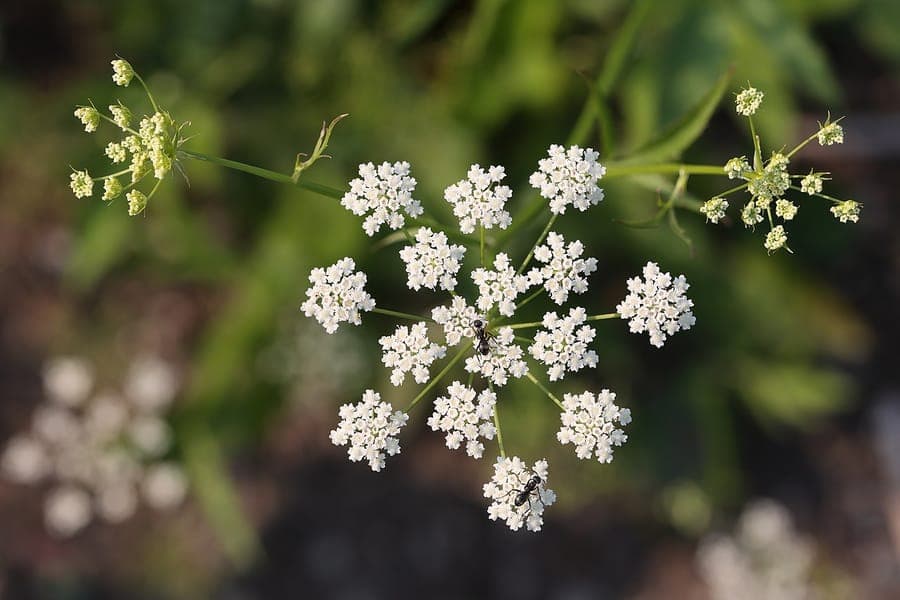
Skirret forms a compact plant 60 to 90 centimetres tall with feathery gray-green foliage resembling willow fronds. In the second year (rarely in first), the plant displays elegant white to yellowish-white flowers in umbrella-shaped flower clusters typical of the Apiaceae family. The roots are very thin and white, often branched and fragmented, reaching depths of 30 to 60 centimetres. Upon maturity, they develop a sugar-like structure.
Ideal location
Skirret thrives in sunny to partially shaded locations receiving at least 4 to 5 hours of daily direct sunlight. In areas with very hot summers, afternoon light shade proves beneficial. The plant grows well in open gardens, vegetable beds, and container cultivation. Sunny locations ideal for optimal growth, though the plant adapts to less ideal light.
Soil
Skirret performs best in well-draining, loose, fertile soils. The plant prefers neutral to slightly acidic soils with pH 6.0 to 7.0. Compact, heavy clay soils must be improved with compost and sand to enable deep root growth. Strongly acidic soils (pH below 5.5) can create problems. Adding organic matter helps roots develop better.
Watering
Skirret requires regular watering, especially during growth and root development. Soil should remain consistently moist (not waterlogged). In dry periods, water daily to achieve optimal root expansion. Inconsistent watering can cause root cracking. In the second year (flowering year), less water is needed.
Free design
Want to see Skirret: complete guide in your garden? Make a free design now.
Pruning
Skirret requires no pruning, though removing dead leaves can occur anytime. After flowering, flower stems can be removed. During the first year, no pruning is needed; focus on root growth.
Maintenance calendar
April-May: Sow directly into ground. June-July: Water regularly, control weeds. August-September: Prepare for harvest or overwintering. October-November: Harvest possible in mild winters; otherwise harvest next spring. December-February: Rest, minimal care. March: Next year growth (if not harvested).
Winter hardiness
Skirret is extremely hardy, tolerating temperatures down to -15 to -20 degrees Celsius. In fact, winter cold often improves flavor by converting starch to sugar (similar to potato). Roots can remain in the ground through winter and be harvested in spring when temperatures rise.
Companion plants
In vegetable beds, Skirret pairs well with other roots such as Carrot and Parsnip. Also compatible with leaf greens such as Lettuce and Spinach. Avoid close planting with other Apiaceae members (Parsley, Dill) due to potential cross-pollination. In aesthetic gardens, the fine foliage pairs well with taller plants.
Closing thoughts
Skirret is a valuable underappreciated crop deserving rediscovery in modern gardens. With its simple cultivation requirements, exceptional nutritional value, and unique flavor, it offers much for home gardeners. Harvesting and cooking can be done in many recipes. For more vegetable gardening tips and advice, visit gardenworld.app, your comprehensive guide to modern garden design. gardenworld.app offers design tools and plant guides to bring your vegetable and ornamental garden to life. Visit gardenworld.app today for inspiration and expert guidance.
Want to see Skirret: complete guide in your garden? Make a free design now.
Upload a photo, pick a style, and get a photorealistic design with plant list in under a minute.
No credit card required


Similar plants
Whorled carrot: complete guide
Daucus involucratus
Daucus involucratus is a Mediterranean umbellifer with white flower heads framed by lacy bracts. Growing this gravel garden gem.
Daucus muricatus: complete guide
Daucus muricatus
Daucus muricatus, the spiny wild carrot, grows wild on Mediterranean coasts. Discover sowing, June-July bloom, and wildflower meadow use.
Daucus pumilus: complete guide
Daucus pumilus
Daucus pumilus is a dwarf wild carrot relative with white lacy umbels, thriving on dunes and coastal rock in poor, fast-draining soil.