
Wikimedia Commons / Public domain, via Wikimedia Commons
Cup plant: complete guide
Silphium perfoliatum
Want to see Cup plant: complete guide in your garden?
1 minute, no credit card
Overview
The cup plant, botanically known as Silphium perfoliatum, is an impressive perennial plant from the Asteraceae family. This North American plant is renowned for its remarkable growth, its unique perfoliate leaves, and its yellow flowers that attract many pollinators. The cup plant grows to over two meters in height and is a powerful addition to any larger garden design. At gardenworld.app, you can create a design that perfectly integrates this mighty plant into your garden landscape.
The cup plant has grown increasingly popular in recent years as an energy crop and forage crop in Europe, but also has significant ornamental value in the garden. With its robust growth and minimal maintenance requirements, it is an ideal plant for sustainable and food-productive garden designs.
Appearance & bloom cycle
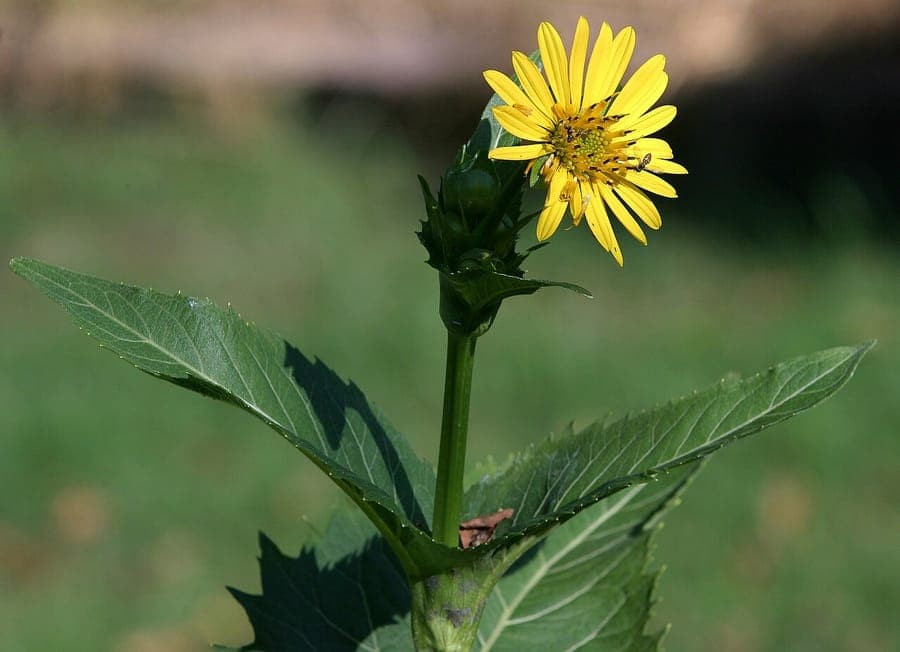
Silphium perfoliatum grows as a herbaceous plant that can reach 150 to 250 cm in height. The stems are strong, green, angular, and either unbranched or minimally branched. What is most characteristic is that opposite leaves at the base of the stem are fused together, creating a passage or window through the stem, hence the name 'perfoliate'.
The leaves are oblong-lanceolate, green, approximately 10-20 cm long, and have a rough surface. They sit in opposite pairs where each two leaves are fused at their base around the stem.
The flowers appear from July to September. They grow in dense, yellow flower heads at the top of the plant and are approximately 1.5-2 cm in diameter. The flowers have ten to fifteen yellow florets per flower head. These flowers attract many bees, butterflies, and other insects.
After pollination, seed heads form that contain many seeds. The seeds are large, approximately 8-10 mm, flattened, and dispersed by wind and animals.
Ideal location
The cup plant thrives best in locations with full sun. It performs reasonably well in partial shade, but will produce fewer flowers in densely shaded situations. The plant has long, deep roots that can grow more than two meters deep, so place it in locations where it can spread.
The cup plant is very winter hardy and grows well in virtually any climate in Europe, from the southern Mediterranean region to northern Scandinavia. However, it prefers temperate and continental climates.
Soil & underground requirements
The cup plant makes few demands on soil and grows well on very diverse soils. It thrives on clay, sand, loam, and even nutrient-poor soil. It prefers soils with a pH between 4.5 and 8.5. The plant can tolerate moderately acidic to neutral soil, and even slightly alkaline soil.
However, it is important that the soil is well-draining. Very wet, boggy soils can lead to root rot. The plant grows well, however, on moderately dry to moderately moist soil.
The cup plant can grow in nutrient-poor soils, but grows faster and better in nutrient-rich soils. However, it is not a heavy feeder and needs little extra nutrition once well established.
Free design
Want to see Cup plant: complete guide in your garden? Make a free design now.
Watering
Once well established, the cup plant is highly drought-tolerant. The deep roots can reach water from groundwater levels. However, regular watering is important for the first year after planting, especially during the summer season. Provide approximately 20-30 liters of water per week during dry periods.
For mature plants, supplemental watering is almost never necessary, except in very dry years. The plant does, however, perform well with extra water and will grow faster if watered regularly.
Pruning & maintenance
The cup plant requires little pruning. In spring you can remove dead parts, but the plant grows naturally well without pruning. If you want to prevent it from spreading through seed, you can remove the seed heads before they ripen, but this is not necessary in wild growth situations.
In very windy locations, it may be useful to support young plants, but mature specimens are usually strong enough to grow without support.
Maintenance calendar
- January - February (Winter): Plant is dormant. Remove dead stems from the previous season if desired.
- March (Early spring): Begin carefully digging up the plant if you want to move it. Plant new young plants.
- April - May (Spring): New shoots appear. Water if dry.
- June (Early summer): Plant grows rapidly. Water during dry periods.
- July - August (Summer): Plant flowers. Pollinators visit frequently. No maintenance needed.
- September (Early fall): Flowers continue. Seeds begin to ripen.
- October - November (Fall): Seeds ripen and disperse. Plant declines.
- December (Winter): Plant dies back. Clean up or leave dead material for overwintering insects.
Winter hardiness
The cup plant is extremely winter hardy and can tolerate temperatures down to -30°C. It grows well in virtually all USDA hardiness zones 4 through 9, and also in temperate Europe. Young plants may die in very severe winters, but mature plants will rarely die from frost. In very wet winters, wet soils can lead to root rot, so ensure good drainage.
The plant regenerates each year from its roots, so even if the above-ground parts die, it will return.
Companion plants & combinations
The cup plant can be well combined with other tall perennial plants. It is particularly suitable for wildflower and natural garden designs. It grows well with other native species and herbaceous plants that have the same growing conditions.
For example, it grows well with Echinacea, Rudbeckia, Heliopsis, and other summer bloomers. It attracts many pollinators, making it useful near other flowers and fruit trees.
In permaculture designs, the cup plant can be used as an energy crop and the seed stalks provide nutrition for animals.
Conclusion
The cup plant is a strong, beautiful, and versatile plant that can enrich any larger garden. With minimal maintenance requirements and maximum benefits for pollinators and wildlife, it is an ideal choice for sustainable gardens. For more inspiration and professional garden design, you can always consult gardenworld.app, where you can get expert help in planning your garden.
Want to see Cup plant: complete guide in your garden? Make a free design now.
Upload a photo, pick a style, and get a photorealistic design with plant list in under a minute.
No credit card required


Similar plants
Calendula stellata: complete guide
Calendula stellata
Complete guide to Calendula stellata, the star-flowered marigold from Sicily: location, soil, watering and companion planting tips.
Korean chrysanthemum: complete guide
Chrysanthemum x rubellum
Chrysanthemum x rubellum is a hardy autumn perennial with single pink to copper flowers from August to November. Care and combinations.
Helianthus divaricatus: complete guide
Helianthus divaricatus
Helianthus divaricatus is a North American woodland sunflower with yellow summer blooms, ideal for naturalistic borders and shady edges.