
Eric Hunt / CC BY-SA 4.0, via Wikimedia Commons
Silphium laciniatum: complete guide
Silphium laciniatum
Want to see Silphium laciniatum: complete guide in your garden?
1 minute, no credit card
Overview
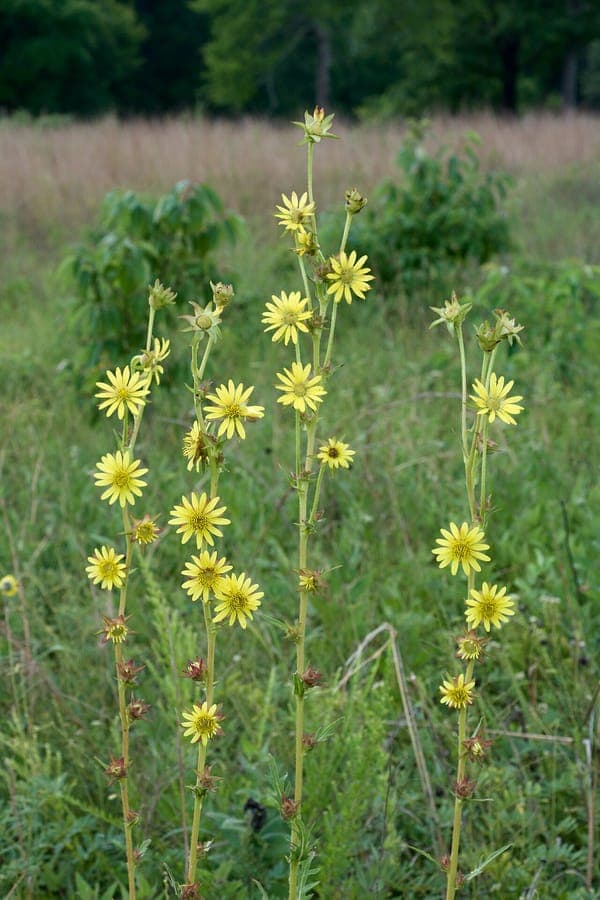
Silphium laciniatum, commonly known as Compass Plant or Polarplant, is a dramatic native perennial from North America. This impressive member of the Asteraceae (daisy) family grows taller than 2 meters and is renowned for its large, striking yellow flowers. The plant is named for the remarkable phenomenon that its lowest leaves orient themselves in a north-south direction, functioning as a natural compass.
Appearance and bloom
Silphium laciniatum grows as a stately plant reaching 1.5-2.5 meters tall. The stems are robust, often flecked with red. The leaves are large, coarse, irregularly lobed, and rough to the touch. From July to September, numerous large, bright yellow flowers appear, each measuring 5-8 cm in diameter. These showy flowers attract bees and butterflies. The plant produces distinctive flat, winged seeds.
Ideal location
Compass Plant thrives in full sun, requiring at least 6-8 hours of direct daily sunlight. The plant tolerates wind but may need staking. Ideal for prairie gardens, wildflower meadows, back borders, and large landscapes where height is valued. The plant is fully hardy and supports native plantings.
Soil
Silphium laciniatum adapts to diverse soil types. Well-drained, moderately fertile soil is ideal. The plant tolerates dry to moderately moist conditions. Heavy clay soil is problematic. Enrich poor soil with organic matter. The plant grows on marginal soils but develops more vigorously with reasonable conditions.
Free design
Want to see Silphium laciniatum: complete guide in your garden? Make a free design now.
Watering
Compass Plant is drought-tolerant once established. Water regularly during the first growing season to establish deep roots. Mature plants need supplemental water only during extended drought. Excessive water invites rot. Mulching helps retain soil moisture.
Pruning
Minimal maintenance required. If staking is necessary, use gentle supports. Deadhead spent flowers to prevent self-seeding throughout the garden. Old stems can be cut back in early spring. Severe pruning is not recommended.
Maintenance calendar
April-June: Active growth, no special care. July-August: Flowering period, check stakes. August-October: Remove faded flowers as needed. October-April: Dormancy, remove dead material in spring.
Winter hardiness
Silphium laciniatum is fully hardy to USDA zone 4 (minimum -30 degrees C). In temperate regions, it overwinters outdoors without protection. No winter protection needed.
Companion plants
Compass Plant pairs magnificently with other tall perennials: Rudbeckia, Echinacea, Helianthus, Liatris, Aster, and native prairie flowers. Excellent for background plantings. Ensure companions share full-sun requirements.
Conclusion
Silphium laciniatum is a spectacular, low-maintenance plant for large gardens and prairie-like settings. Perfect for gardeners seeking dramatic height, showy flowers, and authentic native character. Visit gardenworld.app for design inspiration and planting advice.
Want to see Silphium laciniatum: complete guide in your garden? Make a free design now.
Upload a photo, pick a style, and get a photorealistic design with plant list in under a minute.
No credit card required


Similar plants
Calendula stellata: complete guide
Calendula stellata
Complete guide to Calendula stellata, the star-flowered marigold from Sicily: location, soil, watering and companion planting tips.
Korean chrysanthemum: complete guide
Chrysanthemum x rubellum
Chrysanthemum x rubellum is a hardy autumn perennial with single pink to copper flowers from August to November. Care and combinations.
Helianthus divaricatus: complete guide
Helianthus divaricatus
Helianthus divaricatus is a North American woodland sunflower with yellow summer blooms, ideal for naturalistic borders and shady edges.