
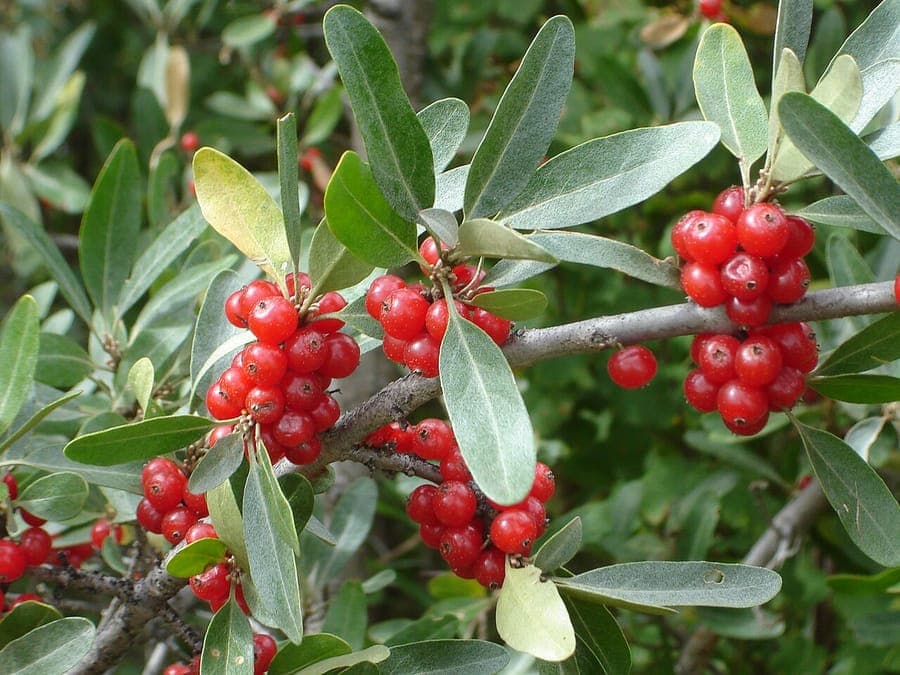
SriMesh / CC BY-SA 3.0, via Wikimedia Commons
Silver Buffaloberry: complete guide
Shepherdia argentea
Want to see Silver Buffaloberry: complete guide in your garden?
1 minute, no credit card
Overview
Shepherdia argentea, named for its silvery foliage, is a North American shrub from the Elaeagnaceae family (same as sea-buckthorn). Native from western and central Canada through the western and central USA, this robust shrub thrives in dry, windswept sites, steppes, and rocky slopes. With its dramatic silver foliage, hidden fragrant flowers, and abundant red berries, it is a bird magnet and a unique choice for extreme environments and xeriscaping.
Appearance and Bloom
Silver buffaloberry grows as an upright to spreading shrub, typically 1.5 to 4 metres tall and equally broad. The most striking feature is the foliage: long, narrow leaves covered in a silvery waxy coating that renders them almost pure silver. This silvery appearance is truly spectacular in sunlight and provides year-round visual interest.
Flowers are small, inconspicuous (red to yellow) and highly fragrant, appearing in May. Bees and wasps flock to them. After flowering, abundant, fleshy red berries form in summer-autumn. These berries are extremely bird-friendly: sparrows, thrushes, and cedar waxwings devour them. Berries are also edible to humans (tart but palatable).
Ideal Location
Full sun. This shrub loves maximum sunshine. Windy, dry terrain is no problem; in fact, it thrives in such conditions. Perfect for exposed sites, ridge-tops, and windbreaks.
Soil
Well-draining, preferably dry. Lean, sandy, or gravelly soil is ideal. pH 6.5-8 (neutral to slightly alkaline). Excess fertility is actually detrimental; poor soil leads to better berry formation and reduced soft growth.
Free design
Want to see Silver Buffaloberry: complete guide in your garden? Make a free design now.
Watering
Once planted, extremely drought-tolerant. Water minimally to not at all. This is not a plant for wet sites. In the first year, water regularly until the root system establishes.
Pruning
Minimal pruning required. The shrub can grow wild; pruning is optional and only for shaping or space management. Remove dead branches in spring if needed.
Maintenance Calendar
April-May: Growth begins. Pruning optional. May: Bloom and fragrance peak. Enjoy bee activity. June-August: Berries ripen. Bird visitation increases. September-October: Berries at peak. Harvest for food (cautiously; birds need them too). November-March: Winter dormancy. No maintenance.
Winter Hardiness
USDA Zone 2-8. Extremely cold-hardy, endures temperatures to -40 C (-40 F). This is a plant for the harshest, coldest climates. Perfect for Canada, Scandinavia, and mountain regions. No winter protection needed.
Companion Plants
Other drought-tolerant shrubs: Berberis, Rosa rugosa, Hippophae (sea-buckthorn). Ornamental grasses: Stipa, Bouteloua, Miscanthus. Other silver-foliaged plants: Elaeagnus, dwarf Artemisia.
Difficult to find in mainstream UK and European garden centres; seek specialized native-plant nurseries or online suppliers.
Closing
Shepherdia argentea is a dramatic, extremely hardy shrub for dry, windy, harsh environments. Its silvery foliage, fragrance, berries, and bird-magnetism make it a unique and valuable addition to any xeriscape or wild garden project. Plant in full sun, let it grow, and watch the birds feast.
Want to see Silver Buffaloberry: complete guide in your garden? Make a free design now.
Upload a photo, pick a style, and get a photorealistic design with plant list in under a minute.
No credit card required


Similar plants
Canadian buffalo-berry: complete guide
Shepherdia canadensis
Complete guide to Canadian buffalo-berry: location, soil, watering, pruning, and companion plants for this resilient wildlife shrub.
Broadleaf Oleaster: complete guide
Elaeagnus macrophylla Thunb.
Discover the Broadleaf Oleaster, a hardy ornamental shrub with silvery leaves and robust growth. Perfect screening plant for front gardens.
Sea-buckthorn: complete guide
Hippophae rhamnoides
Sea-buckthorn (Hippophae rhamnoides) is a resilient shrub with vibrant orange berries that lasts through winter. Hardy to -35C, perfect for sandy soils and coastal gardens.