
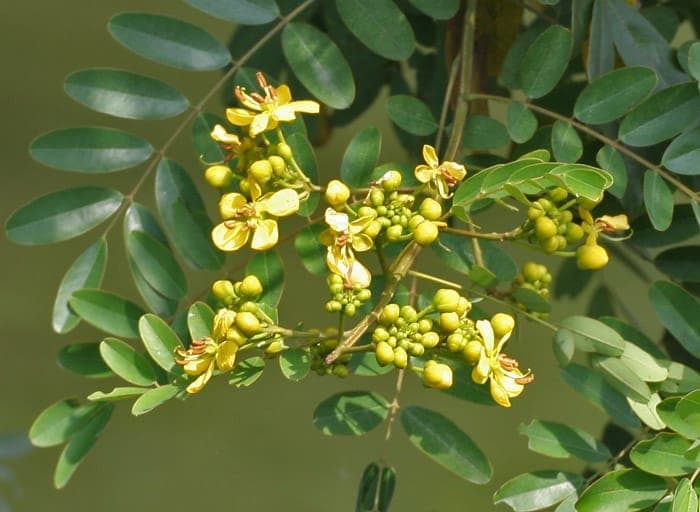
J.M.Garg / CC BY-SA 3.0, via Wikimedia Commons
Senna siamea: complete guide
Senna siamea
Want to see Senna siamea: complete guide in your garden?
1 minute, no credit card
Overview
Senna siamea, also known as ironwood cassia or kassod tree, is an elegant tree from the Fabaceae family (legumes). This tropical tree originates from Sri Lanka and Indochina, but now grows in warm climates worldwide. With its yellow flowers and graceful, finely divided foliage, Senna siamea provides striking visual impact in warm-climate gardens.
The tree grows into a medium-large specimen reaching 8-15 meters tall, making it ideal for spacious front yard areas. Though not frost hardy in temperate climates, it can be a valuable structural plant in tropical and subtropical zones growing for many years. Perfect for those seeking something more dramatic than standard ornamental shade trees.
Appearance and bloom
Senna siamea grows into an elegant tree with a broad, rounded crown. The leaves are feathered, 30-50 centimeters long, with numerous small leaflets giving a very refined appearance. The trunk is upright and grayish-brown, often interestingly textured.
The flowers are the highlight: bright yellow racemes growing densely along branches during the summer season. These flowers are very showy and attract pollinators. After blooming, long, flat pods with seeds develop, adding to the decorative value of the tree.
Ideal location
Senna siamea grows best in completely sunny locations receiving plenty of direct sunlight - minimum 6-8 hours daily. The tree performs poorly in shade and will grow thin and weak. Therefore, place it in open, sunny spots in your yard, away from larger trees.
The tree can reach substantial size, so ensure you have adequate space. Protect from strong winds where possible, especially in young years. In windy locations, support with stakes until the tree is firmly established.
Soil
Senna siamea grows well in various soil types, as long as drainage is good. The tree tolerates sandy, clayey, and mixed soils without problem. A well-prepared planting hole with compost and fertilizer helps strong growth.
The tree prefers neutral to slightly acidic soils. Chalky soils can cause chlorosis, but usually the tree still grows fine. Apply a thick layer of mulch around the base for water retention and root cooling.
Free design
Want to see Senna siamea: complete guide in your garden? Make a free design now.
Watering
Senna siamea has moderate water needs in established state. Water regularly in the first years to help the root system develop well. Once well established, the plant tolerates moderate drought well.
During growth period (spring-summer), water deeply once weekly. In drier seasons, intensify watering. In winter, minimize watering - water only if extremely dry. Too much water promotes fungal issues and root rot.
Pruning and maintenance
Senna siamea requires minimal pruning once established. Remove dead, damaged, or hazardous branches continuously. If needed, thin the crown lightly in early spring for better air circulation.
Young trees can be gently shaped by encouraging the central leader. Remove drooping branches. Ensure good structure in young years - this determines the eventual tree form. Dead flowers and pods do not really need removal.
Maintenance calendar
Spring: Gentle pruning for form, apply fertilizer around base, start watering. Summer: Regular watering, monitor blooming. Autumn: Reduce watering. Winter: Minimal watering, no pruning except emergencies.
Winter hardiness
Senna siamea is not frost hardy in temperate climates. The tree dies back at frost and cannot survive outdoors in cold areas. The plant can tolerate short light frosts to about -2 degrees Celsius.
In tropical and subtropical zones (minimum 10-15 degrees Celsius year-round), it can grow permanently outdoors. Elsewhere, grow it in containers and bring indoors for winter.
Companion plants
Senna siamea works well as a specimen tree in gardens due to its substantial size. Support can consist of shade-tolerant shrubs like Sarcococca under the crown, and tropical flowering plants like Mandevilla around the base.
The yellow flowers contrast nicely with purple or blue flowering neighbors. In large gardens, create nice depth by combining different tree layers.
Conclusion
Senna siamea is a spectacular choice for those with space in warm climate areas. This elegant tree offers structure, yellow summer flowers, and graceful foliage adding value. Plant it now in warm areas and enjoy years of beauty. Read more plant guides on gardenworld.app!
Want to see Senna siamea: complete guide in your garden? Make a free design now.
Upload a photo, pick a style, and get a photorealistic design with plant list in under a minute.
10,000+ gardens designed already
No credit card required


Similar plants
Tall Silky Lupine: complete guide
Lupinus elatus
Tall silky lupine is a fast-growing Californian perennial with silvery foliage and blue-purple flower spikes, ideal for a prairie-style garden.
Garfield Lupine: complete guide
Lupinus garfieldensis
The Garfield lupine is a rare, fast-growing American perennial for alkaline, dry grassland gardens, with striking blue flower spikes.
Lupinus elegans: complete guide
Lupinus elegans
Lupinus elegans, the elegant lupine, is a spectacular blooming plant from Mexico with blue flower spikes. Care, cultivation and garden use.