
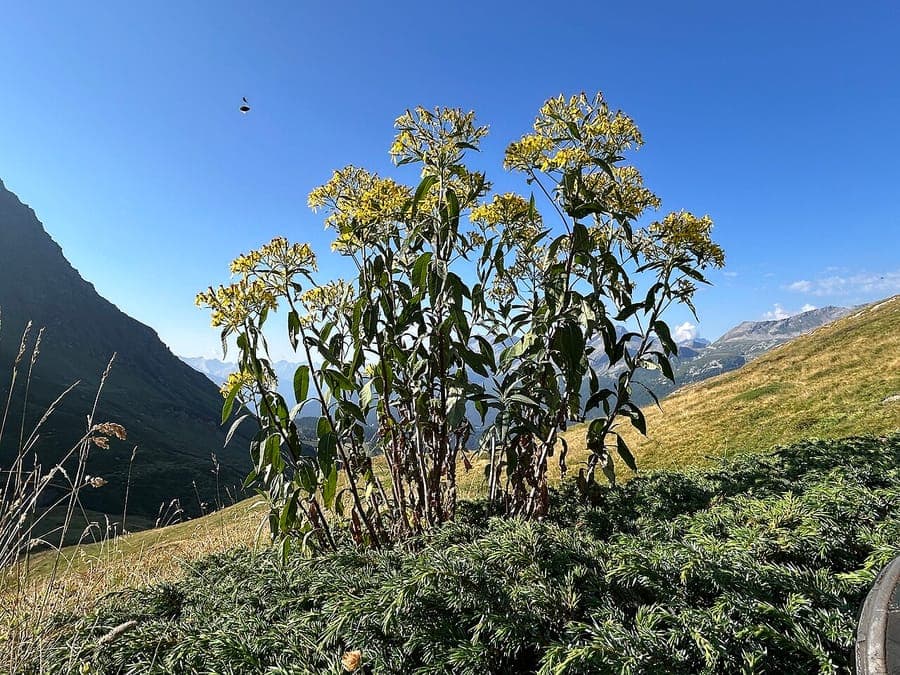
Parpan05 / CC BY 4.0, via Wikimedia Commons
Senecio ovatus: complete guide
Senecio ovatus
Want to see Senecio ovatus: complete guide in your garden?
1 minute, no credit card
Overview
Senecio ovatus, known as Fuchs ragwort or wood ragwort, is an elegant European perennial from the Asteraceae family. Also recognized under the botanical name Jacobaea ovata, this species distinguishes itself through its oval leaves and marked preference for partial shade to shaded conditions. The plant creates a refined accent in shadowed garden areas and woodland edges.
The plant grows as an upright perennial reaching approximately sixty to ninety centimeters in height. Unlike many ragworts, this species performs considerably better in conditions with less direct sunlight. The dark green, ovate leaves form an attractive basal rosette from which flower plumes develop. The flowering extends from July through October in cheerful yellow clusters.
Appearance and Bloom
The plant distinguishes itself through relatively broad, oval leaves that grow in neat, aromatic tufts. These leaves are less refined than other Senecio species, contributing a fuller appearance. The leaf color displays a fresh dark green without gray tones.
Flowers emerge from July through October in yellow, umbel-like clusters. Each floret features ten to twelve ray florets arranged radially around a yellow disc. The flower clusters grow on upright, sturdy stems, proving extremely attractive in arrangements. The plant receives regular visits from honeybees and other pollinators.
Ideal Location
Senecio ovatus thrives in partial shade to deep shade, distinguishing it from most other Senecio species. Ideal locations include shaded woodland edges, beneath deciduous trees, or on the north side of walls. The plant tolerates at least three to four hours of indirect sunlight but flowers abundantly even in deeper shade.
Excessive sun exposure can result in scorched leaves, particularly on very hot days. The plant proves perfect for shadowed corners where other garden plants struggle. Furthermore, the plant appreciates shelter from harsh winds.
Soil Requirements
Senecio ovatus makes reasonable soil demands. A well-draining, nutrient-rich soil is preferred. Humus-rich woodland soil proves ideal. The plant also grows reasonably well in more acidic soils, with pH ranging from five to seven point five.
In poor soils, plants grow smaller but still flower satisfactorily. Heavy clay soils function when they contain sufficient organic matter. Organic compost or leaf mold may be incorporated each spring. The plant appreciates moisture but not waterlogging.
Free design
Want to see Senecio ovatus: complete guide in your garden? Make a free design now.
Watering and Moisture Needs
Senecio ovatus enjoys regular water, particularly during growth and flowering periods. The soil should never completely dry out. During warm summers, watering becomes more frequent if rainfall is limited. Ensure consistent moisture without soggy conditions.
In shade, water evaporates more slowly. Given the plant's preference for some moisture, more water can be provided than for many other Senecio species. Winter watering may be limited, but avoid leaving the soil completely dry.
Pruning Methods
Senecio ovatus may be lightly cut back after flowering to maintain compact form. Prune in late spring, around March to April. Remove dead stems completely and reduce approximately one-third of previous season's growth to healthy buds.
Faded flowers may be removed throughout the season to encourage continued flowering. Old, long stems may be cut back to half their length.
Maintenance Calendar
February-April: Complete pruning, remove dead material. Add compost. Cuttings may be taken from healthy shoots.
May-June: Water regularly, especially during dry weather. Plant may require support if becoming very large.
July-October: Flowering reaches peak. Water regularly. Remove spent flowers for extended bloom.
November-January: Minimal maintenance. Check moisture levels. Avoid winter pruning until flowering is complete.
Winter Hardiness
Senecio ovatus is a native European plant and exceptionally winter hardy. In nearly all European climates, it survives without problems. The plant tolerates temperatures to minus fifteen degrees without damage. In extreme freezing conditions, some top growth may die back, but the base typically survives.
The plant may be protected with leaf mulch in very cold regions, though this rarely becomes necessary.
Companion Plants
Senecio ovatus combines beautifully in shaded woodland plant combinations:
- Hellebores (Helleborus)
- Ferns (Polystichum, Dryopteris)
- Solomon's seal (Polygonatum)
- Violets (Viola)
- Lily of the valley (Convallaria)
Conclusion
Senecio ovatus represents a valuable specimen for shaded gardens where it delivers elegant flowers where other plants falter. European origin guarantees robustness. Perfect for woodland-style gardens or shaded corners against north walls. Explore further shade planting solutions at gardenworld.app/en.
Visit gardenworld.app/en to plan shaded areas perfectly and discover more plant selections for all garden situations.
Want to see Senecio ovatus: complete guide in your garden? Make a free design now.
Upload a photo, pick a style, and get a photorealistic design with plant list in under a minute.
No credit card required


Similar plants
Calendula stellata: complete guide
Calendula stellata
Complete guide to Calendula stellata, the star-flowered marigold from Sicily: location, soil, watering and companion planting tips.
Korean chrysanthemum: complete guide
Chrysanthemum x rubellum
Chrysanthemum x rubellum is a hardy autumn perennial with single pink to copper flowers from August to November. Care and combinations.
Helianthus divaricatus: complete guide
Helianthus divaricatus
Helianthus divaricatus is a North American woodland sunflower with yellow summer blooms, ideal for naturalistic borders and shady edges.