
Kurt Stüber [1] / CC BY-SA 3.0, via Wikimedia Commons
Ciliated houseleek: complete guide
Sempervivum ciliosum
Want to see Ciliated houseleek: complete guide in your garden?
1 minute, no credit card
Overview
Sempervivum ciliosum, commonly called ciliated houseleek, is a small alpine succulent from the Crassulaceae family. This species naturally occurs in the mountainous regions of southeastern Albania through southwestern Bulgaria. It represents an important component of native alpine flora in the southern Balkan mountains.
Formally described in 1914, ciliated houseleek is classified as an accepted succulent species. Its natural habitat spans steep mountainous slopes and rocky ridges of the southeastern Balkans.
Appearance & bloom
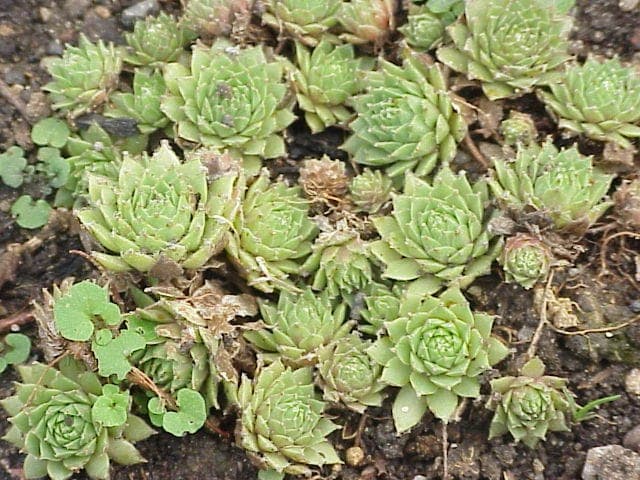
Sempervivum ciliosum forms tight rosettes typically reaching 3-5 centimeters in diameter. The leaves are small, green to reddish-purple in color, and notably fringed with distinctive hairs along their margins, justifying the species name "ciliosum" (fringed). These hairs give the plant an appealing fuzzy appearance.
Flowers appear in summer, typically May through July, on thin stems 10-15 centimeters tall. They are pink to red, star-shaped with 8-12 petals. The blooming period extends several weeks. Following flowering, the mother rosette dies, but young offsets persist.
The plant maintains colorful foliage year-round in most climates.
Ideal location
Sempervivum ciliosum thrives in full sun to light shade. A minimum of four to five hours of direct sunlight daily suffices. The plant tolerates shade but displays less vibrant coloring.
Plant on steep, well-drained slopes or in rock gardens. The species also succeeds in containers alongside other sedums and hardy succulents. Group multiple rosettes together for ornamental effect.
This plant excels in Mediterranean rock gardens, alpine troughs, green roofs and living walls.
Soil
Sempervivum ciliosum requires extremely well-draining soil. The plant thrives in poor, rocky soil with minimal organic matter preferred. Optimal pH ranges from 6.0 to 7.5.
Add coarse sand and gravel to standard potting mix for container cultivation. The plant proves extremely tolerant of marginal soils. High nitrogen fertilization promotes soft growth and encourages disease.
Drainage trumps fertility in importance.
Free design
Want to see Ciliated houseleek: complete guide in your garden? Make a free design now.
Watering
Sempervivum ciliosum is extremely drought-tolerant. During the growing season from May through September, water moderately, approximately once every two weeks. In containers, water weekly during intense heat.
After September, reduce watering dramatically. The plant survives the entire winter without supplemental water. Avoid waterlogging at all costs, which promotes root rot and plant death.
In gardens, rainfall often suffices for all water needs.
Pruning
Sempervivum ciliosum requires no pruning. The plant naturally forms rosettes without intervention. Remove only dead leaves as they appear.
When flowering stems have completed their cycle, remove them after wilting for neatness.
The plant reproduces itself continuously with young offsets encircling the mother rosette.
Maintenance calendar
May-June: Water moderately, observe flowering. July-August: Water sparingly, every 2-3 weeks. September-October: Reduce water, prepare for dormancy. November-April: Minimal or no watering, plant dormant.
Winter hardiness
Sempervivum ciliosum is hardy to USDA zone 4, tolerating temperatures around -30 degrees Celsius. This makes it suitable for most northern European regions, including large areas of Scandinavia.
The plant overwinters outdoors without protection in most temperate zones. It survives freezing temperatures down to -30 degrees Celsius with proper drainage and siting.
Companion plants
Combine ciliated houseleek with other alpine and rock plants:
- Sempervivum tectorum (common houseleek): Identical care requirements
- Sedum spp (stonecrop): Similar growth and water needs
- Armeria maritima (sea pink): Alpine origin, compatible conditions
- Saxifraga spp (saxifrage): Rock plants, extremely drought-tolerant
- Lychnis alpina (alpine catchfly): Mountain plant, complementary bloom
Plant in groups of five or more for visual impact.
Closing
Sempervivum ciliosum offers a distinctive addition to dry gardens with its striking nodding flowers and colorful succulent foliage. Exceptional winter hardiness and minimal maintenance make it valuable for both beginner and experienced gardeners.
With proper drainage and sunny placement, this plant thrives for decades with no care. Plant ciliated houseleek in rock gardens, alpine troughs or succulent containers. Discover more alpine succulents and hardy plants at gardenworld.app.
Want to see Ciliated houseleek: complete guide in your garden? Make a free design now.
Upload a photo, pick a style, and get a photorealistic design with plant list in under a minute.
No credit card required


Similar plants
Sedum nevadense: complete guide
Sedum nevadense
Discover Sedum nevadense, the stunning alpine stonecrop from the Pyrenees. Expert care tips, growing requirements, and design ideas for rock gardens.
Aizoon stonecrop: complete guide
Phedimus aizoon
Everything about Phedimus aizoon - the frost-tolerant aizoon stonecrop from Siberia with bright yellow flowers. Planting, care and garden use.
Roseroot: complete guide
Rhodiola rosea
Everything about roseroot (Rhodiola rosea): a tough hardy succulent ideal for rock gardens, green roofs, and dry sunny positions.