
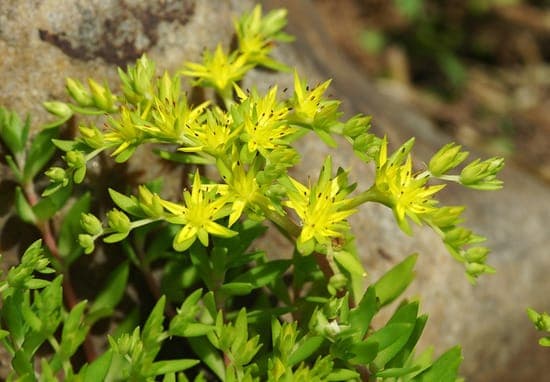
이태수 / CC BY 4.0, via Wikimedia Commons
Stringy stonecrop: complete guide
Sedum sarmentosum
Want to see Stringy stonecrop: complete guide in your garden?
1 minute, no credit card
Overview
Stringy stonecrop (Sedum sarmentosum) is a creeping, herbaceous succulent that spreads rapidly across dry, sunny areas. Native to parts of China, Japan, Korea, and Southeast Asia, it's become a go-to choice for gardeners dealing with tough spots where little else survives. It forms a dense mat of fleshy, three-lobed leaves and reaches 15 to 25 cm in height, though it spreads horizontally much more aggressively than it grows vertically. This makes it ideal for rock gardens, dry slopes, or between stepping stones.
One of the biggest strengths of stringy stonecrop is its resilience. It doesn't need rich soil, resists pests, and handles heat and drought like a pro. On gardenworld.app, you can design a garden layout that integrates stringy stonecrop into water-wise planting schemes, especially in zones with high sun exposure and low rainfall.
Appearance & bloom cycle
The foliage is bright green, sometimes with a yellowish tint, and arranged in threes along the trailing stems-hence the common name. Each leaf is plump and succulent, storing water for dry spells. From June to August, upright stems produce clusters of small, star-shaped yellow flowers. These aren't flashy, but they do attract pollinators like bees and hoverflies. After blooming, the flower stalks dry out, but the leaves often stay green well into autumn, especially in milder climates.
The plant spreads by sending out long, rooting stems that form new plants wherever a node touches soil. This makes it fast to cover ground, but also means it can creep into unwanted areas. In moist, shaded gardens, it may need containment. Use edging or plant it in isolated pockets to keep it in check.
Ideal location
Stringy stonecrop thrives in full sun-aim for at least 6 hours of direct sunlight daily. In full sun, it grows compact and blooms reliably. In partial shade, it becomes leggy and loses density. Best spots include rock walls, gravel beds, dry borders, or hot, exposed corners of the garden.
It's also a solid candidate for green roofs, container edges, or courtyard gardens where soil stays warm and dry. Use gardenworld.app to map sun patterns in your yard and identify the perfect microclimate for stringy stonecrop before planting.
Soil requirements
This succulent isn't fussy about soil fertility. It grows well in poor, sandy, or rocky soils as long as drainage is excellent. Avoid heavy clay or water-retentive mixes. Amend dense soil with 20–30% grit, perlite, or coarse sand to improve flow. A pH between 6.0 and 7.5 is ideal.
Never fertilize-it encourages weak, floppy growth. Lean conditions keep the plant tight and tough.
Free design
Want to see Stringy stonecrop: complete guide in your garden? Make a free design now.
Watering
Once established, stringy stonecrop is highly drought-tolerant. Water weekly during the first month after planting, especially in dry springs. After that, rely on rainfall. Only water during prolonged droughts (3+ weeks without rain), and then give a deep soak rather than frequent sprinkles.
Avoid overhead watering-wet foliage can lead to rot, especially in humid conditions. Water at the base early in the morning.
Pruning
Pruning isn't essential, but a light trim in early spring (March to April) helps maintain shape and density. Cut back any spent or straggly stems with sharp shears. Remove winter-damaged growth as new shoots emerge. No need to compost-toss trimmings in the green waste.
Be careful: stem fragments can root where they fall. Clear debris to prevent unwanted spread.
Maintenance calendar
- January: Check for frost damage. No action needed.
- February: Clear debris if necessary. Prepare for spring.
- March: Trim back old growth. Loosen soil gently around plants.
- April: New growth appears. Water only if dry.
- May: Rapid spreading. Monitor for encroachment.
- June–August: Blooming period. Minimal care required.
- September: Growth slows. Stop irrigation.
- October: Leave foliage intact for winter insulation.
- November–December: Dormant. No maintenance.
Winter hardiness
Stringy stonecrop is hardy in USDA zones 5 to 9. In the UK and most of the US, it survives winter without protection. Top growth may turn brown in hard freezes, but roots remain alive and send up new shoots in spring. The real risk isn't cold-it's wet soil in winter. Ensure excellent drainage to prevent rot.
Companion plants
Pair stringy stonecrop with other drought-tolerant perennials like creeping thyme, sedum 'Autumn Joy', or yarrow. It contrasts well with silver-foliaged plants like lamb's ear or artemisia. Avoid aggressive groundcovers like ivy or mint that could outcompete it. Works beautifully in gravel gardens, raised beds, or between pavers with minimal soil.
Closing
Stringy stonecrop is a no-fuss, reliable groundcover that excels in hot, dry spots. It's not a showstopper, but it's a workhorse-filling gaps, suppressing weeds, and blooming quietly in summer. You'll find it at garden centres across the UK and US, or online from specialty nurseries. With a smart planting plan-maybe one you sketch out on gardenworld.app-you can use this tough little succulent to solve tricky garden problems with minimal effort.
Want to see Stringy stonecrop: complete guide in your garden? Make a free design now.
Upload a photo, pick a style, and get a photorealistic design with plant list in under a minute.
No credit card required


Similar plants
Sedum nevadense: complete guide
Sedum nevadense
Discover Sedum nevadense, the stunning alpine stonecrop from the Pyrenees. Expert care tips, growing requirements, and design ideas for rock gardens.
Aizoon stonecrop: complete guide
Phedimus aizoon
Everything about Phedimus aizoon - the frost-tolerant aizoon stonecrop from Siberia with bright yellow flowers. Planting, care and garden use.
Roseroot: complete guide
Rhodiola rosea
Everything about roseroot (Rhodiola rosea): a tough hardy succulent ideal for rock gardens, green roofs, and dry sunny positions.