
Dianne Fristrom / CC BY-SA 3.0, via Wikimedia Commons
Sedum oregonense: complete guide
Sedum oregonense
Want to see Sedum oregonense: complete guide in your garden?
1 minute, no credit card
Overview
Sedum oregonense, commonly known as Cream stonecrop, is a fascinating succulent plant native to the mountain regions of Oregon and Northern California. This small but mighty succulent makes a valuable addition to any gardener's collection, especially those who appreciate low-maintenance, distinctive plants. The botanical name references Oregon's geography, while 'Cream' describes the soft, creamy coloration of the foliage during certain growth stages.
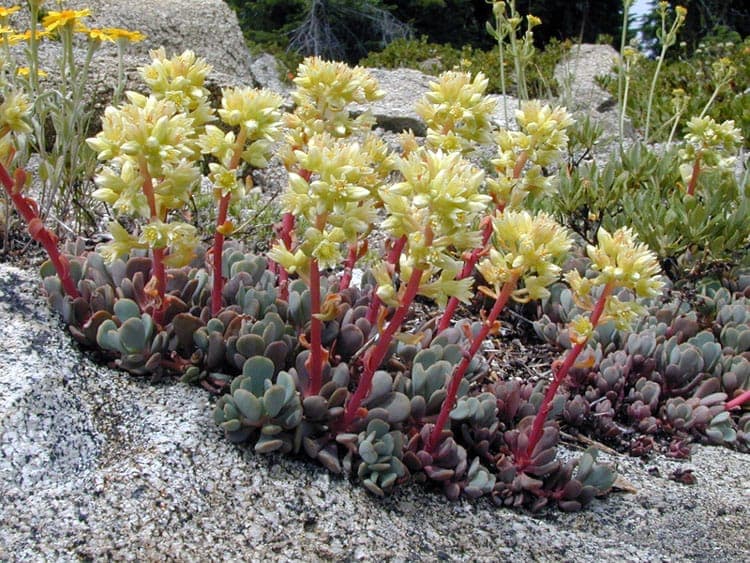
What makes Sedum oregonense special is the combination of hardiness and elegance. This plant grows as a compact herbaceous specimen, perfect for rock gardens, borders, and containers. In spring and summer, it transforms into a colorful display with yellow star-shaped flowers that attract bees and butterflies.
Appearance & Bloom
Sedum oregonense forms dense, low rosettes of green to bronze-tinged leaves. The foliage is compact and neatly arranged, giving the plant a well-structured appearance. Over time, it develops subtle color variations that add depth and character. The flower stems rise above the leaf canopy and carry small, delicate yellow star flowers that appear in late spring through early summer.
Blossoms typically emerge around May and June, making this plant a perfect herald of summer. The flower clusters attract numerous beneficial insects, adding vitality to your garden. After flowering, the plant produces seeds that either fall naturally or can be collected for propagation.
Ideal Location
Sedum oregonense thrives best in full sun to light shade conditions. This plant is made for sunshine - at least 6 hours of direct sunlight daily ensures the best color development and flowering. In regions with intense summer heat, some afternoon dappled shade prevents the plant from becoming stressed.
Position Sedum oregonense where air can circulate freely and wind can help strengthen the plant. Good air movement helps prevent fungal issues and encourages a sturdy root system. On rocky outcrops, in alpine troughs, or in green roof gardens, this plant feels right at home.
Soil
Like all succulents, Sedum oregonense isn't picky about nutrients, but soil structure makes all the difference. Ensure excellent drainage - this is rule number one for successful succulent cultivation. Use a mix of roughly 60% coarse sand or grit, 30% garden soil, and 10% peat or coconut coir. Avoid heavy clay soils that retain excessive moisture.
The pH can range from slightly acidic to neutral (6.0 to 7.0), though the plant adapts to other values. For container growing, use specialized succulent potting mix available at any garden center. This soil already contains the right composition with adequate structure and aeration.
Free design
Want to see Sedum oregonense: complete guide in your garden? Make a free design now.
Watering
Watering Sedum oregonense is a delicate balance - the plant hates wet feet but needs water during growing seasons. During the growth period (spring and summer), water only when the soil feels completely dry. Typically once weekly under normal conditions.
As autumn arrives and temperatures drop, reduce watering dramatically. In winter, water sparingly or not at all - the plant enters dormancy and requires minimal moisture. Regularly check that overly moist soil isn't causing rot issues. Better dry than wet is the golden rule here. Use room-temperature water and avoid wetting the leaves.
Pruning
Sedum oregonense is a low grower that rarely needs pruning. Do remove dead leaves and faded flowers regularly to prevent disease and pest issues. If the plant becomes overly vigorous, prune back excess stems in spring - these can be used for propagation.
Harsh cutting back is not recommended, as the plant needs years to recover. A light annual trim in early spring, removing mainly dead and weak portions, is sufficient. This helps rejuvenate without damaging the plant's structure.
Maintenance Calendar
January to March: Winter dormancy. Very little water. Monitor for disease.
April to May: Growing season begins. Gradually increase watering. No fertilizer needed initially.
June to August: Peak growth and flowering. Water regularly. Avoid overfeeding.
September to October: Transition phase. Gradually reduce watering. Plant prepares for dormancy.
November to December: Deep rest period. Minimal water. Keep dry.
Winter Hardiness
Sedum oregonense is quite cold-hardy, surviving frost down to minus 15 degrees Celsius. In regions with harsher winters (below -15 degrees), protect the plant with mulch or frost cloth. In containers, frost protection is often necessary since roots freeze more readily than in-ground plants.
In southern Netherlands, the plant can remain outdoors without extra protection. In northern regions, consider placing it under a cold frame or unheated greenhouse during winter. This ensures your plant survives the frost without complications.
Companion Plants
Sedum oregonense pairs beautifully with other low-growers like Sempervivum (houseleek), Armeria maritima, and Festuca glauca. It also combines well with other Sedum species sharing similar requirements. In green roofs, it creates attractive mixed groupings.
For border color combinations, plant it alongside blue fescue or silvery Artemisia. The yellow flowers create striking contrast. Especially in early summer, the display is quite impressive.
Closing Thoughts
Sedum oregonense is an ideal entry point into succulent gardening for many gardeners. The plant is maintenance-free, cold-hardy, and blooms reliably each year. With minimal care, you can enjoy this charming alpine specimen for years. Definitely try it in your garden - you'll be amazed at how easily it grows. Gardenworld.app helps you design your garden with this and similar succulents. Gardenworld.app makes garden design simple!
Want to see Sedum oregonense: complete guide in your garden? Make a free design now.
Upload a photo, pick a style, and get a photorealistic design with plant list in under a minute.
No credit card required


Similar plants
Sedum nevadense: complete guide
Sedum nevadense
Discover Sedum nevadense, the stunning alpine stonecrop from the Pyrenees. Expert care tips, growing requirements, and design ideas for rock gardens.
Aizoon stonecrop: complete guide
Phedimus aizoon
Everything about Phedimus aizoon - the frost-tolerant aizoon stonecrop from Siberia with bright yellow flowers. Planting, care and garden use.
Roseroot: complete guide
Rhodiola rosea
Everything about roseroot (Rhodiola rosea): a tough hardy succulent ideal for rock gardens, green roofs, and dry sunny positions.