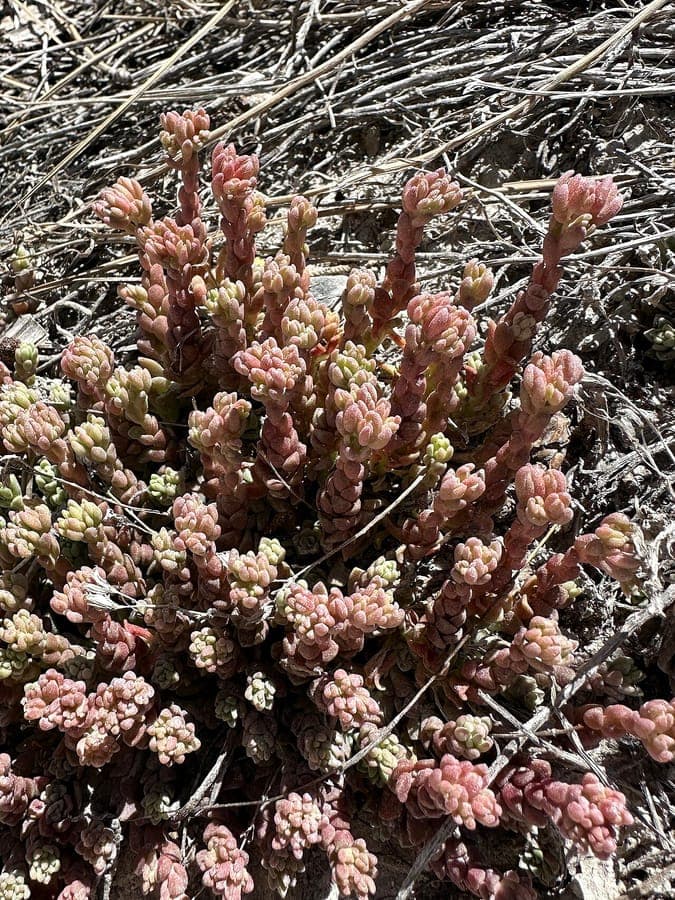
(c) Matt Berger, some rights reserved (CC BY) / CC BY 4.0, via Wikimedia Commons
Sedum niveum: complete guide
Sedum niveum
Want to see Sedum niveum: complete guide in your garden?
Full design in HD: €7.99
Look after your Sedum niveum with the GardenWorld app
Identify plants with your camera and get a care calendar with reminders for this plant.


Overview
Sedum niveum, better known as Davidson's stonecrop or snow stonecrop, is a charming, low-growing succulent from California and Northern Mexico. This plant is perfect for rock gardens, green roofs, and dry borders. With its compact growth, white flowers, and minimal care requirements, it is a favorite for low-maintenance gardens.
Appearance and Bloom
Davidson's stonecrop grows as a low mat only 5-15 cm tall. The small, gray-green leaves form rosettes and have interesting texture. The flowers are small and white, appearing in clusters and blooming from May to August. This gives the plant a long, festive bloom period in summer.
Ideal Location
Plant Sedum niveum in full sun to lightly shaded locations. The plant thrives with at least 4-6 hours of direct sunlight daily. In very hot climates, some afternoon shade may be beneficial. This is a plant for rock gardens, walls, pots, and well-draining ground areas.
Soil
Extremely good drainage is absolutely essential for sedums. Use special succulent potting soil or add plenty of gravel, sand, and perlite to garden soil. A pH between 6.0 and 8.0 is acceptable. This plant tolerates poor soil excellently and can even grow on rocks.
Free preview
Want to see Sedum niveum: complete guide in your garden? Make a free preview of your design.
Watering
Once well established, Sedum niveum is extremely drought tolerant. Water only minimally, especially during the growing season. In winter, water very little. Overwatering is the primary cause of sedum death; drier is better than wet.
Pruning
Minimal pruning is needed. This plant requires almost no pruning. Remove dead flowers if desired, but this is not necessary. Removing wilted parts is all that is required.
Maintenance Calendar
- March-April: Inspection for winter damage
- May-August: Bloom period, enjoy
- September-October: Growth slows
- November-February: Dormant, no maintenance
Winter Hardiness
Sedum niveum is hardy to about -10 to -15 degrees Celsius. Perfect for most European gardens. The plant can survive months without water and is one of the most robust sedums for cold climates.
Companion Plants
Pair with other succulent lovers: other sedums, sempervivums, echeverias, and alpine grasses. This creates a beautiful, colorful xeriscaping border. Also ideal in pots and green roofs.
Closing Thoughts
Sedum niveum is the perfect plant for those with little time and knowledge. This is gardening made simple. Available at garden centers and online. Consult gardenworld.app for design ideas. Plant it, water it rarely the first year, and enjoy years of beauty. Gardenworld.app helps you integrate this popular succulent perfectly.
Frequently asked questions about Sedum niveum
Is Sedum niveum winter hardy?
Sedum niveum is hardy to about -10 to -15 degrees Celsius. Perfect for most European gardens.
When and how do you prune Sedum niveum?
Minimal pruning is needed. This plant requires almost no pruning.
How much water does Sedum niveum need?
Once well established, Sedum niveum is extremely drought tolerant. Water only minimally, especially during the growing season.
Where does Sedum niveum grow best?
Plant Sedum niveum in full sun to lightly shaded locations. The plant thrives with at least 4-6 hours of direct sunlight daily.
What soil does Sedum niveum need?
Extremely good drainage is absolutely essential for sedums. Use special succulent potting soil or add plenty of gravel, sand, and perlite to garden soil.

See it in your garden
See Sedum niveum in your garden
One photo of your garden and a few questions. You see the result in about a minute.
Try it with a photoIdentify this plant in your own garden. Identify a plant
Similar plants
Aeonium tabuliforme: growing the saucer plant
Aeonium tabuliforme
Aeonium tabuliforme, the saucer plant, forms a flat, hairy rosette like a green plate. How to grow this Tenerife succulent, tilt it, water it and overwinter it.
String of buttons (Crassula perforata): care guide
Crassula perforata
How to grow string of buttons, Crassula perforata: light, watering, compost, cuttings and overwintering for this succulent with leaf pairs stacked like beads on a stem.
Glaucous echeveria (Echeveria secunda): complete guide
Echeveria secunda
Echeveria secunda forms mats of blue-grey rosettes with red leaf tips and is one of the toughest echeverias. Light, watering, potting mix, propagation and pet safety.
