
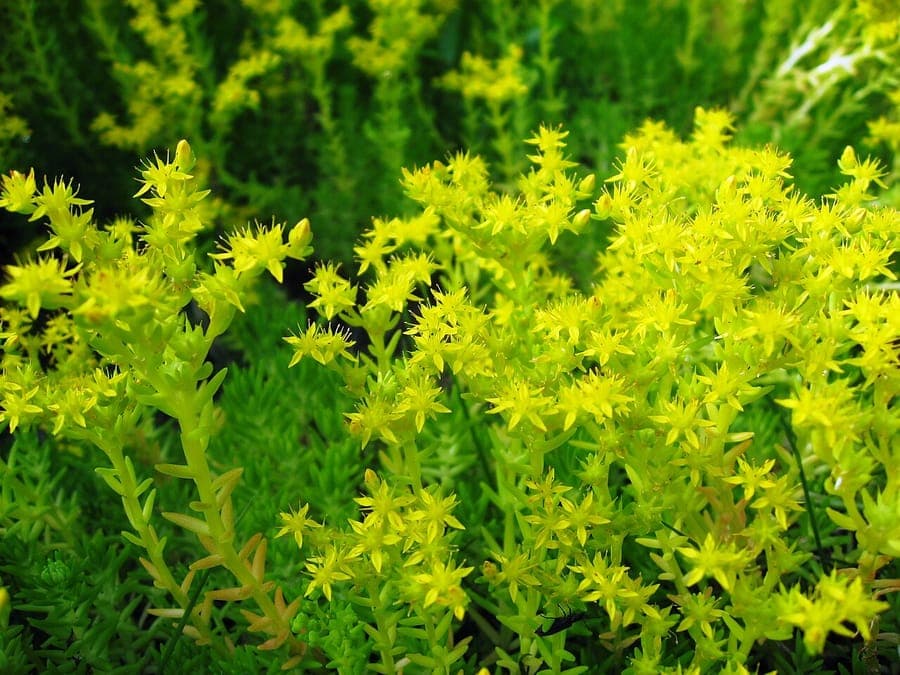
Qwert1234 / CC BY-SA 3.0, via Wikimedia Commons
Mexican stonecrop: complete guide
Sedum mexicanum
Want to see Mexican stonecrop: complete guide in your garden?
1 minute, no credit card
Overview
Sedum mexicanum, commonly known as Mexican stonecrop, is a succulent perennial native to Guatemala and southeastern Mexico. As part of the Crassulaceae family, it thrives in rocky, well-drained soils and dry climates. In temperate gardens, it's prized for its resilience, low water needs, and ability to spread steadily without becoming invasive. Typically growing 10–15 cm tall with a spread of up to 30 cm, it forms a dense mat of foliage, making it ideal for sunny borders, rockeries, or between pavers.
This herbaceous forb establishes itself quickly in warm microclimates. It stays evergreen in mild winters, providing year-round structure. Its compact growth habit fills gaps efficiently, especially in areas where soil is thin or drainage is sharp. Whether you're designing a modern gravel garden or restoring a dry slope, Sedum mexicanum is a dependable choice. On gardenworld.app, you can create a custom design that integrates this plant seamlessly into your landscape.
Appearance & bloom cycle
The foliage of Sedum mexicanum is its main attraction for most of the year. Small, fleshy, oval-shaped leaves grow densely along trailing stems, forming a soft green cushion. The leaves are bright to mid-green, turning slightly bronze in intense sun or cold weather. In midsummer - typically from June to early September - flat clusters of star-shaped, golden-yellow flowers appear.
Each flower cluster measures about 2–3 cm across and sits atop short, stiff stems. They're rich in nectar and highly attractive to pollinators, especially bees and hoverflies. The bloom period lasts 6–8 weeks, peaking in July and August. After flowering, the dried heads often persist into winter, adding visual interest during colder months.
Ideal location
Full sun is best - aim for at least 6 hours of direct sunlight daily. While Sedum mexicanum tolerates partial shade, plants become leggy and lose their tight form. South- or west-facing spots work well, especially against stone walls, on slopes, or in raised beds with gravel mulch.
Avoid low-lying areas where water collects. This plant hates wet feet. In cooler UK or northern European climates, plant it in a sheltered spot to maximise heat retention. Rooftop gardens, containers, and dry stone walls are all excellent options. If your garden lacks natural drainage, consider building a small rockery or using a raised bed.
Soil requirements
Quick-draining soil is non-negotiable. Heavy clay or water-retentive soils will lead to root rot. Amend garden soil with coarse sand, perlite, or crushed gravel to improve drainage. A mix of 2 parts loam, 1 part sand, and 1 part grit works well. The ideal pH range is 6.0 to 7.5.
In containers, use a cactus or succulent mix with extra drainage holes. Elevating the pot on feet helps water escape faster. Avoid moisture-retaining additives like peat unless balanced with plenty of grit. On gardenworld.app, you'll find soil calculators and planting guides tailored to succulent gardens.
Free design
Want to see Mexican stonecrop: complete guide in your garden? Make a free design now.
Watering
This plant is drought-tolerant once established. During the growing season (April to October), water deeply but infrequently - roughly every 2–3 weeks, depending on rainfall. Only water when the top 3–5 cm of soil is dry. Overwatering is the most common cause of failure.
In winter, stop watering entirely unless in a heated greenhouse. Rainfall is usually sufficient. If grown in pots, bring containers under cover during prolonged wet spells to prevent saturation.
Pruning
Minimal pruning is needed. Sedum mexicanum maintains its shape naturally. In early spring, remove any dead or damaged foliage and old flower stalks with clean, sharp snips. Cut back lightly if the plant has sprawled too far, but avoid heavy cutting in autumn, as new growth may not harden before frost.
You can divide and replant healthy sections in spring or early summer. Simply lift a portion, break it into smaller clumps, and reposition in well-prepared soil. This is also a great way to share with fellow gardeners.
Maintenance calendar
- January: Check for frost damage. No watering.
- February: Leave old growth for insulation.
- March: Clear debris. No feeding required.
- April: Resume occasional watering if soil is dry.
- May: Monitor spread. Divide if necessary.
- June: Blooms begin. Ensure full sun.
- July: Peak flowering. Attracts pollinators.
- August: Watch for excess moisture.
- September: Flowers fade. Do not prune.
- October: Reduce watering gradually.
- November: No maintenance needed.
- December: Protect container plants from freezing.
Winter hardiness
Sedum mexicanum is hardy in USDA zones 7–10. In zone 8 (common across southern UK and much of western Europe), it usually survives winter with no issues if drainage is good. In colder zones, protect with a light mulch of dry leaves or gravel. Avoid wet mulches like bark, which hold moisture.
Potted plants are more vulnerable. Move them to a sheltered spot or unheated greenhouse during winter. In areas with heavy snow or ice, cover lightly with horticultural fleece.
Companion plants
Pair Sedum mexicanum with other drought-tolerant perennials. Excellent companions include Thymus vulgaris, Eryngium planum, Allium cernuum, and Carex oshimensis 'Evergold'. Its low height makes it perfect as a front-of-border plant or spiller in containers.
Avoid aggressive spreaders like mint or ground-covering ivy, which can overwhelm it. For a natural rock garden look, combine with Sedum spurium, Sempervivum, or small ornamental grasses.
Closing
Sedum mexicanum is a tough, reliable ground cover that thrives where many plants struggle. Its golden summer blooms, minimal care needs, and wildlife value make it a smart addition to sunny, dry gardens. You can find it at UK garden centres, especially those specialising in alpines or succulents.
Whether you're filling a gap between stepping stones or designing a full xeriscape, this stonecrop delivers performance with zero fuss. And with gardenworld.app, you can visualise how it fits into your garden's unique layout and light conditions.
Want to see Mexican stonecrop: complete guide in your garden? Make a free design now.
Upload a photo, pick a style, and get a photorealistic design with plant list in under a minute.
No credit card required


Similar plants
Sedum nevadense: complete guide
Sedum nevadense
Discover Sedum nevadense, the stunning alpine stonecrop from the Pyrenees. Expert care tips, growing requirements, and design ideas for rock gardens.
Aizoon stonecrop: complete guide
Phedimus aizoon
Everything about Phedimus aizoon - the frost-tolerant aizoon stonecrop from Siberia with bright yellow flowers. Planting, care and garden use.
Roseroot: complete guide
Rhodiola rosea
Everything about roseroot (Rhodiola rosea): a tough hardy succulent ideal for rock gardens, green roofs, and dry sunny positions.