
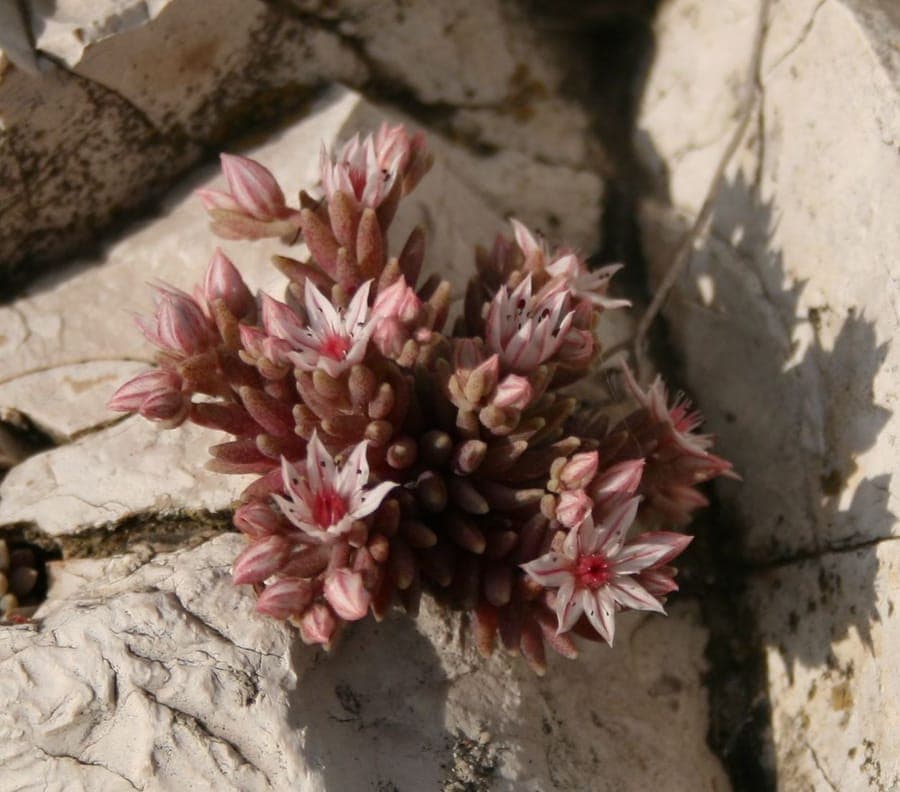
Franz Xaver / CC BY-SA 3.0, via Wikimedia Commons
Spanish stonecrop: complete guide
Sedum hispanicum
Want to see Spanish stonecrop: complete guide in your garden?
1 minute, no credit card
Overview
Sedum hispanicum, commonly known as Spanish stonecrop, is a low-growing, creeping succulent that thrives in dry, sunny garden spots. As a member of the Crassulaceae family, it stores water in its fleshy leaves, making it a top choice for gardeners dealing with drought or limited watering schedules. Native to southern Europe and parts of the Middle East - including Greece, Italy, Bulgaria, and Iran - this plant is naturally adapted to rocky slopes and wall crevices. It handles poor soil and intense sun like a pro, which is why it's gaining popularity across UK and North American gardens.
In the UK, it's not native, but it grows beautifully in gravel gardens, between paving stones, or spilling over the edges of raised beds. Its compact size and drought tolerance make it perfect for modern, eco-conscious gardens. On gardenworld.app, you can design a drought-resistant garden layout that features Spanish stonecrop as a key ground cover, tailored to your garden's sun exposure and soil type.
Appearance & bloom cycle
Spanish stonecrop forms dense, creeping mats that reach only 5–8 cm in height. The foliage is small, oval, and tightly packed, with a distinctive blue-green hue. In full sun, the leaf tips often blush pink, adding subtle seasonal interest. From July to September, it produces tiny star-shaped flowers in soft pink to white shades. These blooms are a magnet for pollinators like bees and hoverflies, making it a valuable addition to wildlife-friendly gardens.
The blooming period is impressively long for such a compact succulent. After flowering, the dried seed heads often persist through winter, offering visual texture and structure when other plants have died back. The plant spreads slowly but steadily, filling in gaps without becoming invasive.
Ideal location
Plant in full sun - at least 6 hours of direct sunlight daily. Partial shade is acceptable, but too much shade leads to leggy growth and reduced flowering. Spanish stonecrop excels in rock gardens, green roofs, wall crowns, or as a trailing plant in containers. Its low, spreading habit makes it ideal for edging paths or softening the edges of retaining walls.
Use the sun mapping tool on gardenworld.app to find the sunniest spots in your garden. That way, you can position your Spanish stonecrop where it'll perform best.
Soil requirements
This succulent needs sharply drained soil. Avoid heavy clay or water-retentive soils, which cause root rot. Amend garden soil with coarse sand or gravel (50:50 mix) to improve drainage. It prefers lean, low-fertility soils - rich compost can actually harm it by encouraging weak, floppy growth.
For containers, use a cactus or succulent mix with added perlite, pumice, or lava grit. Keep pH between 6.0 and 7.5. Never use moisture-retaining gels or water crystals.
Free design
Want to see Spanish stonecrop: complete guide in your garden? Make a free design now.
Watering
Water sparingly. Only irrigate when the soil is completely dry - typically every 10–14 days in summer, depending on rainfall. In containers, check the top 2–3 cm of soil; if dry, water thoroughly but allow quick drainage. Never let the plant sit in water.
During winter, watering should be minimal or stopped entirely, especially if the plant is outdoors. Overwatering in cold, wet conditions is the most common cause of failure.
Pruning
No pruning is required. If needed, tidy up old or dead stems in early spring with sharp scissors. This isn't necessary for health, but helps maintain a neat appearance. The plant regenerates quickly and spreads to cover bare patches on its own.
Maintenance calendar
- Jan: Dormant; no action needed
- Feb: Check for frost damage
- Mar: Remove any dead foliage if present
- Apr: Monitor for new growth
- May: Begin light drought monitoring
- Jun: Inspect for developing flower buds
- Jul: Peak bloom; ensure good airflow
- Aug: Continue dry conditions; avoid overwatering
- Sep: Blooming tapers off
- Oct: Leave seed heads for winter interest
- Nov: Protect from prolonged wet cold
- Dec: Full dormancy; no watering
Winter hardiness
Sedum hispanicum is hardy to around -15°C (USDA Zone 7). In the UK (Zone 8–9), it usually survives winter outdoors if planted in well-drained soil. The real danger comes from wet, cold soil - not the cold itself. To improve survival, plant on a slope, use a gravel mulch, or grow in a raised bed. In harsh, wet winters, a light mulch of straw or bracken can help, but avoid smothering the plant.
Companion plants
Pair with other drought-tolerant species like Thymus vulgaris, Sedum 'Autumn Joy', Helianthemum nummularium, or Nepeta faassenii. These share similar cultural needs and create a harmonious, low-water planting scheme. Avoid moisture-loving plants like ferns or hostas, which require opposite conditions.
For design inspiration, use gardenworld.app to generate a custom planting plan based on your garden's dimensions and light conditions.
Closing
Spanish stonecrop is a quiet achiever in the garden. It doesn't demand attention, but it delivers year-round structure, summer blooms, and pollinator support with minimal effort. Plant it in sunny, dry areas where other plants struggle, and let it do its thing. Available at most garden centres in the UK, often in 7 cm pots. For best effect, plant in groups of at least 5 per square metre. A smart, sustainable choice for modern, low-maintenance gardens.
Want to see Spanish stonecrop: complete guide in your garden? Make a free design now.
Upload a photo, pick a style, and get a photorealistic design with plant list in under a minute.
No credit card required


Similar plants
Sedum nevadense: complete guide
Sedum nevadense
Discover Sedum nevadense, the stunning alpine stonecrop from the Pyrenees. Expert care tips, growing requirements, and design ideas for rock gardens.
Aizoon stonecrop: complete guide
Phedimus aizoon
Everything about Phedimus aizoon - the frost-tolerant aizoon stonecrop from Siberia with bright yellow flowers. Planting, care and garden use.
Roseroot: complete guide
Rhodiola rosea
Everything about roseroot (Rhodiola rosea): a tough hardy succulent ideal for rock gardens, green roofs, and dry sunny positions.