
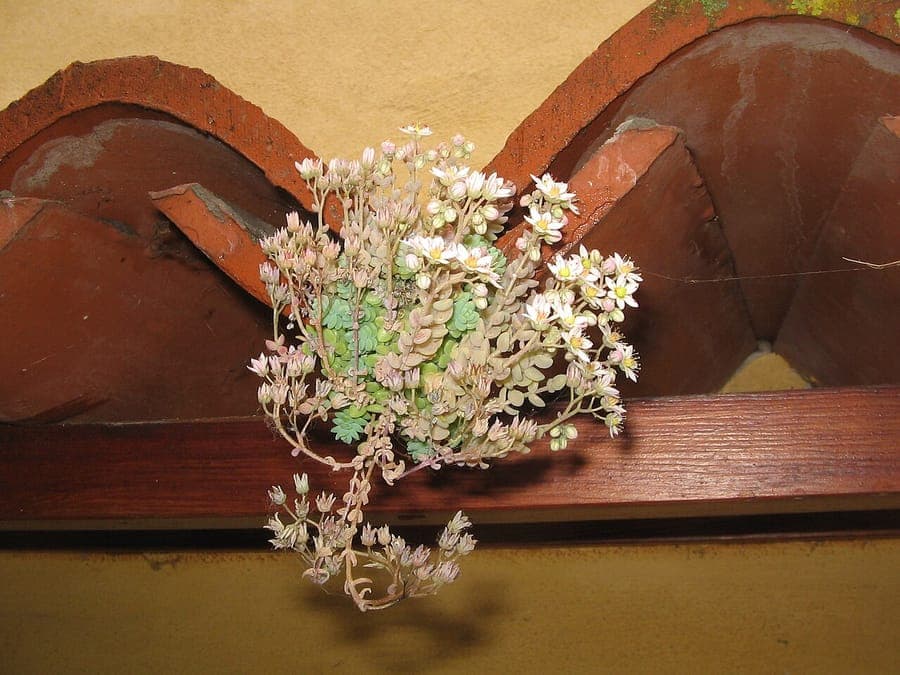
Dэя-Бøяg / CC BY-SA 3.0, via Wikimedia Commons
Thick-leaf stonecrop: complete guide
Sedum dasyphyllum
Want to see Thick-leaf stonecrop: complete guide in your garden?
1 minute, no credit card
Overview
Thick-leaf stonecrop, or Sedum dasyphyllum, is a no-fuss succulent that thrives where other plants struggle. Native to southern Europe, this low-growing perennial forms dense, moss-like mats that handle heat, drought, and poor soil with ease. It's not flashy, but it's dependable - perfect for gardeners who want beauty without the upkeep. Whether you're filling gaps between pavers, softening a retaining wall, or designing a green roof, this plant holds its own.
At just 5–8 cm tall, it stays close to the ground, spreading slowly to form a living carpet. It's hardy in USDA zones 7 to 9, making it suitable for much of the UK, US, and central Europe. Unlike taller sedums, it won't flop or need staking. If you're sketching out a drought-tolerant design, consider using gardenworld.app to map out where this plant fits best in your layout.
Appearance & bloom cycle
The foliage is the main attraction - tiny, fleshy, oval leaves in a rich green with a silvery bloom. They're packed tightly along creeping stems, creating a cushion effect. Each leaf is only 5–8 mm long, but together they form a dense, weed-suppressing mat. In midsummer - July and August - clusters of small white, star-shaped flowers appear on short stalks. They're not huge, but they draw in pollinators like hoverflies and small bees, adding quiet activity to a hot, dry garden.
The bloom lasts about three weeks, depending on conditions. After flowering, the seed heads dry but remain attractive into autumn, offering subtle texture. No deadheading is needed - the plant handles its lifecycle on its own.
Ideal location
Full sun is best - aim for 6 to 8 hours of direct light daily (light level 8/10). It tolerates partial shade, but in low light, the stems stretch and the plant thins out. Use it in hot, exposed spots: on green roofs, between stepping stones, on gravel paths, or atop dry stone walls. It's not meant for heavy foot traffic, but it can handle occasional stepping, especially in narrow paths.
In containers, pair it with upright succulents like Echeveria or taller sedums. It acts as a living mulch, reducing evaporation and keeping the soil surface cool. Avoid planting it under trees or near large shrubs where root competition and shade will weaken it.
Soil requirements
This plant hates wet feet. The soil must drain fast. A gritty mix with sand, perlite, or crushed granite works best. Ideal pH is between 5.5 and 6.5 - slightly acidic to neutral. If your garden soil is heavy clay, amend it with gravel or plant in raised beds. In pots, use a commercial succulent mix, available at most garden centres.
If you're unsure about your soil's drainage, gardenworld.app offers a simple soil assessment tool to help you decide if adjustments are needed before planting.
Free design
Want to see Thick-leaf stonecrop: complete guide in your garden? Make a free design now.
Watering
Water only when the top 2–3 cm of soil is dry. During active growth (April to September), that's about every 10 to 14 days in average conditions. In cooler, rainy summers, you might not need to water at all. In winter, stop watering completely - the plant goes dormant and stores moisture in its leaves.
Overwatering is the top cause of failure. Wet soil leads to root rot, especially in winter. Always use pots with drainage holes, and avoid saucers that hold water. If rain is frequent, lean the pot slightly to encourage runoff.
Pruning
Pruning isn't necessary, but you can tidy up leggy or damaged growth in early spring (March or April). Use clean scissors to cut back brown or sparse patches. The removed stems can be used as cuttings - just lay them on dry soil in a sunny spot. They'll root within weeks with no extra care.
If the plant becomes too dense, a light trim encourages fresh, even growth. Don't cut into old wood - it doesn't regenerate well from bare stems.
Maintenance calendar
- Jan: Dormant. No water or fertilizer.
- Feb: Check for winter damage. Keep dry.
- Mar: Remove dead foliage. Prepare for new growth.
- Apr: Plant cuttings. Begin light watering if dry.
- May: Steady growth. No intervention.
- Jun: Flower buds forming. Watch for pests (rare).
- Jul: Blooming begins. Attracts pollinators.
- Aug: Peak bloom. Continue light care.
- Sep: Reduce watering as growth slows.
- Oct: Dormancy begins. No feeding.
- Nov: Protect container plants in wet areas.
- Dec: Fully dormant. Avoid moisture.
Winter hardiness
Hardy in USDA zones 7–9. In zone 7, it may need a light mulch in wet winters to prevent rot. In zones 8 and 9, it usually survives uncovered. The key is drainage - frozen, soggy soil kills it faster than cold temps. For potted plants, elevate them on feet or move to a covered area during prolonged rain.
Companion plants
Pair it with other drought-tolerant species: Thymus praecox, Sempervivum, Allium neapolitanum, or creeping phlox. These share the same sun and soil needs. Avoid moisture-loving plants like ferns or astilbe - they'll either dry out or force you to overwater the sedum.
In a rock garden, it complements sedges, dwarf conifers, and ornamental grasses. Its low profile adds texture without competing for space.
Closing
Thick-leaf stonecrop is a quiet achiever - it doesn't shout, but it delivers. It's perfect for tough spots, needs no fertilizer, and asks for almost nothing in return. Buy it from garden centres, or look for specialist succulent growers online. Once established, it'll spread slowly and stay green most of the year. If you're planning a low-water garden, this plant deserves a spot - and gardenworld.app can help you place it just right.
Want to see Thick-leaf stonecrop: complete guide in your garden? Make a free design now.
Upload a photo, pick a style, and get a photorealistic design with plant list in under a minute.
No credit card required


Similar plants
Sedum nevadense: complete guide
Sedum nevadense
Discover Sedum nevadense, the stunning alpine stonecrop from the Pyrenees. Expert care tips, growing requirements, and design ideas for rock gardens.
Aizoon stonecrop: complete guide
Phedimus aizoon
Everything about Phedimus aizoon - the frost-tolerant aizoon stonecrop from Siberia with bright yellow flowers. Planting, care and garden use.
Roseroot: complete guide
Rhodiola rosea
Everything about roseroot (Rhodiola rosea): a tough hardy succulent ideal for rock gardens, green roofs, and dry sunny positions.