
Ghislain118 http://www.fleurs-des-montagnes.net / CC BY-SA 3.0, via Wikimedia Commons
Pink stonecrop: complete guide
Sedum cepaea
Want to see Pink stonecrop: complete guide in your garden?
1 minute, no credit card
Overview
Sedum cepaea, commonly known as Pink stonecrop, is a compact succulent belonging to the Crassulaceae family. Native to rocky slopes and dry limestone areas in southern Europe - including regions of Greece, Italy, France, and the Balkans - this hardy perennial thrives in tough conditions where other plants struggle. Reaching a height of 15–25 cm with a spread of up to 30 cm, it forms dense, low mounds that make excellent ground cover in rock gardens, dry borders, or between pavers.
Ideal for gardeners seeking low-effort, high-impact plants, Pink stonecrop is drought-tolerant, pest-resistant, and attracts pollinators. Its subtle beauty and resilience make it a favourite among both new and experienced gardeners. On gardenworld.app, you can design a garden layout that highlights the plant's texture and bloom cycle, especially when paired with other succulents and gravel-loving species.
Appearance & bloom cycle
The foliage of Sedum cepaea is one of its standout features. The leaves are fleshy, blue-green, and arranged in tight rosettes at the tips of short, branching stems. They have a slightly incurved shape, giving the plant a soft, cushion-like appearance. The leaves store water efficiently, allowing the plant to withstand long dry spells.
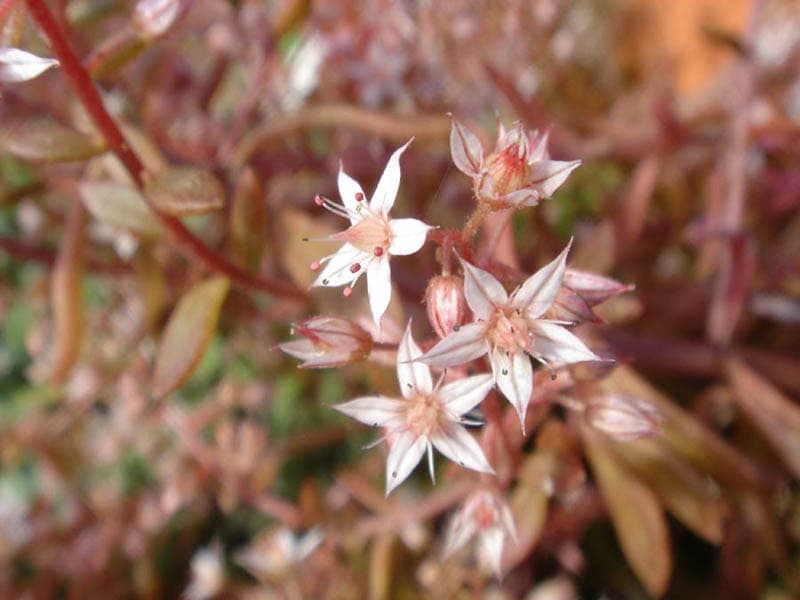
From June through August, upright flowering stems rise above the foliage, bearing open panicles of tiny star-shaped flowers. These bloom in delicate shades of white to pale purple, creating a soft haze over the plant. The flowers are rich in nectar and attract bees, hoverflies, and small butterflies. Even after blooming, the dried flower heads persist into winter, adding architectural interest to the dormant garden.
Ideal location
Pink stonecrop performs best in light levels rated 5 out of 10 - meaning partial sun to light shade. While it can tolerate full sun in cooler climates, in hotter regions it benefits from afternoon shade to prevent leaf scorch. In the UK and similar temperate zones, a south- or west-facing spot works well, especially on slopes, rockeries, or in raised beds.
This plant is perfect for green roofs, wall crevices, container gardens, or gravel pathways. Avoid placing it in deep shade or under dense tree canopies where moisture lingers. On gardenworld.app, you can map out microclimates in your garden to find the optimal spot for Sedum cepaea based on sun exposure and drainage.
Soil requirements
Well-drained soil is non-negotiable. The ideal pH range is 5.5 to 6.5 - slightly acidic to neutral. Avoid heavy clay soils unless amended with grit, sand, or perlite to improve drainage. A mix of loam, coarse sand, and a bit of organic compost works well in beds. For containers, use a commercial succulent or cactus mix.
This plant tolerates poor, rocky soils and even shallow substrates. It does not require rich soil; in fact, overly fertile conditions may lead to leggy growth and reduced flowering. Avoid water-retentive soils, especially in winter, as this increases the risk of root rot.
Free design
Want to see Pink stonecrop: complete guide in your garden? Make a free design now.
Watering
Once established, Pink stonecrop needs minimal watering. Young plants should be watered regularly during their first growing season to help roots develop. After that, rely on natural rainfall except during prolonged droughts. When watering, soak the soil deeply but infrequently, allowing it to dry out completely between sessions.
Overwatering is the most common cause of failure. In winter, reduce watering to almost zero, especially for potted plants. Ensure containers have drainage holes and avoid letting plants sit in standing water.
Pruning
Pruning is minimal. After flowering ends in late summer, you can deadhead the spent flower stalks by cutting them back to the base of the rosette. This keeps the plant looking tidy and may encourage a second, lighter flush of blooms in mild autumns.
In early spring, remove any dead or damaged foliage to make way for new growth. Use clean, sharp shears to prevent disease spread. Never cut into old, woody stems, as they may not regenerate.
Maintenance calendar
- January: Dormant. Keep dry. Protect pots from frost.
- February: Check for damaged stems. Remove any mushy tissue.
- March: Begin light soil aeration. No feeding required.
- April: New growth appears. Add gritty sand to improve drainage.
- May: Prepare for bloom. Water only if soil is dry.
- June: Bloom begins. Ensure good air circulation.
- July: Peak flowering. Watch for leggy growth - may indicate too much shade or water.
- August: Flowers fade. Deadhead if desired.
- September: Leave some seed heads for winter texture.
- October: Reduce watering. Plant enters dormancy.
- November: Move containers to sheltered areas.
- December: Full dormancy. Keep dry and frost-free if in pots.
Winter hardiness
Sedum cepaea is hardy in USDA zones 6 to 9. In zone 8 and above, it typically survives winter with little to no dieback. In colder zones, the top growth may die back, but the plant usually re-sprouts from the base in spring. The key to winter survival is dry soil - wet roots in freezing temperatures are fatal.
For container-grown plants, overwinter in a cold frame, unheated greenhouse, or against a south-facing wall with cover.
Companion plants
Pair Pink stonecrop with other drought-tolerant, sun-loving plants. Excellent companions include Thymus serpyllum, Sedum spurium, Eryngium, Allium, and Nepeta. These share similar soil and light needs and create a cohesive, low-water planting scheme.
Avoid moisture-loving plants like hostas or ferns. In rock gardens, it combines beautifully with Sempervivum, creeping phlox, or dwarf conifers.
Closing
Pink stonecrop is a quiet achiever in the garden - unassuming but incredibly reliable. With its fleshy foliage, long bloom time, and minimal care needs, it's perfect for modern, eco-conscious landscapes. Whether you're filling gaps in a stone wall or designing a gravel garden, this plant delivers year-round interest.
You can find Sedum cepaea at garden centres across the UK and online. Look for healthy, compact plants with firm leaves. When planning your planting scheme, use gardenworld.app to visualise how this succulent fits into your overall garden design, ensuring the right companions and conditions for success.
Want to see Pink stonecrop: complete guide in your garden? Make a free design now.
Upload a photo, pick a style, and get a photorealistic design with plant list in under a minute.
No credit card required


Similar plants
Sedum nevadense: complete guide
Sedum nevadense
Discover Sedum nevadense, the stunning alpine stonecrop from the Pyrenees. Expert care tips, growing requirements, and design ideas for rock gardens.
Aizoon stonecrop: complete guide
Phedimus aizoon
Everything about Phedimus aizoon - the frost-tolerant aizoon stonecrop from Siberia with bright yellow flowers. Planting, care and garden use.
Roseroot: complete guide
Rhodiola rosea
Everything about roseroot (Rhodiola rosea): a tough hardy succulent ideal for rock gardens, green roofs, and dry sunny positions.