
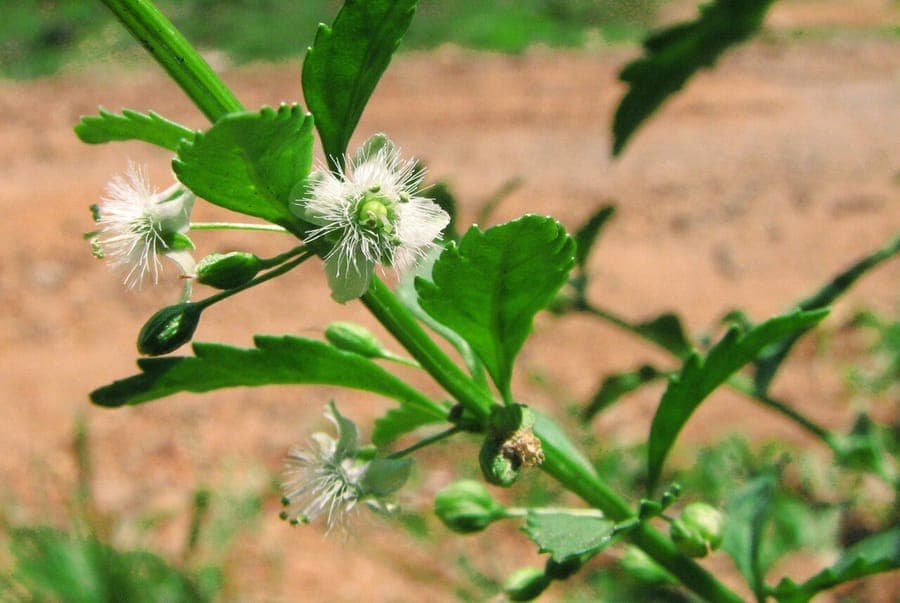
Deepugn / Public domain, via Wikimedia Commons
Scoparia dulcis: complete guide
Scoparia dulcis
Want to see Scoparia dulcis: complete guide in your garden?
1 minute, no credit card
Overview
Scoparia dulcis, commonly known as scoparia-weed, is an elegant herbaceous plant from the Plantaginaceae family. This compact plant with fine, intricately branched growth and delicate foliage thrives in warm, sunny corners of your front yard. Originally from tropical and subtropical America, it now flourishes in temperate climates with adequate warmth.
The plant is prized for its soft green canopy, which adds an airy quality to borders and containers. Although small and refined, Scoparia dulcis has great potential as a groundcover or as an underplanting for larger structural elements in your garden design.
Appearance and bloom
Scoparia dulcis grows into a compact, bushy herb typically reaching 30-40 centimeters in height. The stems are thin and highly branched, with small, lance-shaped leaves arranged in whorls along the branches. This creates a very fine, almost hazy appearance when the plant matures.
The flowers are small, white to pale pink, and emerge gradually along the stems during the growing season. They are not dramatic, but offer a delicate beauty that perfectly suits natural, informal garden styles. Followed by numerous small seeds stored in capsules.
Ideal location
Scoparia dulcis thrives best in a sunny to lightly shaded spot in your front yard. The plant needs at least 4-6 hours of direct sunlight daily to grow well. In warm climates, light afternoon shade can even prevent leaf scorch.
It is not a plant for deep shade locations - it will become thin and sparse there. Place it near pathways, in borders along the lawn, or in containers where sunlight is optimally utilized. The elegant growth habit is also ideal for supporting larger groundcover plantings.
Soil
Well-draining, light soil is essential for Scoparia dulcis. The plant dislikes waterlogging and quickly develops root rot in heavy, wet soils. Mix your soil with sand, gravel, or perlite to improve drainage.
The plant is not particularly demanding regarding soil fertility. Average, moderately nutrient-rich soil suffices. In very fertile soils, it may grow too vigorously. For containers and pots, use a mixture of potting soil and sand in a 2:1 ratio.
Watering
Scoparia dulcis has moderate water needs. Water regularly but allow the soil to dry slightly between waterings. Too much water causes damage; you risk rot and fungal issues. During the growing period (spring-summer), water twice weekly depending on weather conditions.
During drier periods, monitor soil moisture carefully. A finger test helps: if you feel moisture to 2cm depth in the soil, no need to water yet. In autumn and winter, reduce watering drastically - water only once every two weeks if frost threatens.
Free design
Want to see Scoparia dulcis: complete guide in your garden? Make a free design now.
Pruning and maintenance
Scoparia dulcis responds well to regular pruning, creating a more compact, fuller form. Begin light pruning in spring once new growth becomes visible. Remove dead, damaged, or diseased stems completely.
For a neater appearance, trim longer shoots back to about two-thirds of their length. This stimulates side branching and a fuller plant. Remove spent flowers regularly to encourage continued blooming. For potted plants: bring indoors for winter or place behind windbreaks in sheltered locations.
Maintenance calendar
Spring: Prune back, remove dead parts, apply light fertilizer. Summer: Regular watering, fertilizer every two weeks. Autumn: Reduce water, decrease fertilization. Winter: Minimal watering, no pruning, protection in cold climates.
Winter hardiness
Scoparia dulcis is not frost hardy in regions with freezing temperatures. In areas with mild winters (minimum -2 to 0 degrees Celsius), it can remain outdoors if well protected with mulch and windbreaks. Elsewhere, it's best brought inside as a houseplant or moved to a warm greenhouse for winter.
In containers, overwintering is simpler - place pots in a bright, cool location (10-15 degrees) and water minimally. Outdoors they grow only as annual plants.
Companion plants
Scoparia dulcis combines beautifully with other fine-branched herbs like Pentas, Plectranthus, and small Salvia species. The delicate structure is well highlighted by heavier-leaved plants like Heuchera or Coleus. For color, choose blooming neighbors in white, pink, or red tones.
In borders along informal paths, create nice volume contrasts with Scoparia dulcis groups at the base and taller elements behind. For containers, combine with trailing plants if you want a cascade effect.
Conclusion
Scoparia dulcis is an underrated treasure for those who love fine, delicate plant spaces. Easy to care for, elegant in appearance, and flexible in placement, this herbaceous plant deserves more attention from garden lovers. Order your specimen now from quality garden retailers and give your front yard that refined, natural character that Scoparia dulcis promises. Discover more gardening tips and plant guides on gardenworld.app!
Want to see Scoparia dulcis: complete guide in your garden? Make a free design now.
Upload a photo, pick a style, and get a photorealistic design with plant list in under a minute.
No credit card required


Similar plants
White Beardtongue: complete guide
Penstemon albidus
Discover white beardtongue (Penstemon albidus) - elegant perennial with white to cream flowers. Drought-resistant, perfect for prairie and dry gardens.
Longsepal Beardtongue: complete guide
Penstemon calycosus
Discover longsepal beardtongue (Penstemon calycosus) - beautiful perennial with lilac-blue flowers. For partial shade and moist soil. Ideal for naturalized.
Penstemon cusickii: complete guide
Penstemon cusickii
Discover Cusick's beardtongue, a compact alpine flowering plant with violet-pink blooms. Perfect choice for rock gardens and water-wise landscaping.