
Francesco Rigotti / CC BY-SA 4.0, via Wikimedia Commons
Burser's saxifrage: complete guide
Saxifraga burseriana
Want to see Burser's saxifrage: complete guide in your garden?
1 minute, no credit card
Overview
Saxifraga burseriana, also called Burser's saxifrage or Bursers steinbrech, is a rare alpine rock plant native to the Eastern Alps. This remarkable saxifrage is celebrated for its extremely compact growth and spectacular white flowers appearing early in the season. For the true alpine plant enthusiast, this is a must-have species - diminutive, elegant, and full of character.
Appearance and Bloom
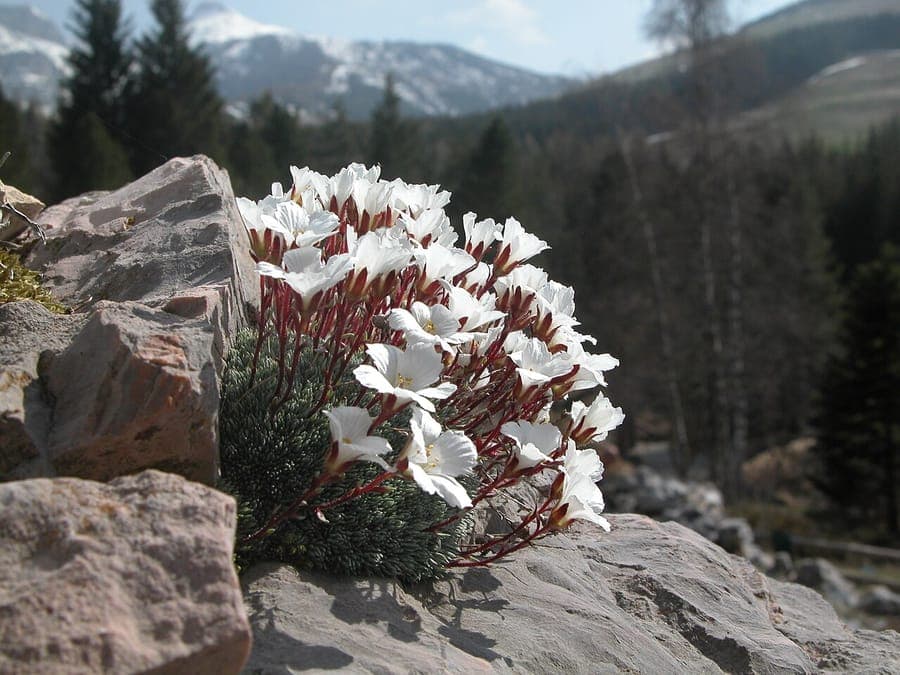
Burser saxifrage forms extraordinarily dense rosettes of fine leaves, rarely exceeding 5 centimeters across. This is among the most compact saxifrages, maintaining identical size year after year. Flowers are white, sometimes with rosy tints, emerging in April-May - exceptionally early in the season. Dense flower clusters completely transform the tiny plant during bloom.
Ideal Location
Full sun is essential. This alpine dweller grows on very stony Eastern Alpine slopes, demanding abundant light. Windy spots are ideal - air movement prevents fungal issues. Protection from intense afternoon sun in very hot regions is sometimes needed. Raised beds are perfect.
Soil
Gritty, ultra-porous soil is critical. This is not a plant for standard compost. Create an extremely permeable alpine mix combining alpine grit, coarse sand, gravel and perlite. Soil pH 7.5-8.5 is ideal. The mixture should feel almost entirely stony - the plant tolerates no waterlogging whatsoever.
Free design
Want to see Burser's saxifrage: complete guide in your garden? Make a free design now.
Watering
Minimal water needed. Water only when soil becomes completely parched - once every three weeks in summer often suffices. During wet spells, withhold water entirely. This is a plant for dry gardeners. Winter watering should virtually cease.
Pruning
Pruning is nearly impossible given the diminutive size. Remove only faded flowers with extreme care. Dead leaves can be gently removed. The plant maintains its form naturally.
Maintenance Calendar
Spring (March-May): Water with extreme care as blooming begins. No feeding required.
Summer (June-August): Keep very dry. Observation is important.
Autumn (September-October): Dramatically reduce watering.
Winter (November-February): Keep dry. Protection against wet snow recommended.
Winter Hardiness
Extremely cold-hardy - from high Eastern Alpine elevations, this plant tolerates temperatures to -25 degrees Celsius and below. The true enemy is wet winter, not cold. Ensure impeccable drainage.
Companion Plants
Perfect alpine compositions with:
- Tiny alpine phloxes
- Miniature dianthus
- Tiny sedums
- Alpine astilbes
- Miniature alpine honeysuckles
Closing
Burser saxifrage represents the summit of alpine plant artistry. Tiny, elegant, challenging, yet immensely rewarding. Perfect for enthusiasts truly dedicating themselves to rock gardening mastery. Complete your alpine collection on gardenworld.app - design a garden that true plant collectors will envy today!
Want to see Burser's saxifrage: complete guide in your garden? Make a free design now.
Upload a photo, pick a style, and get a photorealistic design with plant list in under a minute.
No credit card required


Similar plants
Scree saxifrage: complete guide
Saxifraga androsacea
Master the elegant Scree saxifrage - a high-alpine rock plant with white blooms and minimal care demands. Perfect for alpine troughs and rocky gardens.
Stiff-haired saxifrage: complete guide
Saxifraga aspera
Discover the striking Stiff-haired saxifrage with its distinctive bristly leaves and delicate white blooms. Perfect for alpine troughs and specialist rock gardens.