
Algirdas at Lithuanian Wikipedia / CC BY-SA 3.0, via Wikimedia Commons
Red-berry elder: complete guide
Sambucus racemosa
Want to see Red-berry elder: complete guide in your garden?
1 minute, no credit card
Overview
Sambucus racemosa, commonly known as red-berry elder, is a deciduous shrub or small tree that brings early-season interest to the garden. Native from Alaska through the Alps and into Eastern Europe, it thrives in cool, moist woodlands and along stream banks. Unlike its more familiar cousin, black elder (Sambucus nigra), red-berry elder stays more compact, usually reaching 2–3 meters in height with a spread of 1.5–2 meters. That makes it a smarter fit for smaller gardens or naturalistic plantings.
On gardenworld.app, you can design a garden layout that takes full advantage of this plant's preference for dappled shade and moist soil. It's also a great tool to visualize how the shrub will interact with surrounding trees and underplantings over time.
Appearance & bloom cycle
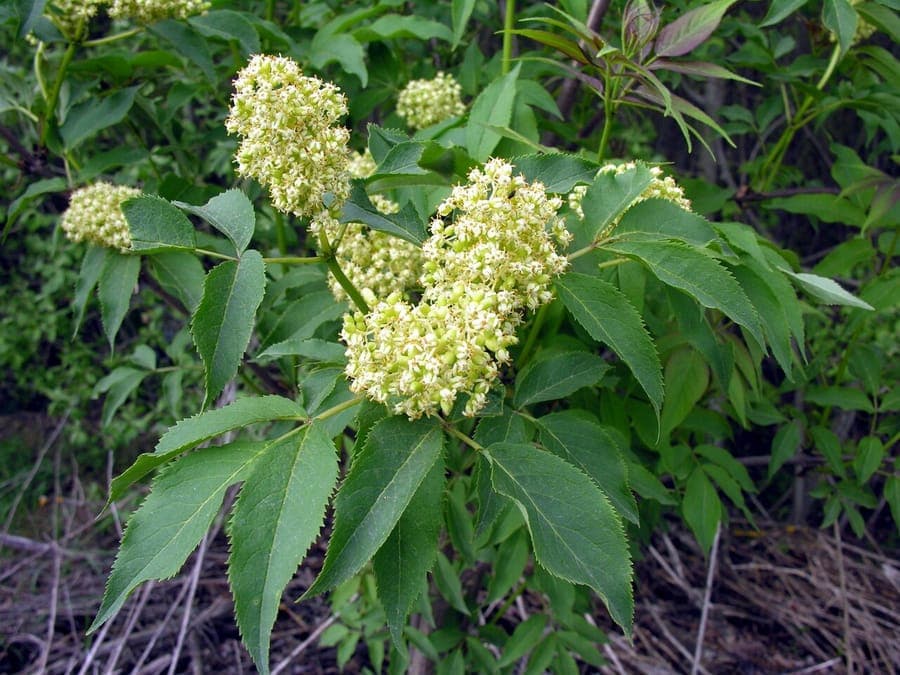
Red-berry elder unfolds fresh green, pinnate leaves in April, each with 5 to 7 lance-shaped leaflets. The foliage emits a faint spicy scent when crushed-somewhere between parsley and pepper. From late April to early June, fragrant clusters of creamy-yellow flowers appear in flat-topped panicles up to 15 cm wide. These attract bees, hoverflies, and early butterflies.
By July, the flowers develop into dense clusters of bright red berries. While poisonous to humans when raw, they are a valuable food source for birds like thrushes, warblers, and grosbeaks. The berries usually persist into early autumn before being fully consumed. Fall color is modest-yellow to pale gold-but the bare, upright stems remain attractive through winter, especially when lightly frosted.
Ideal location
This elder thrives in partial shade, scoring a 5 out of 10 on the light scale. A spot beneath open-canopy trees, on a north-east facing slope, or at the edge of a woodland garden suits it best. It can tolerate full sun if the soil stays reliably moist, but in hot climates, full sun may lead to scorched leaves and reduced flowering.
Avoid planting in deep shade or under dense evergreens-growth will be leggy and flowering sparse. Use gardenworld.app to map light patterns in your yard across seasons, so you don't accidentally place it where it'll be overshadowed later by growing trees.
Soil requirements
Red-berry elder prefers moist, humus-rich soil with a pH between 5.0 and 5.5. It does well in loamy or clay-loam soils as long as drainage is adequate. The key is consistent moisture without waterlogging. Incorporate generous amounts of leaf mold or well-rotted compost when planting.
Avoid alkaline soils-these can cause iron chlorosis, visible as yellowing between leaf veins. If your soil is chalky, consider planting in a raised bed with ericaceous compost. Mulch annually with pine needles or oak leaves to maintain acidity and moisture.
Free design
Want to see Red-berry elder: complete guide in your garden? Make a free design now.
Watering
During the first growing season, water weekly with at least 10 liters per plant, especially during dry spells. Once established, the shrub is moderately drought-tolerant but performs best with consistent soil moisture. In prolonged dry periods, give a deep soak every 10 days.
Never let the root ball dry out completely, particularly in spring when flower buds are forming. Drought stress can cause bud drop and weak flowering. On the other hand, avoid soggy soil-root rot can set in if drainage is poor.
Pruning
Pruning is rarely needed. The natural form is upright and tidy. If size control is necessary, prune right after flowering or in late winter before bud break. Avoid heavy cutting into old wood, as this species doesn't regenerate well from dormant buds.
For rejuvenation, remove one or two of the oldest stems at ground level each year. This encourages new growth from the base and keeps flowering strong. Always use clean, sharp tools to prevent disease transmission.
Maintenance calendar
- Jan: inspect structure, remove dead or damaged wood
- Feb: light pruning if needed
- Mar: check for aphids, apply organic slug barrier if necessary
- Apr: apply balanced organic fertilizer
- May: flowering peak, monitor for drought
- Jun: flowers fade, berries begin forming
- Jul: bird activity increases, berries ripen
- Aug: minimal care, avoid disturbing nesting birds
- Sep: foliage may yellow slightly, leave fallen leaves as mulch
- Oct: top up mulch with leaf mold
- Nov: reduce watering, prepare for dormancy
- Dec: check winter hardiness, protect young plants in exposed sites
Winter hardiness
Red-berry elder is extremely cold-hardy, thriving in USDA zones 3 to 7. It withstands temperatures down to -40°C. Established plants need no protection, but first-year shrubs may benefit from a 10 cm layer of leaf mulch around the base to prevent frost heave.
In harsh winters, top dieback can occur, but the plant typically resprouts from the base. Avoid heavy snow loads on branches by positioning away from roof drip lines.
Companion plants
Pair with woodland associates: foamflower (Tiarella), columbine (Aquilegia), Solomon's seal (Polygonatum), and native ferns like Dryopteris. These share similar soil and light needs. For seasonal contrast, plant with spring ephemerals such as bloodroot (Sanguinaria) or trout lily (Erythronium).
Avoid aggressive spreaders like mint or goldenrod unless contained. Also, steer clear of shallow-rooted competitors that dry out the topsoil too quickly.
Closing
Red-berry elder is a resilient, low-maintenance shrub that supports wildlife and adds subtle beauty across seasons. It's not flashy, but it's dependable-perfect for gardeners who value ecology over ornament. You'll find it at independent garden centres, especially those specializing in native or woodland plants. Look for bare-root stock in late winter for best results and value. Remember: the red berries are toxic to humans, so keep children informed. Use it as a natural screen, a habitat booster, or a quiet accent in a shaded border.
Want to see Red-berry elder: complete guide in your garden? Make a free design now.
Upload a photo, pick a style, and get a photorealistic design with plant list in under a minute.
No credit card required


Similar plants
Squashberry: complete guide
Viburnum edule
Grow mooseberry (Viburnum edule): ultra-hardy North American shrub with fragrant white flowers and red autumn berries. Perfect for boreal gardens. Zone 3.
Witherod: complete guide to this elegant North American shrub
Viburnum cassinoides
Discover Viburnum cassinoides: an elegant North American shrub with white flowers, yellow fall foliage, and blue berries. Perfect for temperate garden zones.
Buddlejaleaf viburnum: complete guide
Viburnum buddleifolium
Elegant evergreen shrub with delicate foliage and white spring flowers. Perfect for sheltered borders in temperate gardens.