
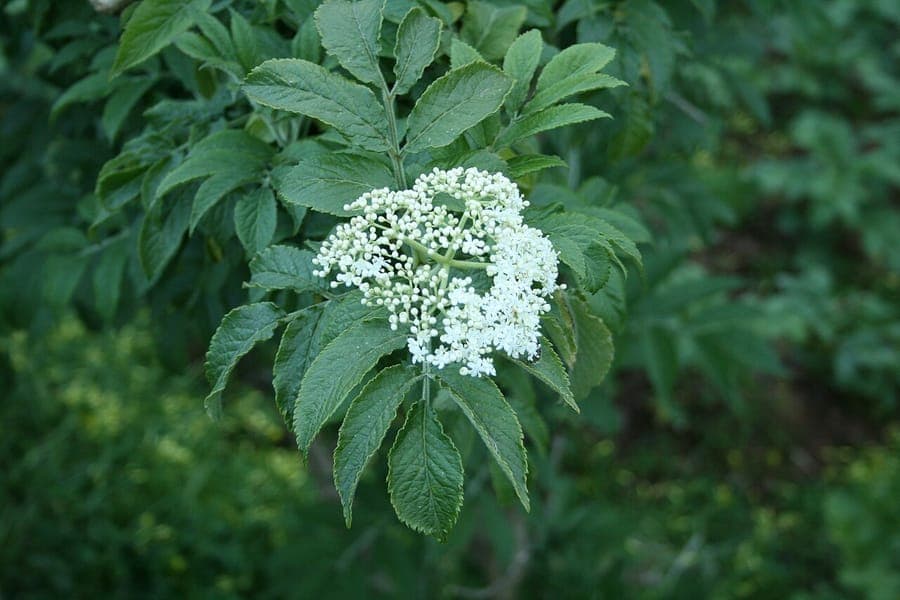
PabloCabBel / CC BY-SA 3.0, via Wikimedia Commons
Canary Islands Elder: complete guide
Sambucus palmensis
Want to see Canary Islands Elder: complete guide in your garden?
1 minute, no credit card
Overview
Canary Islands Elder (Sambucus palmensis) is a rare and fascinating shrub endemic to the Canary Islands, specifically Tenerife and La Palma. This botanical jewel is rarely cultivated outside its natural habitat, making it an exceptionally special plant for collectors and enthusiasts of unique garden specimens.
With its elegant growth habit, fragrant white flowers, and dark berries, this plant combines beauty with ecological value. It attracts birds and pollinators, making it a worthwhile addition to sustainable gardens.
Appearance & bloom
Canary Islands Elder grows as a small to medium-sized shrub reaching 3-6 meters in ideal conditions. The structure is branching and elegant, with slender branches and fine architectural form.
Leaves are pinnate, deep green, and possess a fine, graceful shape. In summer, the plants produce white, fragrant flowers arranged in large, flat flower clusters (corymbs). These flowers are highly attractive to bees and hoverflies.
Following pollination, black berries develop that are extremely attractive to birds, especially thrushes and blackbirds. The berries ripen in fall and provide an important food source for migrating birds.
Ideal location
Canary Islands Elder thrives in sunny locations, though it tolerates some partial shade.
Optimal placement:
- Full sun to light partial shade
- Protected location from strong winds
- Good air circulation
- Suitable only in mild climates (unsuitable for harsh winters)
It grows naturally in forested mountain slope environments on the Canary Islands, so protection from excessive wind is recommended.
Soil
Canary Islands Elder prefers well-draining, nutrient-rich soil.
Ideal soil composition:
- Well-draining garden soil
- Organic richness (compost, leaf mold)
- pH neutral to slightly acidic (6-7)
- Not wet or waterlogged
This plant cannot tolerate wet feet and will rot in permanent moisture.
Watering
Canary Islands Elder is quite drought-tolerant once established but benefits from regular water during growing seasons.
At planting:
- Water thoroughly at planting
- Keep consistently moist for 6 weeks
Established plant (after first year):
- In normal rainfall areas, regular water during growing seasons (spring-fall)
- Water during dry spells
- Minimal water needed in winter
Tip: This plant is tolerant enough to survive some drought.
Free design
Want to see Canary Islands Elder: complete guide in your garden? Make a free design now.
Pruning
Canary Islands Elder responds well to regular light pruning that improves form.
Pruning techniques:
- Early spring: gentle pruning for shape
- Remove dead branches
- Avoid aggressive pruning (this plant recovers more slowly)
- Spent flower clusters can be removed post-bloom
Tip: This plant naturally forms an attractive shape, so minimal pruning is needed.
Maintenance calendar
Spring (March-May)
- Gentle formative pruning
- Water during dry spells
- Growth begins
Summer (June-August)
- Regular watering
- Blooming and post-bloom pollination
- No pruning needed
Fall (September-October)
- Continuing berry development
- Birds feeding on berries
- Less water needed
Winter (November-February)
- Rest, minimal maintenance
- In very harsh winters, consider protection
Winter hardiness
Canary Islands Elder has limited winter hardiness:
- Survives to approximately -3 to -5 degrees Celsius
- In mild winter areas (southwestern Europe), possible overwintering
- Not recommended outdoors in harsh climates
In cold climates, grow in containers and store protected over winter.
Bird attraction
The dark berries provide important food:
- Migrating birds (thrushes, blackbirds, warblers) consume berries
- Flowers attract bees and pollinators
- Dense foliage provides shelter
This plant is excellent for sustainable bird gardens.
Propagation
Canary Islands Elder can be propagated via:
- Seed (bird dispersal helps; seed is bird-spread in nature)
- Semi-hardwood cuttings in summer
- Air layering in spring
Propagation is moderately difficult.
Companion plants
Canary Islands Elder combines well with:
- Other southern shrubs (Laurustinus, Pittosporum)
- Mediterranean plants (Rosemary, Lavender)
- Native growing shrubs
- Bird-attracting plants (other berry-bearing shrubs)
Together they create a sustainable, bird-attracting garden.
Closing
Canary Islands Elder is an exceptional plant choice for those wanting something rare and unique to grow. With its elegant growth habit, beautiful flowers, and bird-attracting properties, this endemic island plant deserves a place in every mild-climate garden.
For more unique and sustainable plant ideas, visit gardenworld.app for inspiration.
Want to see Canary Islands Elder: complete guide in your garden? Make a free design now.
Upload a photo, pick a style, and get a photorealistic design with plant list in under a minute.
No credit card required


Similar plants
Squashberry: complete guide
Viburnum edule
Grow mooseberry (Viburnum edule): ultra-hardy North American shrub with fragrant white flowers and red autumn berries. Perfect for boreal gardens. Zone 3.
Witherod: complete guide to this elegant North American shrub
Viburnum cassinoides
Discover Viburnum cassinoides: an elegant North American shrub with white flowers, yellow fall foliage, and blue berries. Perfect for temperate garden zones.
Buddlejaleaf viburnum: complete guide
Viburnum buddleifolium
Elegant evergreen shrub with delicate foliage and white spring flowers. Perfect for sheltered borders in temperate gardens.