
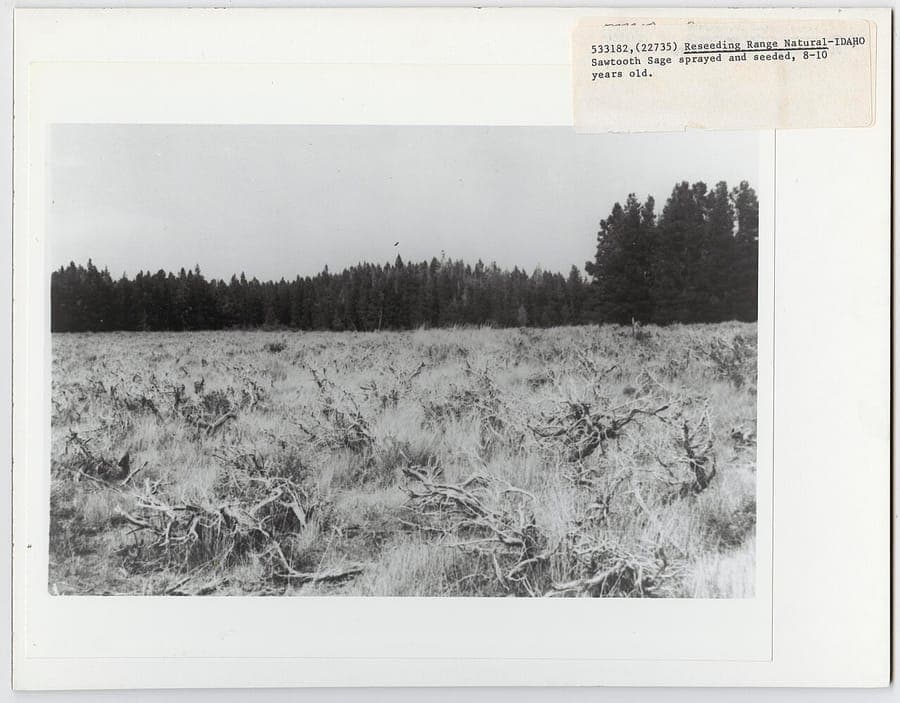
Department of Agriculture. Forest Service. 7/1/1905 / Public domain, via Wikimedia Commons
Salvia subincisa: complete guide
Salvia subincisa
Want to see Salvia subincisa: complete guide in your garden?
1 minute, no credit card
Overview
Salvia subincisa, commonly known as sawtooth sage, is a fascinating plant native to Arizona, New Mexico, Texas, and northeastern Mexico. This semi-woody herbaceous plant belongs to the Lamiaceae family and is a perfect candidate for gardeners seeking drought-resistant, exotic species. The plant is renowned for its fine leaf structure and delicate flowers.
Appearance and bloom
The leaves of Salvia subincisa are distinctly fine with a serrated edge, which gives the plant its characteristic name. This leaf structure imparts an airy, refined appearance to the plant. The flowers are small but abundant, appearing throughout the growing season. The plant reaches modest proportions and forms a compact, rounded shape, making it excellent for borders and small spaces.
Ideal location
Sawtooth sage thrives best in a sunny spot where it receives at least 6 to 8 hours of direct sunlight daily. This plant loves heat and is not shy of intense sun. In Mediterranean and dry climates, it grows without any difficulty. Ensure the plant is in a visible location so you can enjoy the delicate flowers and fine foliage.
Soil
Soil must drain well and not be too moist. Salvia subincisa prefers poor to moderately fertile soil. Add sand or gravel to your garden soil to improve drainage and prevent water accumulation. A pH between neutral and slightly acidic is ideal. If growing your plant in a pot, use cactus soil or a mixture of potting soil with coarse sand.
Watering
Careful watering is essential, especially in the first year. Allow the soil to dry between waterings, especially in winter. Once established, sawtooth sage is very drought-resistant and requires only minimal water. Overwatering is the greatest enemy of this plant and can lead to root rot. During the growing period (spring and summer), water more than in fall and winter.
Free design
Want to see Salvia subincisa: complete guide in your garden? Make a free design now.
Pruning
Pruning is not strictly necessary, but you can lightly prune the plant in early spring to encourage a more compact form. Remove dead or damaged stems. After flowering, you can give a light shaping, but be careful as this is a delicate plant. Pruning also helps keep the plant vital and bushy.
Maintenance calendar
Spring: Begin growing; water moderately and add organic fertilizer. Summer: Water regularly during dry periods; enjoy the bloom. Fall: Gradually reduce watering and feeding. Winter: Minimal maintenance; protect against extreme frost in cold regions. Check year-round for pests or diseases.
Winter hardiness
Salvia subincisa is relatively frost-sensitive and tolerates only light frost (down to about -5 degrees Celsius). In temperate climates, it is best to grow the plant in a pot and move it indoors during winter. In areas with harsher winters, protection is essential. Ensure a dry winter environment; moisture and frost together are deadly.
Companion plants
Pair sawtooth sage with other drought-resistant species such as lavender, saltbush, or agave. Mediterranean herb gardens provide a beautiful backdrop. Sedum offers a nice contrast. Consider the water needs of neighboring plants to avoid water conflicts.
Closing
Salvia subincisa is a special addition to dry, sunny gardens. With its fine foliage and delicate flowers, it brings a southwestern touch to your front garden. Follow this guide and you will enjoy this plant for years to come. Visit gardenworld.app for more plant guides and inspiration for your garden project.
Want to see Salvia subincisa: complete guide in your garden? Make a free design now.
Upload a photo, pick a style, and get a photorealistic design with plant list in under a minute.
No credit card required


Similar plants
Apple mint (Mentha x villosa): complete guide
Mentha x villosa
Meet apple mint (Mentha x villosa): a fruity-scented kitchen herb with woolly leaves, perfect for tea and mojitos.
Salvia peyronii: complete guide
Salvia peyronii
Discover Salvia peyronii, a rare Lebanese mountain sage. Growing tips, hardiness, and companion planting for a Mediterranean gravel garden.
Bigleaf mint (Mentha x rotundifolia): complete guide
Mentha x rotundifolia
Discover bigleaf mint: cultivation, care tips, and garden uses. Learn how to grow this aromatic herb with soft, hairy leaves.