
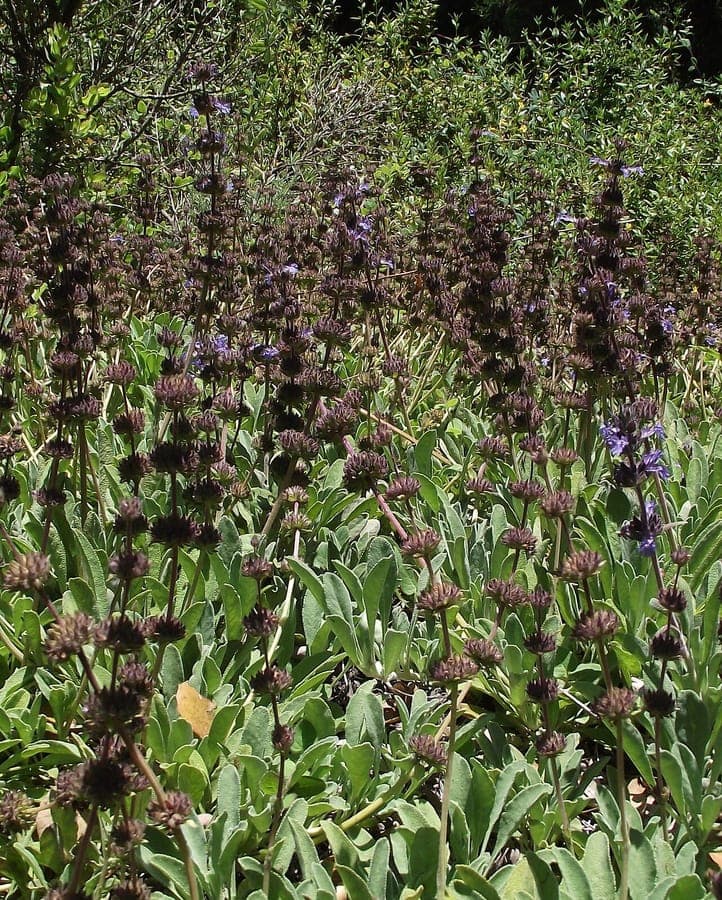
Stickpen / Public domain, via Wikimedia Commons
Salvia sonomensis: complete guide
Salvia sonomensis
Want to see Salvia sonomensis: complete guide in your garden?
1 minute, no credit card
Overview
Salvia sonomensis, commonly known as Creeping sage or Sonoma sage, is a low-growing, semi-woody groundcover native to California. This versatile plant forms an attractive mat of aromatic foliage and elegant purple flowers. With its compact growth pattern and limited water requirements, it is an excellent choice for dry gardens and Mediterranean landscapes throughout Europe.
Appearance and Bloom
Creeping sage reaches only 15-30 cm in height and spreads gradually via underground rhizomes. The small, gray-green leaves have a fine texture and aromatic fragrance when touched. Flowers appear in purple to lavender hues, blooming from April through June. In favorable years, the bloom period can extend into summer.
Ideal Location
Plant Salvia sonomensis in a location receiving at least 6-8 hours of direct sunlight daily. This plant thrives in full sun and becomes leggy and less floriferous in shade. In warm climates, some afternoon shade may be beneficial. Ensure the plant is cultivated in well-ventilated conditions for optimal growth.
Soil
Well-drained soil is essential. This California sage grows best in sandy, lean, or rocky soil. Add gravel or sand to heavier clay soils to improve drainage. A pH between 6.0 and 7.5 is ideal. Avoid waterlogging; this plant tolerates excess moisture poorly.
Watering
Once established, Salvia sonomensis is highly drought tolerant. During the growing season (April through October), water when the top 2-3 cm of soil feel dry. In winter, water minimally. Overwatering is the primary risk factor; drier is better than wet.
Free design
Want to see Salvia sonomensis: complete guide in your garden? Make a free design now.
Pruning
Pruning is minimal. Remove spent flowers in summer to encourage further blooming. In spring (March-April), remove dead or damaged stems. A light trim after flowering can keep the plant more compact.
Maintenance Calendar
- March/April: Inspect for winter damage, prune dead portions
- April-June: Bloom period, enjoy flowers
- July-August: Water during extreme dry spells
- September-October: Growth slows, less watering needed
- November-February: Dormant period, minimal care required
Winter Hardiness
Salvia sonomensis is hardy to -10 to -15 degrees Celsius, making it suitable for most European gardens. In very severe winters with prolonged frost below -15 degrees, protection may be beneficial. Ensure well-drained soil in winter to protect roots from wet frost.
Companion Plants
Pair Creeping sage with other drought lovers: lavender, thyme, germander, and silver-foliaged plants. This combination creates a robust, colorful tapestry requiring minimal maintenance. Also suitable as a front border for rock gardens and alpine beds.
Closing Thoughts
Salvia sonomensis offers years of enjoyment with minimal effort. This is a plant for those who love natural, drought-resistant gardens. Available at garden centers and online. Consult gardenworld.app for planting advice and design ideas. This California jewel adds texture and color to any garden. Build your soil well, plant in full sun, and let nature do its work. Gardenworld.app will assist you fully in integrating these special plants into your garden design.
Want to see Salvia sonomensis: complete guide in your garden? Make a free design now.
Upload a photo, pick a style, and get a photorealistic design with plant list in under a minute.
No credit card required


Similar plants
Apple mint (Mentha x villosa): complete guide
Mentha x villosa
Meet apple mint (Mentha x villosa): a fruity-scented kitchen herb with woolly leaves, perfect for tea and mojitos.
Salvia peyronii: complete guide
Salvia peyronii
Discover Salvia peyronii, a rare Lebanese mountain sage. Growing tips, hardiness, and companion planting for a Mediterranean gravel garden.
Bigleaf mint (Mentha x rotundifolia): complete guide
Mentha x rotundifolia
Discover bigleaf mint: cultivation, care tips, and garden uses. Learn how to grow this aromatic herb with soft, hairy leaves.