
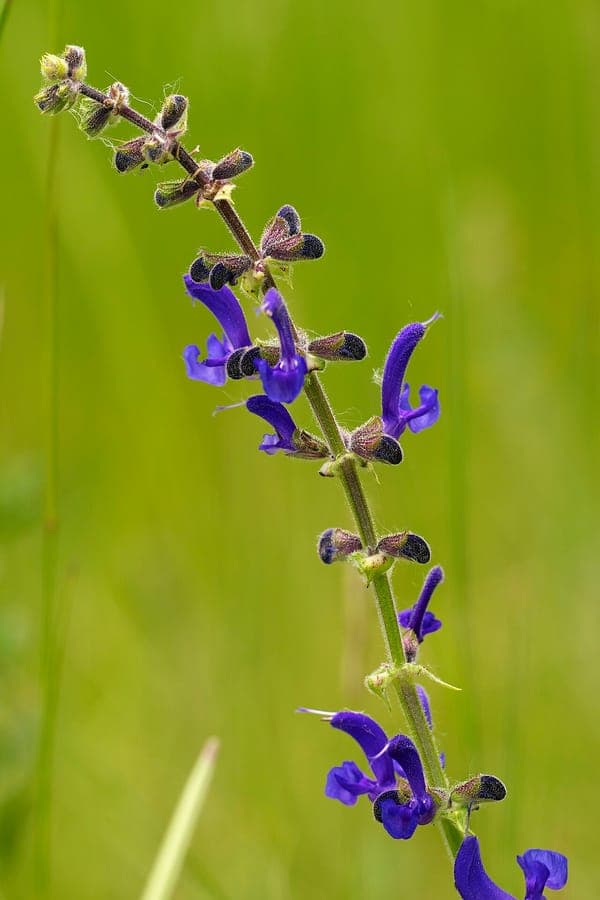
Jörg Hempel / CC BY-SA 3.0 de, via Wikimedia Commons
Meadow clary: complete guide
Salvia pratensis
Want to see Meadow clary: complete guide in your garden?
1 minute, no credit card
Overview
Salvia pratensis, commonly known as meadow clary, is a hardy perennial herb native to dry grasslands across Central and Eastern Europe. Standing 60–80 cm tall, it brings vertical elegance and long-lasting blue flowers to gardens from May through July. This plant thrives in sunny, well-drained spots and is a magnet for bees, bumblebees, and hoverflies-making it a top pick for pollinator-friendly gardens.
Unlike some salvias that demand rich soil and constant care, meadow clary prefers lean, alkaline conditions and minimal fuss. Once established, it's remarkably drought-tolerant and stable for years. If you're designing a low-maintenance, ecologically sound border, this species deserves a spot. On gardenworld.app, you can generate a custom planting plan that integrates Salvia pratensis with complementary perennials and grasses.
Appearance & bloom cycle
Meadow clary forms upright, square stems typical of the Lamiaceae family. The leaves are lance-shaped, slightly toothed, and dark green with a rough texture. They emerge in spring and form a basal rosette before sending up tall flowering stalks.
The real show starts in May, when deep blue, two-lipped flowers open sequentially from the base to the tip of the spike. This staggered blooming extends the display through June and often into early July. The intense blue hue stands out beautifully against silver foliage or golden blooms. Each flower spike can carry dozens of individual blooms, ensuring a strong visual impact.
After flowering, the spent stalks develop small, dark nutlets that rattle in the wind-adding seasonal interest in late summer and autumn. These seeds may self-sow lightly in suitable conditions, but the plant isn't invasive.
Ideal location
Meadow clary needs full sun-aim for at least 8 hours of direct light per day. It performs best in open, airy spaces with good air circulation. A south- or west-facing border, rock garden, or meadow planting are all ideal.
Avoid shaded or damp corners. While it can tolerate light afternoon shade, flowering will be reduced and stems may become leggy. For best results, plant in groups of 5 or more to create a bold drift. This also increases pollinator attraction. Consider pairing with fine-textured grasses like Deschampsia or Stipa for contrast.
In urban gardens, place it near walls or paved areas where heat is reflected. This mimics its natural chalk grassland habitat. Use gardenworld.app to visualize how Salvia pratensis fits into your garden's microclimate and seasonal rhythm.
Soil requirements
This salvia thrives in alkaline soils with a pH of 7.5 to 8.0. It prefers sandy or loamy, well-drained ground and does poorly in heavy clay or waterlogged spots. If your soil is acidic, amend it with ground limestone to raise the pH.
Avoid rich, compost-heavy beds-meadow clary actually blooms better in poor soil. Excessive nutrients promote leafy growth at the expense of flowers and can cause the plant to flop. If drainage is poor, plant in a raised bed or mound with added grit and topsoil.
Free design
Want to see Meadow clary: complete guide in your garden? Make a free design now.
Watering
Water young plants regularly during their first growing season, especially in dry springs. Once established, meadow clary needs little to no supplemental watering. Its deep root system allows it to access moisture from lower soil layers.
During prolonged droughts, a deep soak every two weeks is sufficient. Always water at the base to prevent fungal issues on the foliage. Never let the plant sit in soggy soil-root rot is the main cause of failure in wet climates.
Pruning
After the main bloom period ends in late July, cut back the flower spikes to just above the basal foliage. This can encourage a light secondary flush in late summer and keeps the plant looking tidy.
Leave the remaining stems and basal leaves in place over winter. They provide shelter for beneficial insects and help insulate the crown. In early spring (March), remove any dead or damaged growth with sharp secateurs. Avoid cutting into live wood-this species resprouts slowly.
Maintenance calendar
- March: Clear old foliage, check for pests.
- April: Water young plants if soil is dry. Watch for slugs.
- May–July: Peak bloom. No feeding required.
- Late July: Deadhead spent spikes.
- August–September: Allow light self-seeding. No extra care needed.
- October–February: Dormant period. Leave standing stems for wildlife.
Winter hardiness
Meadow clary is hardy in USDA zones 4 to 8. In most of the UK and northern US, it survives winter without protection. The top growth dies back, but the crown remains alive underground.
In areas with heavy winter rain or persistent snowmelt, improve drainage with a gravel mulch or plant on a slope. Avoid organic mulches like bark or manure-they retain moisture and may cause rot. A light layer of straw or leaf litter is acceptable in colder zones.
Companion plants
Pair Salvia pratensis with other sun-loving, drought-tolerant perennials. Good companions include Echinacea purpurea, Nepeta racemosa, Verbascum, and grasses like Festuca glauca. These create a naturalistic planting with varied texture and long seasonal interest.
Avoid moisture-loving plants like Astilbe or Hosta, which need different conditions. Also steer clear of aggressive spreaders like mint, which can overwhelm clary's slower growth.
Closing
Meadow clary is a resilient, low-input perennial that brings beauty and ecological value to the garden. Its blue spikes dance above the border, attracting pollinators and adding structure. With minimal care, it returns year after year.
You can find Salvia pratensis at garden centres across the UK and US. Look for healthy, compact plants without signs of mildew or wilting. For best results, plan your planting scheme thoughtfully-on gardenworld.app, you can explore design ideas that highlight this salvia's strengths in sun-drenched, well-drained settings.
Want to see Meadow clary: complete guide in your garden? Make a free design now.
Upload a photo, pick a style, and get a photorealistic design with plant list in under a minute.
No credit card required


Similar plants
Apple mint (Mentha x villosa): complete guide
Mentha x villosa
Meet apple mint (Mentha x villosa): a fruity-scented kitchen herb with woolly leaves, perfect for tea and mojitos.
Salvia peyronii: complete guide
Salvia peyronii
Discover Salvia peyronii, a rare Lebanese mountain sage. Growing tips, hardiness, and companion planting for a Mediterranean gravel garden.
Bigleaf mint (Mentha x rotundifolia): complete guide
Mentha x rotundifolia
Discover bigleaf mint: cultivation, care tips, and garden uses. Learn how to grow this aromatic herb with soft, hairy leaves.