
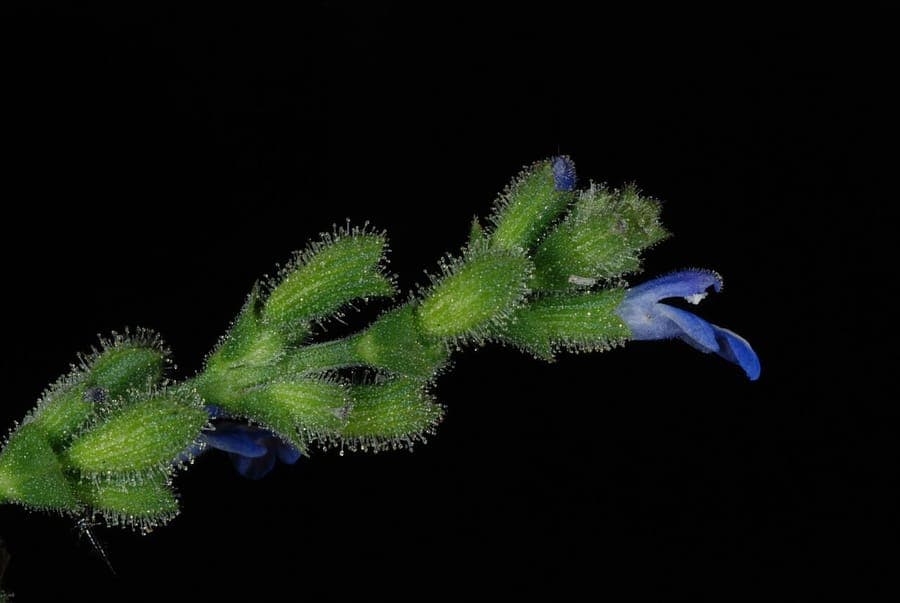
Douglas Goldman / CC BY-SA 4.0, via Wikimedia Commons
Pegapega sage: complete guide
Salvia occidentalis
Want to see Pegapega sage: complete guide in your garden?
1 minute, no credit card
Overview
Pegapega (Salvia occidentalis), also known as West Indian sage or Hap-seed, is a tropical sage species originating from warm climates of Florida, the Caribbean, and Central America. This plant is prized for its beautiful flowers and herbal fragrance. In temperate climates, it can be grown as a container or houseplant.
Appearance and Bloom
Pegapega sage grows as a compact, herbaceous plant with dark green, slightly rough leaves. The flowers are highly striking, ranging from purple to red-purple, appearing in dense flower spikes that bloom for extended periods. The flowering season is long and can extend from summer through autumn.
The plant reaches a height of approximately 50-80 cm and forms a neat, rounded shape. The leaves and flowers have a pleasant herbal fragrance that becomes especially noticeable when the plant is touched or brushed.
Ideal Location
Pegapega sage loves warm, sunny locations. Plant this sage in a spot where it receives at least 6 hours of direct sunlight daily. In very hot regions, light afternoon shade may be welcome. Ensure good air circulation to prevent diseases.
If you cultivate this plant in containers (necessary in cold climates), place it near a sunny window. During summer, the plant can be moved outside to a warm, sheltered patio or balcony.
Soil
Pegapega sage grows best in nutrient-rich, well-draining potting soil. Use standard potting compost mixed with one-third extra perlite or sand for better drainage. The plant is susceptible to root rot, so drainage is essential.
For outdoor cultivation, ensure a well-draining garden soil with adequate organic matter. The plant tolerates moderately infertile soils, but performs better with annual compost applications.
Watering
Pegapega sage requires regular watering, especially during the growing season. Ensure the soil remains consistently moist but never wet and soggy. In winter, water requirements decrease and should be limited to when the top layer feels dry.
For outdoor plants, water regularly, especially during dry periods. Always water at the plant base to prevent leaf diseases. In very hot periods, daily watering may be necessary.
Free design
Want to see Pegapega sage: complete guide in your garden? Make a free design now.
Pruning
Pegapega sage responds well to regular pruning. Pinch back growing tips regularly to encourage a compact, bushy form. This also promotes more abundant flowering. After flowering finishes, you can prune harder to maintain shape.
Remove all spent flower spikes (deadheading). This stimulates more flower production and extends the blooming period considerably.
Maintenance Calendar
In spring, as temperatures rise, it's a good time to start seeds or take cuttings. Begin regular feeding from May through September as the plant actively grows. June through October is the normal blooming period.
In autumn, as temperatures drop, gradually reduce feeding. In winter, severely restrict water and keep the plant cooler. Resume feeding in March as growth begins.
Winter Hardiness
Pegapega sage is not winter hardy and cannot remain outdoors in cold climates. In cold regions, this plant must be brought indoors before winter. Keep the plant in a warm, bright location with minimum temperatures of 10-15 degrees Celsius.
In very cold climates, take cuttings for overwintering as a backup strategy.
Companion Plants
Pegapega sage grows well alongside other tropical plants in containers. Combine with other flowering plants for continuous color. The plant attracts butterflies and hummingbirds, adding wildlife value to your garden.
Avoid waterlogged conditions, as this causes root rot. The plant is generally quite resistant to pests, though spider mites may occasionally occur in dry environments.
Closing
Pegapega sage is a beautiful, flowering plant for those who love exotic, tropical plants. With regular care and proper growing conditions, it will produce beautiful flowers for many years.
Visitors to gardenworld.app can use this plant in their designs for bright colors and long blooming periods. In temperate climates, a warm outdoor location in summer, or a warm, sunny windowsill as a houseplant works best.
Source this sage from specialized nurseries or plant centers. Enjoy the beautiful flowers and the value it brings to any garden planting!
Want to see Pegapega sage: complete guide in your garden? Make a free design now.
Upload a photo, pick a style, and get a photorealistic design with plant list in under a minute.
No credit card required


Similar plants
Apple mint (Mentha x villosa): complete guide
Mentha x villosa
Meet apple mint (Mentha x villosa): a fruity-scented kitchen herb with woolly leaves, perfect for tea and mojitos.
Salvia peyronii: complete guide
Salvia peyronii
Discover Salvia peyronii, a rare Lebanese mountain sage. Growing tips, hardiness, and companion planting for a Mediterranean gravel garden.
Bigleaf mint (Mentha x rotundifolia): complete guide
Mentha x rotundifolia
Discover bigleaf mint: cultivation, care tips, and garden uses. Learn how to grow this aromatic herb with soft, hairy leaves.