
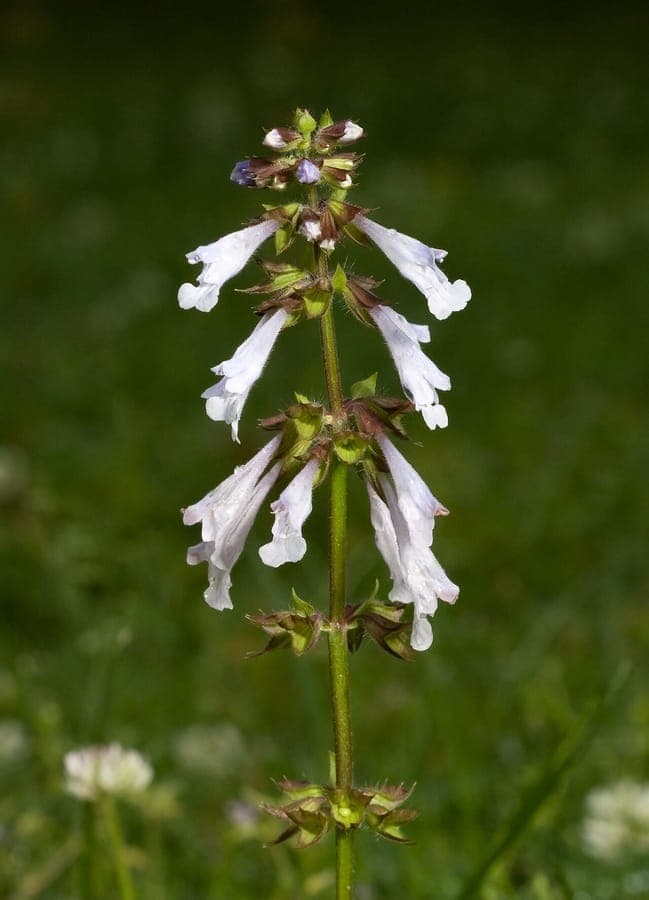
Kaldari / Public domain, via Wikimedia Commons
Lyre-leaf sage: complete guide
Salvia lyrata
Want to see Lyre-leaf sage: complete guide in your garden?
1 minute, no credit card
Salvia lyrata, commonly known as lyre-leaf sage or cancerweed, is a native herbaceous wildflower from central and eastern North America. Part of the Lamiaceae (mint) family, this plant is prized for its distinctive lyre-shaped basal leaves and tall, branching stems bearing eye-catching purple to violet flowers. It thrives in open forests, meadows, and disturbed areas, making it an excellent choice for naturalized gardens, dry borders, and low-maintenance landscapes.
Overview
Salvia lyrata is a biennial to short-lived perennial (winter-hardy to USDA zone 4-5) that behaves as a summer bloomer in cooler regions. It reaches 30-60 centimeters in height with distinctive lyre-shaped basal leaves and purple-violet tubular flowers arranged in dense whorls along the stem. Blooming occurs from March to May in warm states and June to July in temperate zones. This is an ideal plant for wildflower gardens, drought-tolerant borders, neglected corners, and naturalized landscapes.
Appearance and Bloom
The basal rosette features deeply lobed, lyre-shaped leaves measuring 10-15 centimeters in length. Stems are upright, nearly hairless, bearing narrow upper leaves. Flowers are tubular, two-lipped, purple-violet to pink (approximately 1.5 centimeters long), arranged in dense or loose spirals. Bees and hummingbirds frequently visit these nectar-rich blooms. Following bloom, the plant produces small round seeds in capsules, often self-seeding in favorable conditions.
Ideal Location
Lyre-leaf sage thrives in full sun to partial shade (minimum 4-6 hours direct sunlight). In hot climates (zone 8+), afternoon shade benefits performance. The plant prefers open, airy locations away from dense tree shade. Wind exposure is well-tolerated. Once established, it spreads gradually via self-seeding.
Soil Composition
Very drought-tolerant, lyre-leaf sage prefers well-drained, even poor soils. Sandy, gravelly, or stony ground is ideal. Rich soil promotes excessive leaf growth at the expense of flowers. Neutral to slightly acidic pH (6.5-7.0) is suitable. In clay or silty soils, amend with sand and compost (30 percent). Apply light organic mulch around the base to aid moisture retention during very dry spells, but avoid waterlogging.
Free design
Want to see Lyre-leaf sage: complete guide in your garden? Make a free design now.
Watering
After establishment (4-6 weeks post-planting), lyre-leaf sage is drought-tolerant. Water regularly during the first growing season. Once established, water only during very dry periods or in containers. Deep, infrequent watering is preferable to frequent shallow sprinkling. In very dry summers, supplemental irrigation extends bloom; otherwise, flowering may conclude before heat intensifies.
Pruning
Minimal pruning is required. After bloom (May-June), cut spent flower stems back to mid-length to encourage bushier growth and side branching. In milder climates where the plant remains partially evergreen, remove dead foliage in late fall or early spring. The basal rosette often persists through winter, providing early-season visual interest.
Maintenance Calendar
January-February: In mild winters, foliage continues growth. March-May: Primary bloom period; ensure regular watering if rainfall is sparse. June: Post-bloom cutback. July-September: Seed development; water as needed. October-December: Minimal intervention required.
Winter Hardiness
Lyre-leaf sage is hardy to USDA zone 4-5 (temperatures to minus 20-25 Celsius). In zones 6-8, it often survives as a semi-evergreen. In very cold climates (zone 3), it may die back to roots and regrow in spring, or function as an annual. In warm zones (9-11), it behaves as a long-lived perennial.
Companion Plants
Pair lyre-leaf sage with other early bloomers: Phlox, Rudbeckia, Echinacea (purple coneflower), Coreopsis, and ornamental grasses like Festuca or Andropogon. Plant in groups of 3-5 for visual impact. Mix with seed-bearing perennials for repeated summer color. In naturalized gardens, allow self-seeding for organic spread patterns.
Closing
Lyre-leaf sage offers easy, drought-tolerant spring color for gardeners seeking reliable, naturalized wildflower displays. Seeds and young plants are available from garden centers and specialty suppliers. Visit gardenworld.app to integrate this charming sage into your ideal landscape design.
Want to see Lyre-leaf sage: complete guide in your garden? Make a free design now.
Upload a photo, pick a style, and get a photorealistic design with plant list in under a minute.
No credit card required


Similar plants
Apple mint (Mentha x villosa): complete guide
Mentha x villosa
Meet apple mint (Mentha x villosa): a fruity-scented kitchen herb with woolly leaves, perfect for tea and mojitos.
Salvia peyronii: complete guide
Salvia peyronii
Discover Salvia peyronii, a rare Lebanese mountain sage. Growing tips, hardiness, and companion planting for a Mediterranean gravel garden.
Bigleaf mint (Mentha x rotundifolia): complete guide
Mentha x rotundifolia
Discover bigleaf mint: cultivation, care tips, and garden uses. Learn how to grow this aromatic herb with soft, hairy leaves.