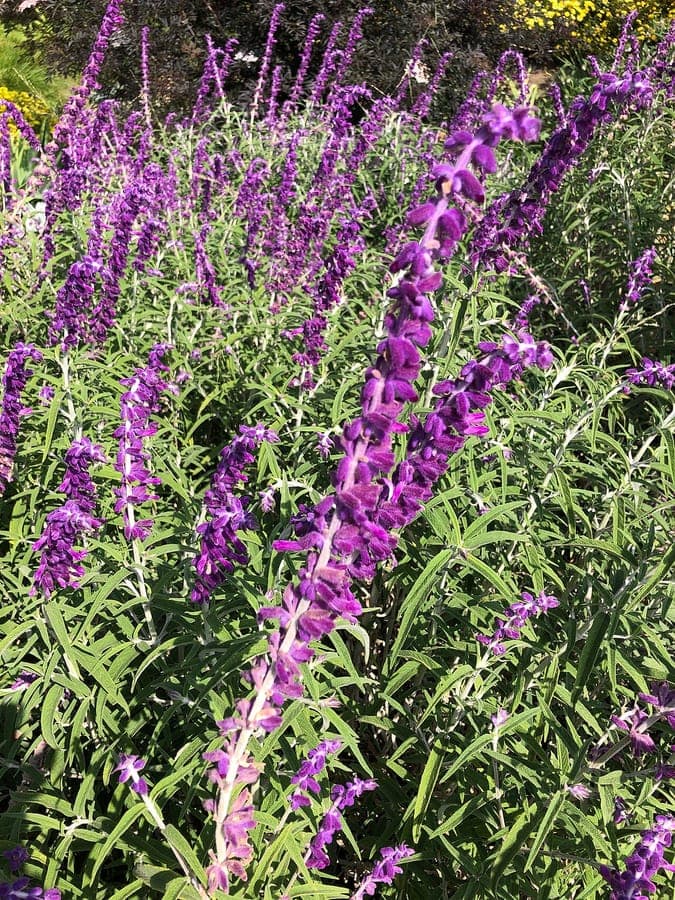
Netherzone / CC BY-SA 4.0, via Wikimedia Commons
Mexican sage: complete guide
Salvia leucantha
Want to see Mexican sage: complete guide in your garden?
Full design in HD: €7.99
Look after your Mexican sage with the GardenWorld app
Identify plants with your camera and get a care calendar with reminders for this plant.


Overview
Mexican sage (Salvia leucantha), also known as velvet sage, is elegant shrub native to Mexico and Central America. This ornamental grows to 1-1.5 meters producing spectacular long purple flower spikes. Perfect for warm, sunny gardens adding exotic flair.
Appearance and bloom
Mexican sage is bushy shrub reaching 1.5 meters with narrow, lance-shaped leaves. Foliage green, fine-textured, about 7-10 cm long. Flowers tiny, purple to violet, arranged dense spikes reaching 20-30 cm long. Bloom occurs July through December in warm climates.
Ideal location
Plant Mexican sage in full sun (8+ hours daily) for best flowering. Thrives warm, sheltered locations protected cold winds. Colder regions: grow in pots, overwinter indoors. Perfect background planting borders, against walls or containers.
Soil
Mexican sage prefers well-draining soils, slightly dry. Heavy clay improved with sand and compost (30% addition). pH 6.0-7.5 ideal. Add 5-8 cm compost at planting. Excellent drainage critical preventing root rot.
Watering
Water newly planted sage regularly (2-3x weekly) first growing season. Once established, plant tolerates drought thanks deep roots. Summer dry periods water once weekly deeply. Avoid overwatering winter. Mulch aids retention but ensure air circulation.
Free preview
Want to see Mexican sage: complete guide in your garden? Make a free preview of your design.
Pruning
Regular pruning promotes bushiness and flowering. Spring (March-April) prune back to 30-50 cm encouraging new branches. After bloom (January-February) light cleanup. Remove dead branches. Plant responds well shaping pruning.
Maintenance calendar
MARCH-APRIL: Heavy pruning, fertilizer application. MAY-JUNE: Growth period, regular watering. JULY-DECEMBER: Bloom, minimal maintenance. JANUARY: Cleanup, feeding. FEBRUARY-MARCH: Season preparation.
Winter hardiness
Mexican sage not frost-hardy in cold climates. Tolerating about 5-10 degrees Celsius. Netherlands, Belgium: overwinter potted indoors (10-15 degrees) or protect outdoors with burlap (to -5 degrees). Southern Europe grows permanently outside.
Companion plants
Use Mexican sage summer borders with other warm-growers like mandevilla, passion flower lantana. Plant with yellow or orange flowers for color contrast. Perfect Mediterranean garden styles.
Closing
Mexican sage deserves place warm gardens where exotic touches desired. With care protecting cold and regular pruning delivers beautiful blooms. Plant material: OBI and Hornbach offer good assortment. Visit gardenworld.app/en expert garden design and gardenworld.app/en plant advice.
Frequently asked questions about Mexican sage
Is Mexican sage winter hardy?
Mexican sage not frost-hardy in cold climates. Tolerating about 5-10 degrees Celsius.
When and how do you prune Mexican sage?
Regular pruning promotes bushiness and flowering. Spring (March-April) prune back to 30-50 cm encouraging new branches.
How much water does Mexican sage need?
Water newly planted sage regularly (2-3x weekly) first growing season. Once established, plant tolerates drought thanks deep roots.
Where does Mexican sage grow best?
Plant Mexican sage in full sun (8+ hours daily) for best flowering. Thrives warm, sheltered locations protected cold winds.
What soil does Mexican sage need?
Mexican sage prefers well-draining soils, slightly dry. Heavy clay improved with sand and compost (30% addition). pH 6.0-7.5 ideal.

See it in your garden
See Mexican sage in your garden
One photo of your garden and a few questions. You see the result in about a minute.
Try it with a photoIdentify this plant in your own garden. Identify a plant
Similar plants
Agastache rupestris: sunset hyssop for hot, dry borders
Agastache rupestris
Growing Agastache rupestris, sunset hyssop: salmon-orange flowers from July to October, aniseed foliage, drainage, pruning and getting it through a wet winter.
Beautyberry (Callicarpa bodinieri): complete guide
Callicarpa bodinieri
Everything about beautyberry (Callicarpa bodinieri) and 'Profusion': position, soil, pruning and hardiness for the shrub with vivid violet berries in autumn and winter.
Bluebeard (Caryopteris × clandonensis): complete guide
Caryopteris × clandonensis
Everything about bluebeard (Caryopteris × clandonensis): sunny position, well-drained soil, spring pruning and hardiness for this late summer, bee-friendly shrub.
