
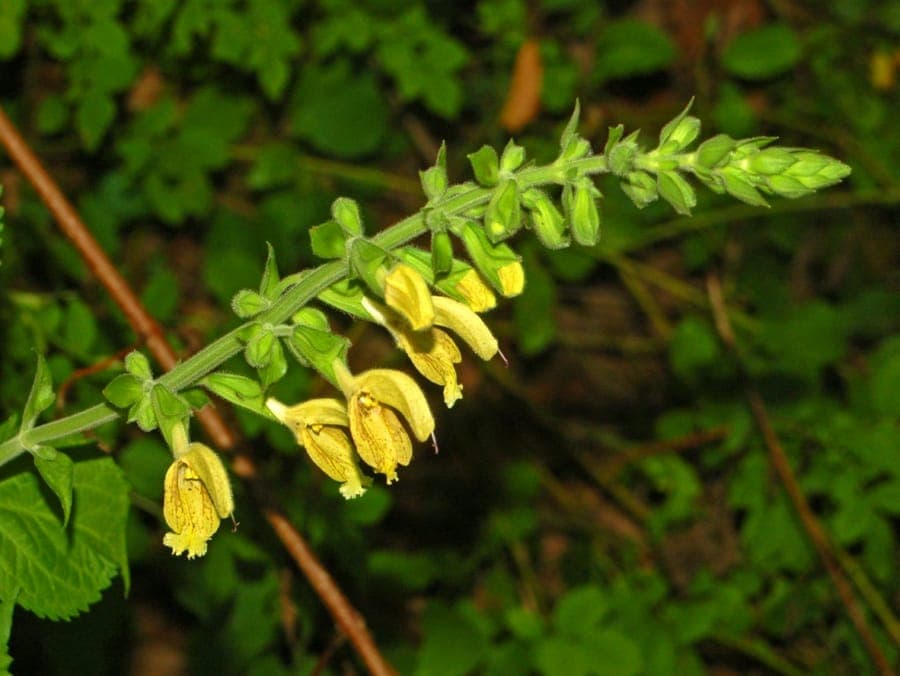
Hectonichus / CC BY-SA 3.0, via Wikimedia Commons
Jupiter's distaff: complete guide
Salvia glutinosa
Want to see Jupiter's distaff: complete guide in your garden?
1 minute, no credit card
Overview
Salvia glutinosa, commonly known as Jupiter's distaff, is a resilient herbaceous perennial native to central and eastern Europe. Standing between 60 and 80 cm tall, it brings a subtle yet distinct presence to the garden with its sticky, aromatic foliage and unusual yellow flowers. Unlike the more common purple salvias, this species blooms in soft golden-yellow whorls from early summer through autumn, making it a standout for gardeners who appreciate quiet elegance over bold statements.
Hardy in USDA zones 5 to 9, it thrives in temperate climates and handles typical British and Irish garden conditions with ease. Once established, it requires little intervention, making it ideal for naturalistic planting schemes or low-maintenance borders. On gardenworld.app, you can design a planting plan that incorporates Jupiter's distaff into layered, wildlife-friendly garden compositions.
Appearance & bloom cycle
Jupiter's distaff has a robust, upright growth habit with square, slightly sticky stems typical of the mint family. The leaves are ovate to lanceolate, deep green on top and paler beneath, covered in glandular hairs that give them a sticky texture and a faint herbal scent when brushed. This trait, while not harmful, is distinctive and can deter some pests.
From June through September, the plant produces dense spikes of small, tubular, yellow flowers. Each flower cluster features multiple two-lipped blooms arranged in whorls around the stem. The pale yellow hue stands out gently among green foliage, attracting bumblebees, hoverflies, and other pollinators. The long bloom period ensures visual interest across seasons, especially when paired with late-blooming perennials.
Ideal location
This salvia prefers partial shade, ideally with morning sun and afternoon shade. While it tolerates full sun, it performs best in cooler microclimates where soil moisture is retained. In hotter regions of the UK or Ireland, a position sheltered from intense midday sun prevents stress and wilting.
Avoid exposed, windy sites, as tall stems can flop without support. Instead, plant it near shrubs or low perennials that provide subtle structural support. On gardenworld.app, you can simulate how this plant fits into mixed borders with ferns, hostas, or eupatoriums for a cohesive design.
Soil requirements
Salvia glutinosa thrives in well-drained, moist to moderately moist soils with a neutral to slightly alkaline pH of 7.0 to 7.5. It adapts well to clay-loam mixes and tolerates light chalky soils. Avoid waterlogged or highly acidic substrates, as these can lead to root rot.
Amend heavy clay with compost or well-rotted manure to improve drainage. Sandy soils benefit from added organic matter to retain moisture. A light application of compost in spring boosts overall plant health without encouraging excessive leafy growth.
Free design
Want to see Jupiter's distaff: complete guide in your garden? Make a free design now.
Watering
During the first growing season, water regularly to help the plant establish deep roots. Once mature, it becomes moderately drought-tolerant but performs best with consistent moisture. Water deeply once a week during dry spells, focusing on the base to avoid wetting foliage and reducing fungal risk.
Mulch with organic material like leaf mould or compost to retain moisture and suppress weeds. Avoid overhead watering, especially in humid conditions, to prevent mildew.
Pruning
Pruning isn't essential but helps maintain a tidy appearance. Cut back stems to 10–15 cm in late winter or early spring before new growth emerges. This encourages bushier growth and prevents the plant from becoming leggy.
Remove spent flower spikes after blooming to redirect energy into root development. Avoid heavy pruning after midsummer, as this may reduce next year's flowering potential.
Maintenance calendar
- January–March: Minimal activity; check for damaged stems and clear debris.
- April: Apply light compost layer; inspect for new shoots.
- May: Monitor for aphids; plant new specimens if needed.
- June–September: Peak bloom; water during droughts.
- October: Clear fallen leaves; leave some for overwintering insects.
- November–December: Reduce care; protect roots with mulch in colder zones.
Winter hardiness
Salvia glutinosa is fully hardy in USDA zones 5–9. In zone 5, a light mulch helps protect crowns during harsh winters. In milder UK zones (7–9), it often remains semi-evergreen with foliage persisting into late winter.
The plant dies back to ground level in autumn but returns reliably each spring. Avoid trimming too early; leave old stems intact until spring to provide shelter for beneficial insects.
Companion plants
Pair Jupiter's distaff with shade-tolerant, moisture-loving plants like Athyrium felix-femina (lady fern), Alchemilla mollis (lady's mantle), or Eupatorium maculatum (spotted joe-pye weed). Its yellow blooms contrast beautifully with blue-flowering perennials such as Campanula latifolia or Digitalis purpurea.
Avoid aggressive spreaders that might overwhelm it. Instead, use it in cottage garden schemes or woodland edges where its subtle charm can shine.
Closing
Jupiter's distaff is an underrated perennial that offers long seasonal interest with minimal care. Its unique yellow flowers, insect-friendly nature, and adaptability make it a valuable addition to any thoughtful garden. Pick up a healthy specimen at garden centres like B&Q, Wyevale, or local independent nurseries. And remember, gardenworld.app allows you to visualise and plan your garden layout so Salvia glutinosa finds its perfect place among your favourite plants.
Want to see Jupiter's distaff: complete guide in your garden? Make a free design now.
Upload a photo, pick a style, and get a photorealistic design with plant list in under a minute.
No credit card required


Similar plants
Apple mint (Mentha x villosa): complete guide
Mentha x villosa
Meet apple mint (Mentha x villosa): a fruity-scented kitchen herb with woolly leaves, perfect for tea and mojitos.
Salvia peyronii: complete guide
Salvia peyronii
Discover Salvia peyronii, a rare Lebanese mountain sage. Growing tips, hardiness, and companion planting for a Mediterranean gravel garden.
Bigleaf mint (Mentha x rotundifolia): complete guide
Mentha x rotundifolia
Discover bigleaf mint: cultivation, care tips, and garden uses. Learn how to grow this aromatic herb with soft, hairy leaves.