
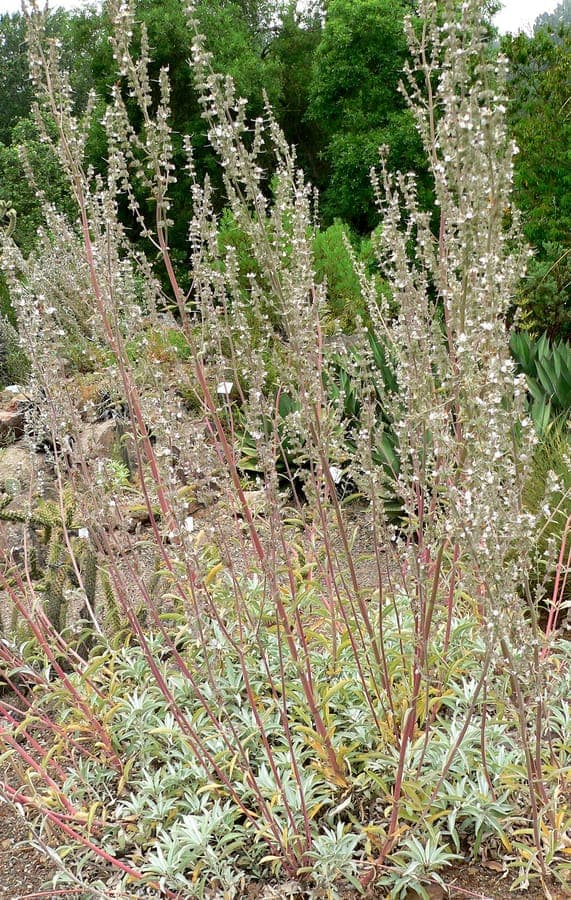
Stan Shebs / CC BY-SA 3.0, via Wikimedia Commons
White sage: complete guide
Salvia apiana
Want to see White sage: complete guide in your garden?
1 minute, no credit card
Overview
White sage (Salvia apiana) is a fragrant, elegant subshrub originating from the arid regions of California and Mexico. This member of the Lamiaceae family, commonly known as the mint family, is renowned for its silvery foliage and aromatic properties. While not suitable as food, it is widely used for ornamental purposes in dry gardens.
As a Mediterranean plant, white sage offers excellent opportunities for gardeners seeking a drought-tolerant, low-maintenance garden design. The natural growth habit and aromatic foliage make this Salvia a valuable addition to modern, sustainable gardens.
Appearance and bloom
White sage grows as a subshrub, typically 60 to 90 centimeters tall, with fine, silver-gray foliage characteristic of drought-adapted plants. The leaf surface feels soft and contains numerous aromatic oils that release a pleasant scent when the leaves are touched.
The flowers of white sage are two-lipped and appear in long, plume-like flower spikes. The blooming period extends from June through fall, depending on climate and care. Flower color ranges from white to light purple-white, giving the plant its popular name.
Ideal location
White sage requires a very sunny location with at least six hours of direct sunlight daily. The plant grows best in full sun, where aromatic oils fully develop and the plant achieves its full, compact form.
Because this plant originates from dry mountain regions, a windy, well-ventilated position is beneficial. Avoid low, wet spots or locations where water accumulates in winter. A raised bed or rock garden is ideal for this elegant shrub.
Soil
White sage requires extremely well-draining soil, otherwise root rot will develop. Sandy to gritty substrates are ideal. The plant thrives on poor, dry soils and requires little nutrition.
On heavy clay soils, you must amend the soil with plenty of sand, gravel, and/or coarser sand. Creating an excellent draining root column is crucial. The pH should be neutral to alkaline.
Watering
Once well established (after 2-3 seasons), white sage requires very little water. In the first year, water regularly, especially during dry periods, to establish the plant.
Once mature, you can almost stop watering entirely. Regular rainfall is usually sufficient. During extreme dry periods, you can water deeply once a month, but caution is advised against overwatering.
Free design
Want to see White sage: complete guide in your garden? Make a free design now.
Pruning
White sage responds well to annual pruning after flowering. Cut back approximately one third of the height to maintain a compact, bushy appearance. This also promotes richer leaf mass and better flower structure in the next season.
Remove dead branches and damaged stems. Proceed carefully, as the plant has strong, woody branches. A sharp pruning saw or secateurs gives the best results.
Maintenance calendar
May-June: Check for frost damage after winter, light pruning. July-August: Blooming period begins, minimal maintenance. September-October: Full bloom, avoid pruning during this season. November-December: Frost protection possible in colder climates, minimal watering. January-February: Winter rest, no watering unless very dry. March-April: Preparation for growing season, more water.
Winter hardiness
White sage is moderately winter hardy and tolerates temperatures down to about -5 to -10 degrees Celsius. In northern regional zones, winter protection is advisable, especially in years with severe winters. In milder climates (much of the Benelux), the plant usually overwinters well.
A layer of mulch around the plant helps provide protection against frost. Excessive moisture buildup in winter from heavy rain can be problematic, so ensure extra drainage during rainy seasons.
Companion plants
White sage pairs excellently with other Mediterranean shrubs such as lavender, rosemary, and santolina. This combination creates a cohesive, drought-adapted plant group. Ornamental grasses such as Stipa and other drought-tolerant grasses also combine well.
Rock plants and stonecrop-like succulents are also good partners in mixed dry gardens. However, avoid moisture-loving plants that don't fit the Mediterranean concept.
Conclusion
White sage is a perfect choice for gardeners seeking an elegant, low-maintenance Mediterranean garden. This fragrant, silvery shrub offers years of visual pleasure with minimal effort. Available through specialized nurseries and plant catalogs that carry Mediterranean plants.
For more design inspiration and plant advice on dry gardens and sustainable gardening, visit GardenWorld.app regularly.
Want to see White sage: complete guide in your garden? Make a free design now.
Upload a photo, pick a style, and get a photorealistic design with plant list in under a minute.
No credit card required


Similar plants
Apple mint (Mentha x villosa): complete guide
Mentha x villosa
Meet apple mint (Mentha x villosa): a fruity-scented kitchen herb with woolly leaves, perfect for tea and mojitos.
Salvia peyronii: complete guide
Salvia peyronii
Discover Salvia peyronii, a rare Lebanese mountain sage. Growing tips, hardiness, and companion planting for a Mediterranean gravel garden.
Bigleaf mint (Mentha x rotundifolia): complete guide
Mentha x rotundifolia
Discover bigleaf mint: cultivation, care tips, and garden uses. Learn how to grow this aromatic herb with soft, hairy leaves.