
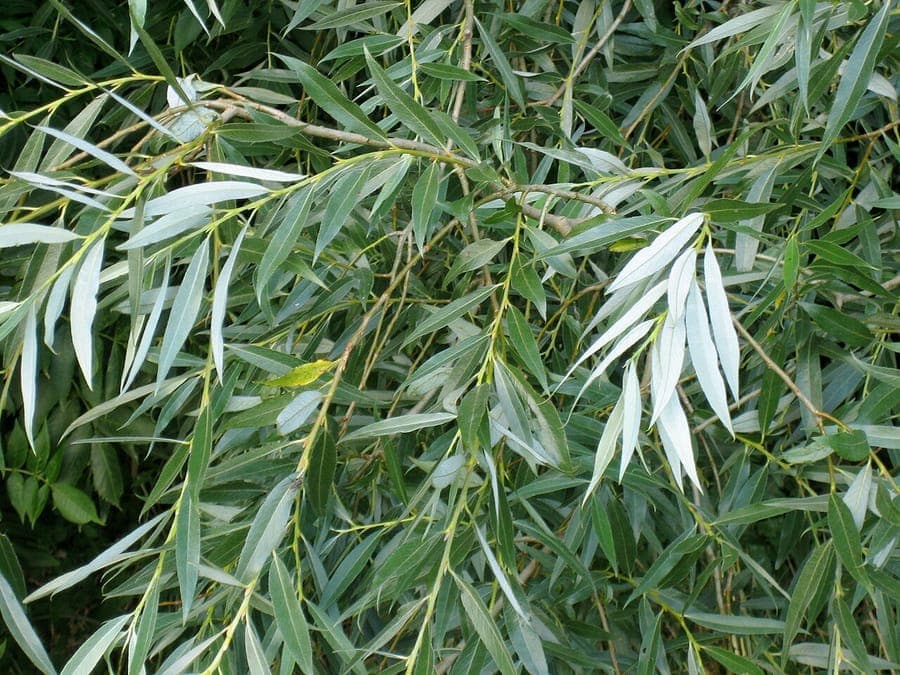
MPF / CC BY-SA 3.0, via Wikimedia Commons
White willow: complete guide
Salix alba
Want to see White willow: complete guide in your garden?
1 minute, no credit card
Overview
The white willow (Salix alba) is a fast-growing, majestic deciduous tree known for its striking presence along waterways. Native to much of Europe and parts of Asia, it thrives in moist environments and can reach heights of up to 80 feet (25 meters) with a broad, spreading crown. It's a common sight along rivers, lakes, and damp meadows, where its aggressive root system seeks out consistent moisture. While admired for its beauty, this tree demands careful placement in the garden.
If you're considering a white willow, use gardenworld.app to map out its future spread and root zone. This helps avoid costly issues with pipes, foundations, or nearby structures down the line. It's not just about looks-it's about long-term planning.
Appearance & bloom cycle
White willow has narrow, lance-shaped leaves that are bright green on top and silvery-white underneath, measuring 4 to 10 cm in length. The silvery underside gives the tree a shimmering effect when the wind moves the foliage. In early spring, usually from March to April, it produces catkins-soft, fuzzy flower clusters that range from yellow to greenish. These are a vital early nectar source for bees and pollinators.
The tree is dioecious, meaning male and female flowers grow on separate plants. Female trees produce cottony seeds in late spring (May), which can create a mess in gardens. If you want to avoid the fluff, go for male cultivars like 'Chermesina' or 'Vitellina', which don't produce seed fluff but still offer stunning visual appeal.
Ideal location
Plant your white willow at least 20 feet (6 meters) away from buildings, septic systems, or underground utilities. Its roots are powerful and invasive, capable of cracking pipes and lifting paving. Full sun is best, though it tolerates light shade. It performs exceptionally well by ponds, streams, or in low-lying areas where water tends to collect.
Avoid planting in small urban gardens. This is a large tree with large ambitions. Use gardenworld.app to simulate how the canopy and root system will expand over 10 to 15 years, so you can make an informed decision before planting.
Soil requirements
White willow isn't picky about soil type but demands consistent moisture. It grows well in clay, loam, or sandy soils as long as they stay damp. Ideal pH ranges from 5.5 to 7.5. It struggles in dry, compacted, or heavily alkaline soils. Amend poor soils with compost before planting to boost organic content and water retention.
Free design
Want to see White willow: complete guide in your garden? Make a free design now.
Watering
Young trees need deep watering once a week during their first two to three growing seasons, especially in dry spells. Apply at least 20 liters per inch of trunk diameter. Established trees are more resilient but still benefit from supplemental watering in prolonged droughts (June to August). Drip irrigation works well to keep the root zone moist without waterlogging.
Pruning
Prune in late winter (January to February) before sap rise begins. Remove dead, damaged, or crossing branches. For a pollarded or coppiced look-popular in rural landscapes-cut back main stems to 20–30 cm above the trunk annually. This encourages long, straight shoots ideal for crafts or screening.
Always use sharp, clean tools to prevent disease. Avoid pruning in spring and summer-fresh cuts attract pests like willow sawflies. And never top a mature willow; it leads to weak regrowth and structural issues.
Maintenance calendar
- January: Prune, inspect for storm damage
- February: Final pruning, plant bare-root specimens
- March: Check for catkins, monitor for aphids
- April: No major tasks, natural blooming
- May: Remove cottony seed fluff if needed
- June: Water deeply during dry periods
- July: Watch for willow beetle and mildew
- August: Continue monitoring moisture levels
- September: Stop pruning, allow dormancy prep
- October: Rake fallen leaves, compost
- November: Check root spread near utilities
- December: Protect young trunks from rodents
Winter hardiness
White willow is hardy in USDA zones 4 to 8. It handles cold winters well and doesn't require winter protection in most regions. Young trees may suffer bark splitting in extreme cold-wrap the trunk with burlap or tree tape for the first two winters. In exposed sites, stake young trees to prevent wind rock.
Companion plants
Pair white willow with moisture-loving plants: iris (Iris ensata), marsh marigold (Caltha palustris), or cardinal flower (Lobelia cardinalis). Sedges (Carex spp.) and native grasses like switchgrass (Panicum virgatum) work well in damp borders. Avoid drought-tolerant species nearby, as they'll struggle with the willow's water draw.
Closing
The white willow is a bold, fast-growing tree perfect for large, wet landscapes. With proper spacing and care, it becomes a striking focal point. Buy healthy specimens from reputable garden centres-look for strong root balls and no signs of pests. And remember: on gardenworld.app, you can design a planting plan that anticipates the willow's size and root spread, helping you avoid future headaches.
Want to see White willow: complete guide in your garden? Make a free design now.
Upload a photo, pick a style, and get a photorealistic design with plant list in under a minute.
No credit card required


Similar plants
Grey poplar: complete guide
Populus x canescens
Everything about Populus x canescens - a fast-growing hybrid poplar with silver-grey foliage, ideal as a windbreak or specimen tree in large gardens.
Populus adenopoda: complete guide
Populus adenopoda
Chinese aspen: a fast-growing tree for large gardens. Cultivation tips, pruning, and use as windbreak or shade tree.
Populus fremontii: complete guide
Populus fremontii
Fremont's cottonwood is a majestic American tree with rapid growth and drought tolerance. Read our guide for cultivation tips and garden integration.