
Jerzy Opioła / CC BY-SA 4.0, via Wikimedia Commons
Awl-leaf pearlwort: complete guide
Sagina subulata
Want to see Awl-leaf pearlwort: complete guide in your garden?
1 minute, no credit card
Overview
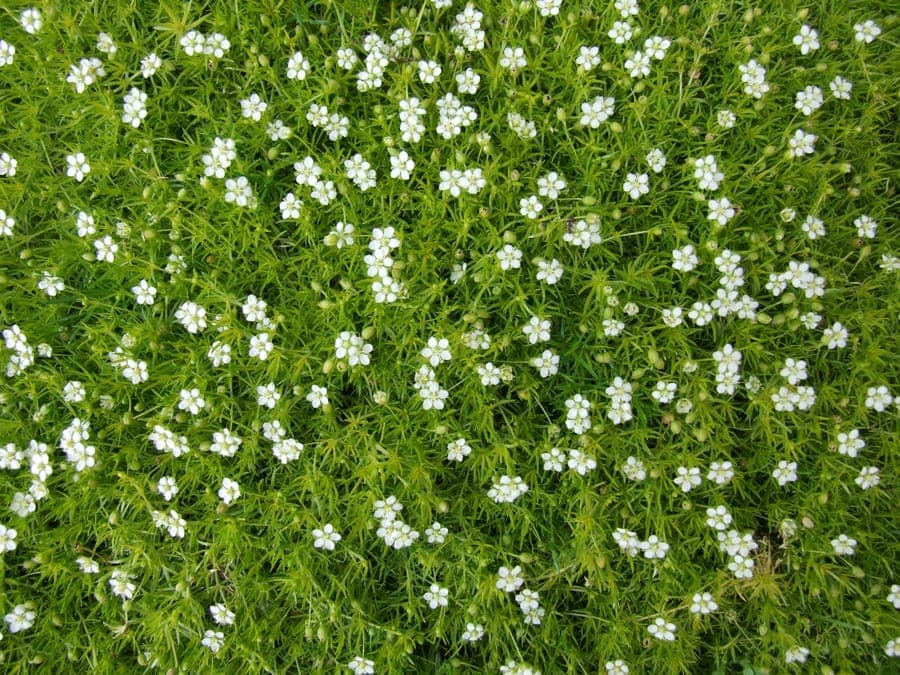
Sagina subulata, commonly known as Awl-leaf pearlwort, is a low-maintenance ground cover that brings subtle charm to gardens across temperate climates. A member of the Caryophyllaceae family, this perennial hails from damp rock crevices and walls in western Europe, especially in coastal regions of the UK and Ireland. In cultivation, it thrives in tight spaces where grass won't grow - think gaps between stepping stones, wall tops, or gravel paths. Reaching just 3–5 cm in height, it forms a dense, moss-like mat that stays green through most of the year.
At gardenworld.app, you can design a garden layout that integrates Awl-leaf pearlwort into hardscaped areas, making the most of its creeping habit between pavers.
Appearance & bloom cycle
The name "awl-leaf" refers to the plant's stiff, narrow leaves that resemble small awls or needles. They grow in tufted clusters, giving the plant a star-like appearance when viewed up close. The foliage ranges from bright to dark green, depending on light and moisture levels. From May to July, tiny white flowers appear - only 3–5 mm wide - with five notched petals that open fully in sunlight. Though small, the flowers create a delicate shimmer across the carpet when in full bloom.
After flowering, seed capsules form, but spread is mostly vegetative via creeping stems. The plant rarely sets viable seed in cooler gardens. In dry summers, it may thin out slightly, but typically rebounds with autumn rains.
Ideal location
Awl-leaf pearlwort prefers partial shade to light sun, thriving best with morning sun and afternoon shade. Full sun is acceptable if soil moisture is consistent. Avoid hot, south-facing spots with reflective surfaces, as these can scorch the foliage. It's perfect for rock gardens, alpine beds, and between flagstones where foot traffic is light. It also works well spilling over container edges or edging shaded pathways.
Avoid high-traffic zones - it tolerates light stepping but not regular trampling. On gardenworld.app, you can test whether your pathway design supports creeping plants like this without compromising durability.
Soil requirements
This plant isn't fussy about soil type but demands good drainage. It grows well in sandy, loamy, or clay soils as long as water doesn't pool. Ideal pH ranges from 5.5 to 7.5. In heavy clay, amend with grit or compost to improve aeration. Avoid highly saline or waterlogged soils, which encourage root rot.
For container use, mix two parts loam-based compost with one part perlite. Ensure pots have drainage holes. In rooftop gardens or green walls, use a lightweight mix to prevent compaction.
Watering
Keep soil consistently moist during establishment - the first 6–8 weeks after planting. Water every 2–3 days in dry spells. Once established, it tolerates short dry periods but looks best with weekly watering in summer. Use a soaker hose or water at soil level to prevent fungal issues on leaves.
Avoid overhead watering in cool, damp weather. In winter, reduce watering except during prolonged dry spells with no snow cover. Never water when soil is frozen.
Free design
Want to see Awl-leaf pearlwort: complete guide in your garden? Make a free design now.
Pruning
Minimal pruning is required. In early spring, rake lightly with a hand fork to remove dead material and encourage fresh growth. If the mat becomes sparse, trim back by one-third using sharp scissors or shears. Never cut below 2 cm - this can damage the crown and delay recovery.
You can also mow at 5 cm with a string trimmer if growing in larger areas. Remove clippings to prevent smothering. Divide and replant sections every 3–4 years to maintain vigor.
Maintenance calendar
- January: Check for frost heave. No watering or feeding.
- February: Inspect for winter dieback. Keep off wet soil.
- March: Light raking. Prepare for spring growth.
- April: Divide clumps. Replant bare spots. Apply balanced granular fertilizer.
- May: Bloom begins. Maintain moisture.
- June: Peak flowering. Watch for drying edges.
- July: Continue watering in dry spells. Avoid cutting back now.
- August: Monitor for thinning. Hand-water if needed.
- September: No pruning. Let foliage build up.
- October: Stop fertilizing. Leave intact for winter.
- November: Clear heavy leaf fall to prevent mat suffocation.
- December: Minimal care. Avoid walking on frozen mats.
Winter hardiness
Hardy in USDA zones 4 to 8. In zone 7 (most of the UK and northern US), it remains evergreen with minor browning in harsh winters. In zone 4, it may die back partially but regrows in spring. Mulch container-grown plants with bark or straw to protect roots from freeze-thaw cycles.
Avoid de-icing salts near planted areas - they are highly damaging.
Companion plants
Pair Awl-leaf pearlwort with other low-growers that share its moisture and light needs:
- Thymus praecox (creeping thyme)
- Veronica prostrata
- Ajuga reptans
- Sedum spurium
- Mazus reptans
Use it to soften hardscapes alongside mosses, ferns, or small hostas. Avoid invasive groundcovers like periwinkle or goutweed that will overwhelm it. In gravel gardens, combine with small sedums for textural contrast.
Closing
Awl-leaf pearlwort isn't a showstopper, but it's a quiet workhorse in the garden. It fills gaps, suppresses weeds, and adds living texture to stone work. It needs consistent moisture in summer but asks for little else. Plant in spring (April–May) or early autumn (September) using 5x5 cm plugs spaced 15 cm apart for full coverage in one season. Available at most garden centres, including online retailers and local nurseries. With patience and proper siting, it forms a resilient carpet that lasts for years. Use gardenworld.app to visualize how it fits into your overall garden plan - especially in modern, low-maintenance designs.
Want to see Awl-leaf pearlwort: complete guide in your garden? Make a free design now.
Upload a photo, pick a style, and get a photorealistic design with plant list in under a minute.
No credit card required


Similar plants
Dianthus karami: complete guide
Dianthus karami
Dianthus karami is a rare Lebanese mountain pink with fringed pink blooms on limestone cliffs, ideal for rock gardens and troughs.
Sicilian pink: complete guide
Dianthus siculus
Discover Dianthus siculus, an elegant purple bloomer from Sicily. Cultivation, June-September flowering and garden combinations.
Alpine mouse-ear chickweed: complete guide
Cerastium pedunculatum
Full growing guide for Cerastium pedunculatum: ideal location, soil, watering, winter hardiness, and companion plants for rock gardens.