
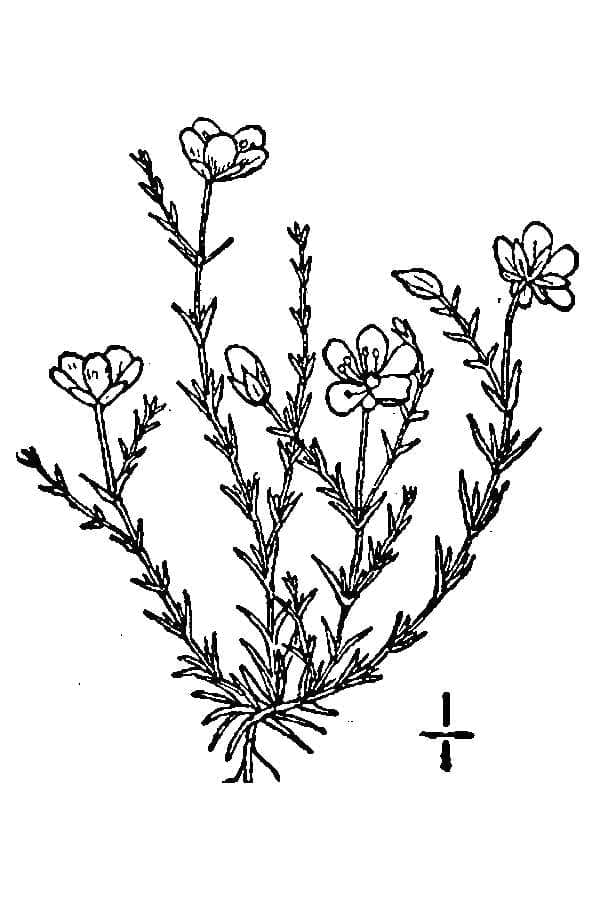
Britton, N.L., and A. Brown. 1913. Illustrated flora of the northern states and Canada. Vol. 2: 52. / Public domain, via Wikimedia Commons
Knotted pearlwort: complete guide
Sagina nodosa
Want to see Knotted pearlwort: complete guide in your garden?
1 minute, no credit card
Overview
Knotted pearlwort (Sagina nodosa) isn't the kind of plant that shouts for attention, but that's exactly why it works so well in the right spot. A humble little herb from the carnation family, Caryophyllaceae, it's native to much of central and eastern Europe, including Austria, Belarus, and the Baltic States. It's compact, resilient, and thrives where many other plants would struggle - in shallow, dry soil between stones, on gravel paths, or tucked into wall crevices. As a low-growing forb, it forms a dense, moss-like carpet that stays green most of the year and asks for almost nothing in return.
What makes it special is its tenacity. It doesn't spread aggressively, but it settles in quietly and holds its ground, even on slopes or sandy banks. Garden designers on gardenworld.app often use it in minimalist, eco-conscious landscapes where texture and function matter more than flash. If you're after a plant that blends in but does solid work, knotted pearlwort deserves a second look.
Appearance & bloom cycle
This plant stays small - 3 to 5 cm tall, spreading 15–20 cm wide. The stems are slender, knotted at the nodes (hence the name), and densely packed with tiny, needle-like leaves arranged in whorls. In late spring to early summer - typically June and July - it produces minute white flowers, about 3 mm across. Each flower has four or five petals, sometimes reduced or missing, giving it a delicate, almost inconspicuous look. Still, these little blooms attract small pollinators like hoverflies and sweat bees, adding subtle life to your garden.
After flowering, seed capsules form and release tiny seeds with the help of rain splash. The plant remains evergreen in mild winters but may turn brown during prolonged cold or waterlogging. It revives quickly in spring, sending out fresh growth as temperatures rise.
Ideal location
Knotted pearlwort loves sun - aim for a light level of 8 out of 10. Full sun is best, though it tolerates light shade, especially in hot afternoon spots. It excels in rock gardens, between stepping stones, in wall joints, or as a filler in dry borders. Avoid heavily shaded or damp areas - this plant wants to bake, not soak.
It handles wind well but can suffer in wet, cold winter winds, especially if the soil stays soggy. Plant on well-drained, elevated spots. If you're planning a crevice garden or stone pathway, check gardenworld.app for layout ideas that incorporate knotted pearlwort naturally and effectively.
Soil requirements
It thrives in well-drained, sandy or gravelly soils with a pH between 6.5 and 7.0. It tolerates poor soils, including chalky or stony substrates, as long as water doesn't pool. Avoid heavy clay or water-retentive composts. If your soil is dense, mix in coarse sand or fine grit to improve drainage. No fertiliser needed - rich soil encourages weak, floppy growth.
It's lime-tolerant, so it's a great choice for limestone walls or areas with alkaline subsoil. Just keep it dry. Acidic, peaty soils are a no-go.
Free design
Want to see Knotted pearlwort: complete guide in your garden? Make a free design now.
Watering
Once established, knotted pearlwort is drought-tolerant. Water twice weekly during the first month after planting, especially in dry spells. After that, it can fend for itself. In extended summer droughts, a light soak helps, but don't overdo it. Water at soil level in the morning to avoid wet foliage, which can lead to fungal issues.
The biggest threat? Overwatering. In wet winters, particularly on clay, root rot can set in. Let the soil dry out between rains.
Pruning
No pruning needed. If the plant looks patchy or brown after winter, gently rake through it with a stiff brush to remove dead material and stimulate new growth. Avoid electric trimmers - they shred the delicate stems. Remove seedlings only if they pop up where you don't want them, like in pavement cracks you'd rather keep bare.
Maintenance calendar
- January: Check for winter dieback. Rake lightly if needed.
- February: No action required.
- March: Begin light grooming as growth resumes.
- April: Watch for new shoots. Water only if unusually dry.
- May: Prepare for bloom. No feeding.
- June: Flowers appear. Monitor for pollinators.
- July: Peak bloom. No extra care.
- August: Bloom fades. Remove unwanted seedlings.
- September: Plant recovers. Leave seed heads for birds.
- October: Watch for wet weather damage.
- November: No maintenance. Light mulch if winters are wet.
- December: Dormant. Leave alone.
Winter hardiness
Hardy in USDA zones 5 to 8, meaning it survives down to -20°C, provided drainage is good. In wet, frozen soils, it's at risk of crown rot. No winter protection needed in most areas, but in regions with heavy winter rain, a light mulch of pine bark or dry leaves can help.
In the UK and northern US, it performs best on slopes or raised beds. Avoid low-lying, boggy spots.
Companion plants
Pair it with other drought-loving plants like Thymus serpyllum, Sedum acre, or Dianthus deltoides. These share the need for sun and sharp drainage. Avoid aggressive spreaders like ivy or mint, which will crowd it out. Small ferns like Asplenium trichomanes make good textural contrasts in wall plantings.
Grey-leaved plants like Artemisia schmidtiana or Stachys byzantina provide nice colour contrast. Give each plant breathing room - don't overcrowd.
Closing
Knotted pearlwort isn't a star, but it's a steady team player in the garden. It doesn't demand attention or care, yet delivers reliable ground cover, subtle beauty, and habitat support. Perfect for rockeries, pathways, or low-maintenance gardens. You can find it at garden centres across the UK and US, often in the alpine or ground cover section. Try tucking it into a stone wall - it'll surprise you with how well it settles. And when you're planning your layout, remember gardenworld.app helps you visualise how knotted pearlwort fits into a cohesive garden design, tailored to your space and style.
Want to see Knotted pearlwort: complete guide in your garden? Make a free design now.
Upload a photo, pick a style, and get a photorealistic design with plant list in under a minute.
No credit card required


Similar plants
Dianthus karami: complete guide
Dianthus karami
Dianthus karami is a rare Lebanese mountain pink with fringed pink blooms on limestone cliffs, ideal for rock gardens and troughs.
Sicilian pink: complete guide
Dianthus siculus
Discover Dianthus siculus, an elegant purple bloomer from Sicily. Cultivation, June-September flowering and garden combinations.
Alpine mouse-ear chickweed: complete guide
Cerastium pedunculatum
Full growing guide for Cerastium pedunculatum: ideal location, soil, watering, winter hardiness, and companion plants for rock gardens.